Portuguese
  Spanish


Indian student developed a solar-powered agricultural machine capable of processing up to 250 kg per hour and was selected for a scientific program in Japan.
A high school student from the state of Odisha, in eastern India, managed to turn a problem faced daily by small farmers into an invention that caught the attention of international scientific institutions. At 16, she designed a multifunctional machine powered exclusively by solar energy, capable of performing various stages of agricultural processing in a single portable device.
The young woman is Subhashree Sahu, a resident of the Ganjam district in Odisha. Her invention combines operations of threshing, grain separation, straw cutting, ventilation for cleaning agricultural products, and even automatic bag stitching, allowing approximately 250 kilograms of production per hour to be processed.
The innovation led the student to the Sakura Science Exchange Programme, one of the international scientific exchange programs promoted by the Japan Science and Technology Agency (JST), in Japan.
-
Brazilian Farmer’s Viral Video on Onion Prices Opens New Income Opportunities Online

-
Brazil’s Chicken Exports Hit Record 2.936 Million Tons in Six Months, Earning $5.7 Billion, with China, Japan, and the Middle East Among Top Buyers
-
Over a Thousand Nelore Cattle Die Unexpectedly in Brazilian Feedlot, Raising Concerns About Intensive Livestock Farming

-
Researchers Turn Discarded Mango Pits into Hydrogel That Absorbs 400% of Its Weight in Water, Offering Agricultural Solution for Droughts and Waste Reuse
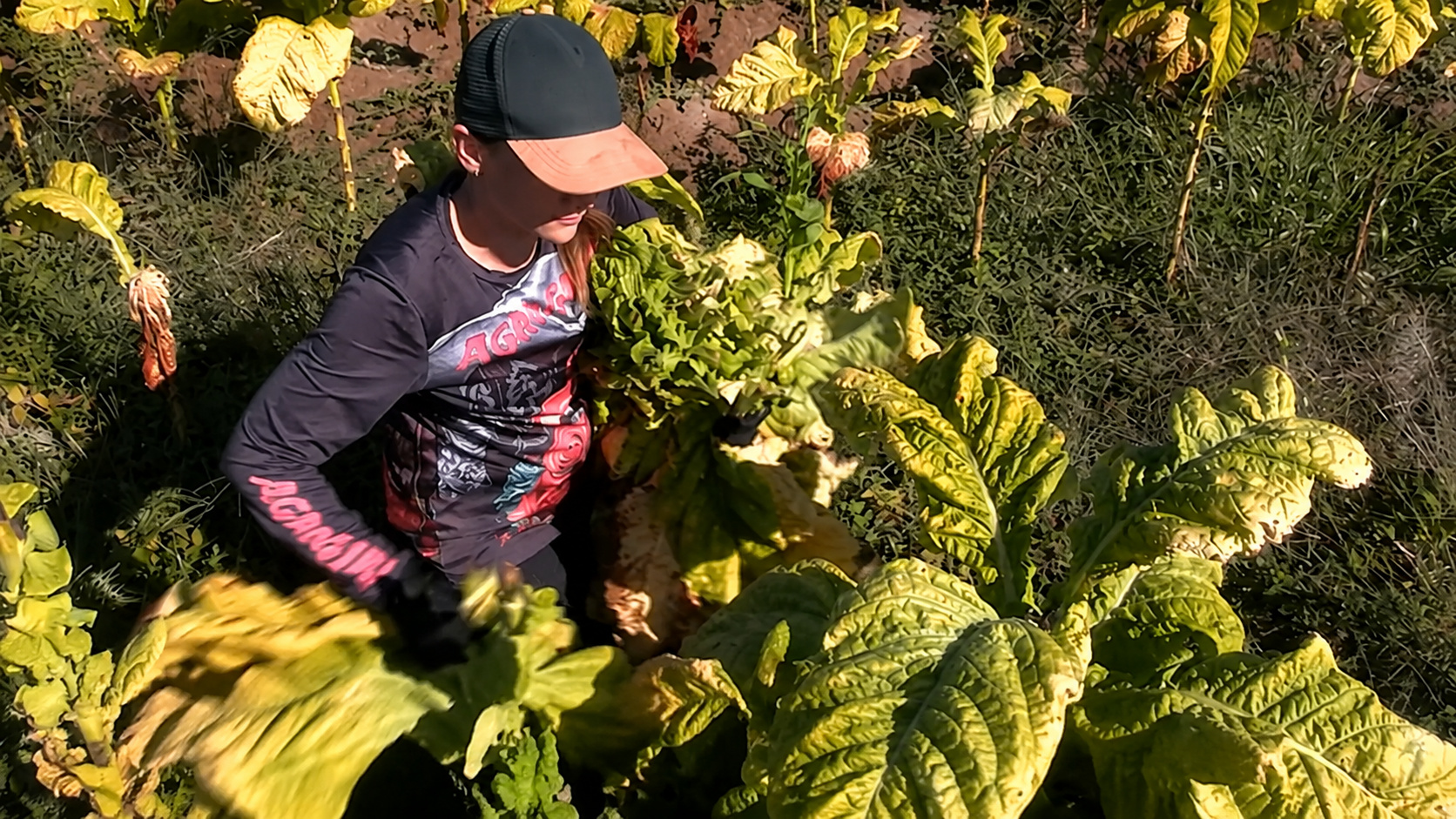


The idea arose from observing the difficulties faced by small rural producers
Subhashree grew up in a region where agriculture is one of the main economic activities. According to the student, many small and medium-sized farmers continue to perform various stages of agricultural processing manually or rely on expensive diesel-powered machines that require constant fuel and frequent maintenance.
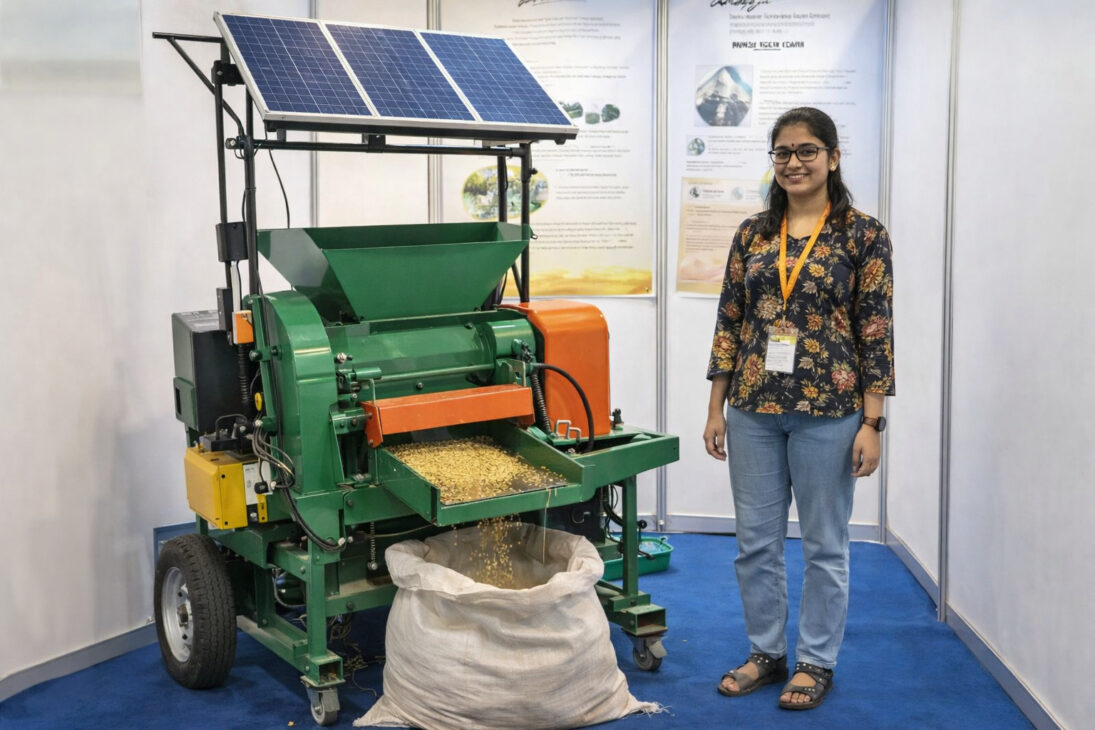
The young woman then decided to develop equipment capable of combining various functions into a single compact system, reducing costs and eliminating dependence on fossil fuels.
The machine was created with guidance from her father, Lalit Mohan Sahu, a science teacher, who assisted in the prototyping phase and testing of the equipment.
Equipment combines five agricultural functions in a single portable structure
The project’s differential lies precisely in the integration of processes. Instead of using separate equipment for each task, Subhashree developed a machine that performs various agricultural activities simultaneously.
Among the functions incorporated into the equipment are:
- grain threshing;
- automatic production separation;
- ventilation for impurity removal;
- straw cutting;
- sack sewing for storage.
According to information released by the Times of India, the machine can process about 250 kilograms of agricultural products per hour, a performance considered significant for family properties and small-scale farmers.
Another aspect highlighted by the creator is the fact that the system operates exclusively on solar energy. This allows for reduced operational expenses and expanded use in rural areas with limited electrical infrastructure.
Solar energy eliminates fuel costs and expands access to mechanization
Agricultural mechanization represents a challenge for millions of small farmers in developing countries.
In many regions, the cost of acquiring and operating motorized equipment remains high. By using solar panels as an energy source, the project aims to reduce part of this barrier.
Subhashree states that the proposal is to make the technology accessible mainly to medium and small producers, who often rely on low-cost solutions to increase productivity.
Besides financial savings, the system reduces emissions associated with the use of diesel engines, often used in conventional agricultural equipment.
For the student, the adoption of renewable technologies can contribute both to environmental sustainability and to improving rural income.
Project received national recognition among hundreds of participants
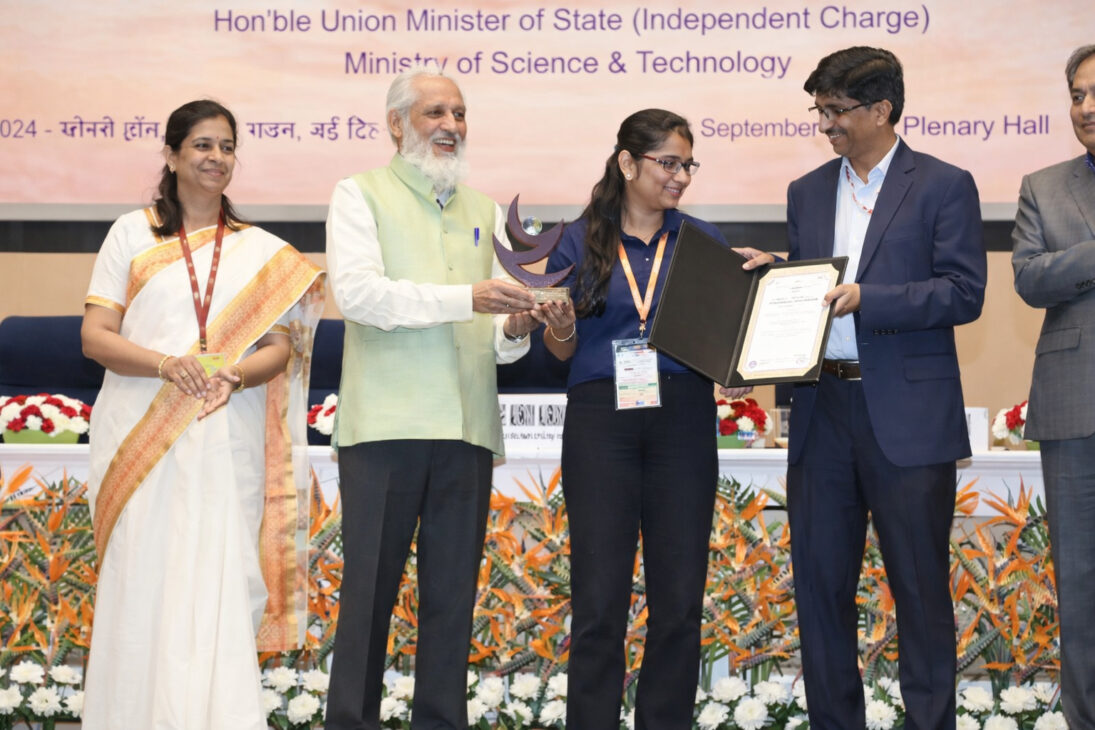
The invention gained visibility during the National Level Exhibition and Project Competition 2024, held in New Delhi.
The event was organized by the Department of Science and Technology of India in partnership with the National Innovation Foundation (NIF).
According to the Times of India, approximately 350 students participated in the competition, but only 31 young scientists were awarded, among them Subhashree Sahu.
The performance ensured the student recognition within the INSPIRE Award program, an Indian initiative aimed at encouraging scientific talents in school age.
Invitation to Japan put the invention on the international radar
As a result of the recognition obtained in the national competition, Subhashree was selected to represent India in the Sakura Science Exchange Programme.
The program is promoted by the Japan Science and Technology Agency, a Japanese institution responsible for funding research, academic exchanges, and international scientific cooperation. The exchange brings together students, researchers, and young innovators from various Asian countries.
The edition that included Subhashree’s participation gathered representatives from 14 Asian countries, providing contact with research centers, universities, and Japanese scientific institutions.
For a high school student, the selection represents a rare opportunity for international exposure and exchange of experiences with other young scientists.
Young person accumulates awards and recognition in science fairs
Subhashree’s journey did not start with the solar agricultural machine. According to the Times of India, the student had previously won the Young Achiever Award 2023, in addition to awards in national science fairs organized by the Indian educational system.
She also participated in scientific events promoted by the national education council of India, expanding her history in projects related to technological innovation and sustainability.
Local authorities from Odisha honored the student for the prominence achieved nationally and internationally.
Invention shows how students are seeking solutions for field challenges
The story of Subhashree Sahu illustrates a growing trend observed in science fairs around the world: young researchers developing solutions aimed at concrete problems faced by local communities. In the case of the Indian student, the proposal arose from the agricultural reality of her own region.
Instead of creating a technology aimed only at laboratories, she chose to develop equipment that could be used directly by family farmers.
The combination of solar energy, accessible mechanization, and multiple agricultural functions helped transform a school project into an invention capable of attracting international attention.
For thousands of small producers who still rely on traditional methods, initiatives like this show that simple, compact, and energy-efficient solutions can represent an important alternative to increase productivity and reduce costs in the field.