Portuguese
  Spanish


Brazilian forests could grow by 8 million hectares by 2035, according to a study cited by Exame, but the turnaround depends on agribusiness, water, restoration, and combating illegal deforestation to transform conservation into an economic asset before crises affect crops, energy, and income throughout the Brazilian countryside.
The forests can grow again in Brazil on a scale compared to twice the territory of Switzerland by 2035, according to an analysis by a coalition of institutions linked to research, philanthropy, and the productive sector. The projection points to a gain of 8 million hectares, with agribusiness at the center of the turnaround, as a large part of the protected areas is within private rural properties.
The information is from Exame, in a publication dated July 5, 2026, at 12:10 PM, signed by Lia Rizzo. The report deals with the study “The Role of Brazilian Forests in the Global Climate Agenda,” which projects the expansion of Brazilian forest cover and argues that conservation, water, agriculture, and energy should be seen as a single economic agenda.
Agro appears as a central piece of the forest turnaround
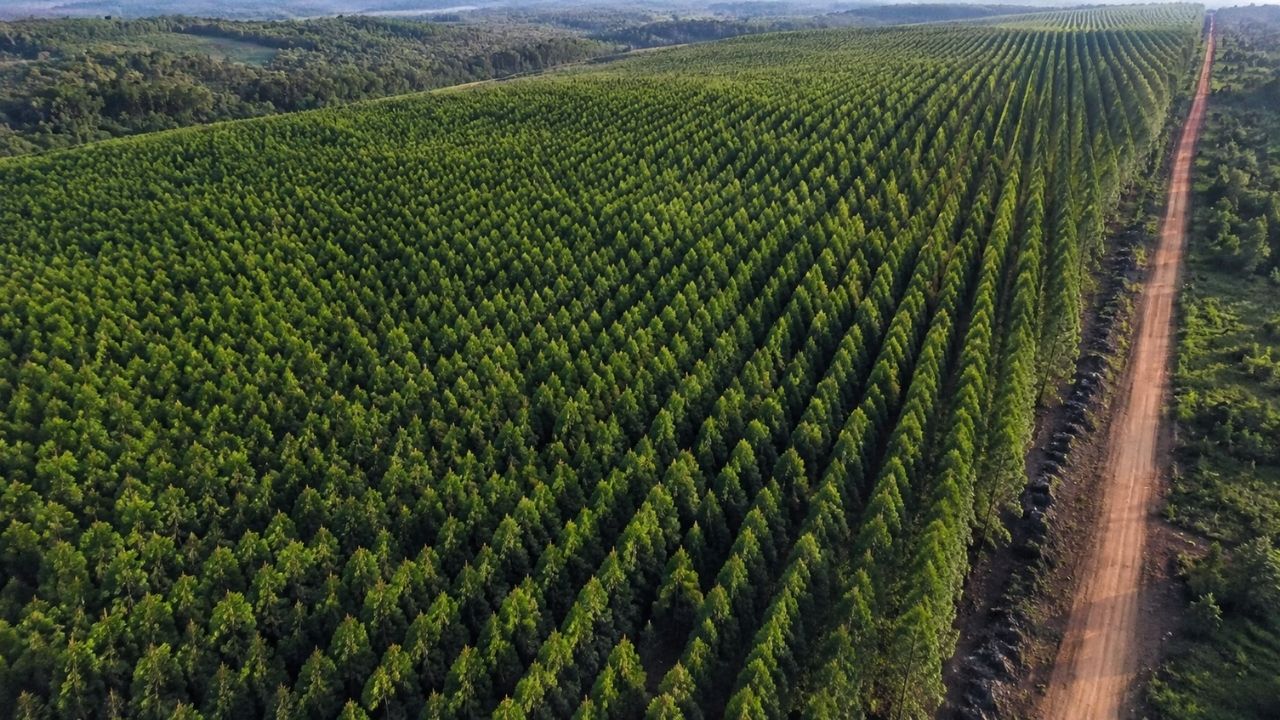
For a long time, the debate about forests in Brazil was treated as a dispute between conserving and producing. The study cited by Exame presents a different reading: a significant part of national conservation is already within rural properties, through Legal Reserves and Permanent Preservation Areas provided for in the Forest Code.
-
Brazilian Student Develops Solar-Powered Agricultural Machine Capable of Processing 250 Kilograms per Hour

-
Brazilian Farmer’s Viral Video on Onion Prices Opens New Income Opportunities Online

-
Brazil’s Chicken Exports Hit Record 2.936 Million Tons in Six Months, Earning $5.7 Billion, with China, Japan, and the Middle East Among Top Buyers
-
Over a Thousand Nelore Cattle Die Unexpectedly in Brazilian Feedlot, Raising Concerns About Intensive Livestock Farming


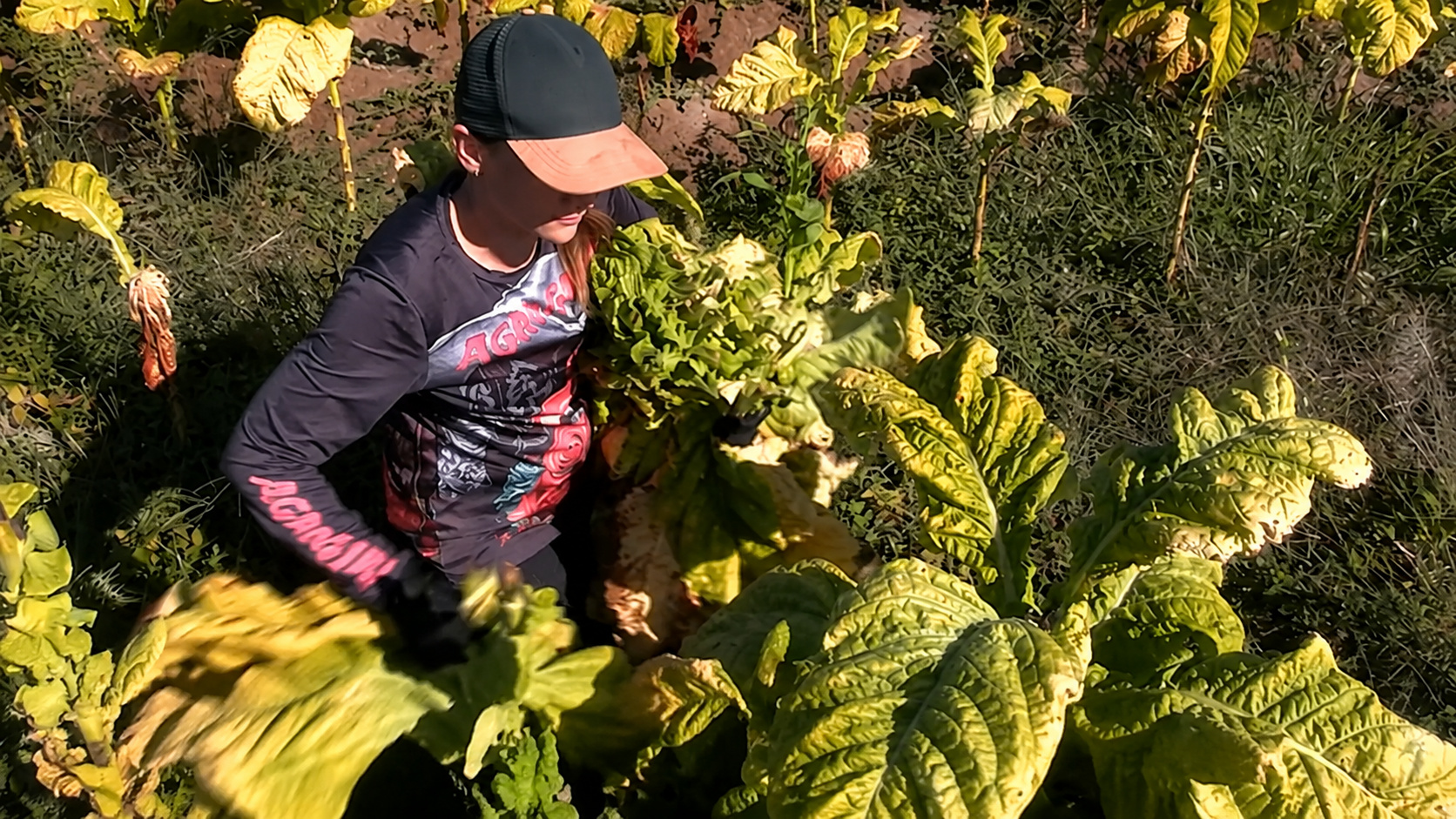


According to the analysis, about 42% of the country’s protected areas are on private rural properties. This puts agribusiness in a decisive position: it is not just a land user but also a holder of enormous natural capital that still seeks economic recognition.
Study projects 8 million additional hectares by 2035
The most striking projection is the possibility of Brazil increasing from 517 million hectares of forests to 525 million by 2035. The addition of 8 million hectares is equivalent, according to the report, to twice the territory of Switzerland.
This expansion would not come from a single front. The study considers restoration, regeneration, planted forests, integration between production and conservation, and recovery of degraded areas. The central change is to transform areas currently seen as environmental obligations into assets capable of generating value for producers, companies, and communities.
Water becomes more significant than carbon in the debate
In recent years, much of the global conversation about forests has focused on carbon and tradable credits. Now, with droughts, fires, and water crises affecting agricultural production, energy, and infrastructure, the study shifts part of the focus to water.
The idea is to treat forests as natural infrastructure. They help regulate rainfall, protect the soil, maintain springs, and reduce risks for production chains. When water is scarce, the impact is no longer just environmental and starts affecting crops, hydroelectric plants, transportation, insurance, and public accounts.
Flying rivers enter the economic equation of agriculture
One of the strongest data points cited in the report involves the so-called flying rivers of the Legal Amazon. According to research published in 2026 in Communications Earth & Environment, cited in the study, these moisture currents generate precipitation valued at about US$ 20 billion annually for agriculture.
This point changes the way forests are viewed. Instead of appearing only as protected areas distant from production, they are treated as part of the system that sustains agricultural productivity. Without water stability, the cost of production can increase, especially in regions that currently rely more on rain than on irrigation.
Hydroelectric plants also depend on vegetation cover
The study also brings the forest agenda closer to energy. Beto Veríssimo, co-founder of Imazon and special envoy of COP30, states in the report that almost 75% of the Brazilian hydroelectric matrix is linked to the forest, including plants in the Amazon and the Paraná basin.
The logic is simple: rainfall, evaporation, and vegetation cover are connected. When forests lose the ability to regulate the water cycle, hydroelectric generation can also feel the impact. Therefore, conservation ceases to be an isolated issue and starts to directly engage with energy security.
Planted forests advance with cellulose and corn ethanol
Part of the projected expansion may come from already structured production chains. Cellulose is the most mature example, with farms that combine commercial planting and conservation areas in productive mosaics. According to the report, this expansion usually occurs over degraded pastures, not native vegetation.
Another frontier comes from biofuels. Corn ethanol, which accounted for 22% of national ethanol production in the 2024/2025 harvest, depends on forest biomass, mainly eucalyptus, for grain drying. In this scenario, agriculture ceases to be just a producer of food and energy and also starts investing in planted forests.
Restoration tries to become an investment thesis
In addition to cellulose and biofuel chains, restoration appears as a third front. The report cites a preliminary survey by Agroicone with the Floraz movement, which identified 2.6 million hectares suitable in about 8,000 properties, in a conservative scenario.
These areas are generally degraded or have low agricultural aptitude. Therefore, they can become targets for partnerships and investments in agroforestry systems, carbon, food, biomaterials, and bioenergy. The challenge is to prove, measure, and value the gain generated by the forests before transforming this agenda into a robust market.
The bottleneck is in measuring before selling
Despite the potential, private capital still does not flow at the necessary speed. The study points to the need for financial instruments, guarantees, and models capable of reducing risk. But there is a prior problem: characterizing and clearly measuring ecosystem services.
Carbon already has more well-known metrics. Water is more tangible but still needs consistent models. Biodiversity is more complex. Without properly measuring these assets, it is difficult to transform conservation into income in a credible, transparent, and accepted way by buyers, producers, and investors.
Illegal deforestation remains the starting point
Even with the proposal to transform forests into an economic asset, the report makes it clear that the basics remain unavoidable: combating illegal deforestation. Waack and Veríssimo advocate zero tolerance and point to the implementation of the Forest Code as an essential step.
Also included in this account are the validation of the Rural Environmental Registry, credit restrictions for those who deforest, payment for environmental services, and incentives to municipalities with lower deforestation. The turnaround depends on taking conservation out of the cost logic and placing it in the value logic for those who keep the forest standing.
Brazil may enter a recovery curve
The report mentions the idea of forest transition, used to explain countries that have reduced their vegetation cover during growth phases and then began to recover it. The argument is that Brazil may have passed the lowest point of this curve and now has the potential to grow in coverage.
The Brazilian difference lies in the cost of transition. While developed countries need to switch expensive energy bases to reduce emissions, Brazil has deforestation as one of the major sources of the problem. Reducing this loss can generate climate gains without sacrificing the productive economy.
What the dispute over forests reveals about the country’s future
The projection of 8 million additional hectares by 2035 shows that Brazil has a rare opportunity: to expand forests, protect water, sustain crops, reduce energy risks, and create new forms of income in the countryside. But this turnaround depends on governance, reliable metrics, combating illegal deforestation, and real participation from agribusiness.
The question that remains is direct: should the rural producer be seen only as responsible for preserving mandatory areas or also as a central piece in transforming conservation into economic value? Do you think Brazil can make this turnaround before water becomes a bottleneck for crops and energy? Leave your opinion in the comments.