





 Portuguese
  English
  Spanish
  4 min of reading
  0 comments


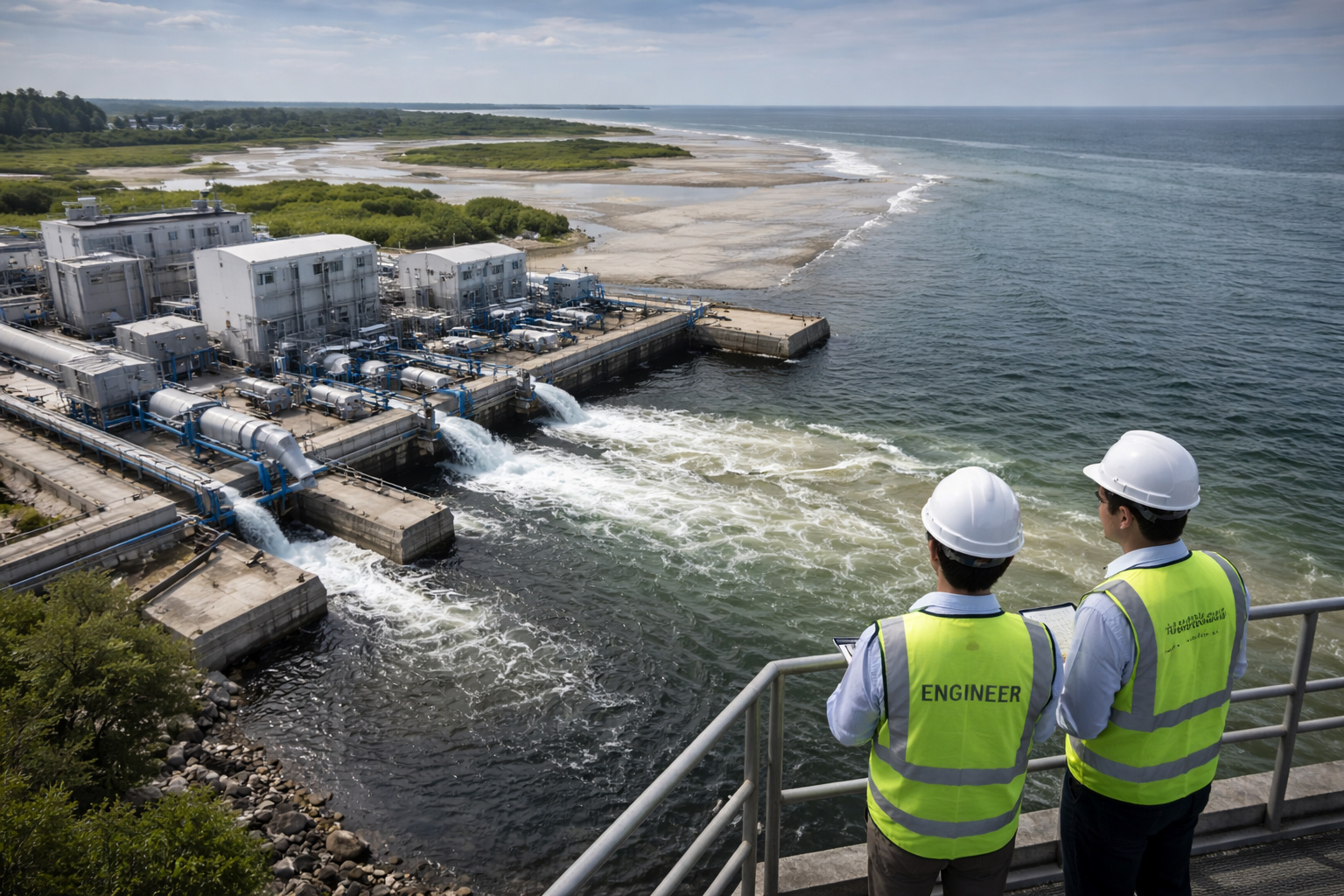
Osmotic energy advances with a plant in Japan and a 500 MW project in Europe, technology generates continuous electricity from the meeting of fresh and saltwater.
According to the World Economic Forum, which ranked osmotic energy as one of the ten most important emerging technologies of 2025, nearly 30,000 terawatt-hours of osmotic energy are naturally released by deltas and estuaries every year, a volume greater than global electricity demand. This process occurs continuously at all points on the planet where rivers meet the sea. Every second, the mixture of fresh and saltwater releases chemical energy equivalent to a waterfall of approximately 120 meters in height.
Osmotic energy plant in Japan marks progress with commercial operation in Asia
On August 5, 2025, the Fukuoka District Water Works Agency inaugurated the Uminonakamichi Nata Seawater Desalination Center, where an osmotic plant began operating integrated with the treatment system.
The facility represents the first osmotic energy plant in commercial operation in Asia and only the second in the world, after the plant inaugurated in Denmark in 2023.
-
Spanish city uses an aquifer hidden 11 meters deep as an urban ‘refrigerator’ for almost 30 years, saves 52% of energy in a public building, and now resorts to AI to prevent the solution from exhausting its potential

-
Canada is preparing a billion-dollar megaproject with 3.5 GW of wind energy, up to 530 turbines, green hydrogen, and ammonia for export, in a bid that could place the country at the center of the new global race for clean fuels.
-
France launches tenders for 12 GW in renewable energy, bets on offshore wind and imposes restrictions on Chinese components to accelerate energy sovereignty, protect European factories, and reduce dependence on oil and gas amid global pressure.
-
Advancement in renewable energy: researchers from UFPB and UNI of Peru create an unprecedented digital twin for a green hydrogen plant; Model is capable of simulating real-time operations and reducing industrial failures in strategic clean energy projects in Latin America.



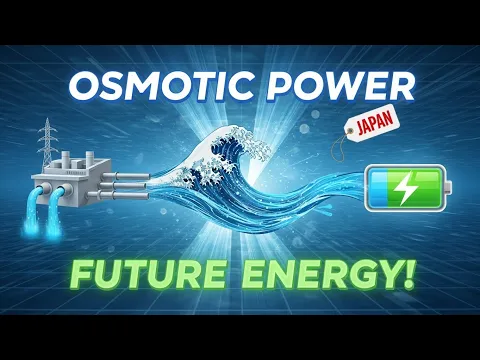
The Japanese unit utilizes residual flows from desalination and sewage treatment, increasing the salinity difference and, consequently, the efficiency of electricity generation.
How osmotic energy works and why it generates electricity continuously
Osmotic generation is based on the physical phenomenon of osmosis, in which water moves through a semipermeable membrane from a less concentrated solution to a more concentrated one.
When this flow occurs between fresh and saltwater, a natural pressure is created that can be converted into mechanical energy and, subsequently, into electricity.
Unlike sources such as solar and wind, osmotic energy operates 24 hours a day, without depending on variable weather conditions.
Technological limitation of membranes hindered the advancement of osmotic energy for decades
Although known since 1954, when engineer R. E. Pattle described its potential, osmotic energy remained commercially unviable for decades.
The main obstacle has always been the efficiency of the membranes. For economic viability, it would be necessary to achieve at least 5 W/m² of power density, while previous technologies produced less than 1 W/m². This technological bottleneck led to the abandonment of initial projects, even after significant investments.
Statkraft’s project in Norway failed due to low efficiency and high cost
In 2009, Statkraft inaugurated the world’s first osmotic power plant in Norway. The plant produced between 2 and 4 kW with 2,000 m² of membranes, insufficient performance for commercial scale.
After more than $20 million invested, the project was terminated in 2012 due to low efficiency and high membrane costs.
This episode marked a period of stagnation for the technology, which returned to the academic environment for nearly a decade.
Scientific advancement in nanotechnology boosted a new generation of osmotic membranes
The turning point occurred with research in nanofluidics led by Lydéric Bocquet, published in the journal Nature in 2013.
These studies demonstrated that materials with nanometric structure could significantly increase the efficiency of ionic transport, raising power density to unprecedented levels. This advancement paved the way for the practical application of osmotic energy on an industrial scale.
The French startup Sweetch Energy developed the INOD membrane, based on natural materials and geometric optimization at the nanoscale.
This technology achieves power densities between 20 and 25 W/m², surpassing by up to 25 times the minimum required for commercial viability. This advancement represents a decisive leap in the competitiveness of osmotic energy against other sources.
Fukuoka plant uses brine and treated water to increase energy efficiency
The Japanese plant adopts an innovative model by utilizing two waste flows: brine from desalination and low-salinity treated water.
This combination increases the concentration difference between the fluids, raising osmotic pressure and energy production. The estimated annual capacity is 880,000 kWh, sufficient to supply about 220 households.
Project in the Rhône delta could reach 500 MW and supply more than 1.5 million homes
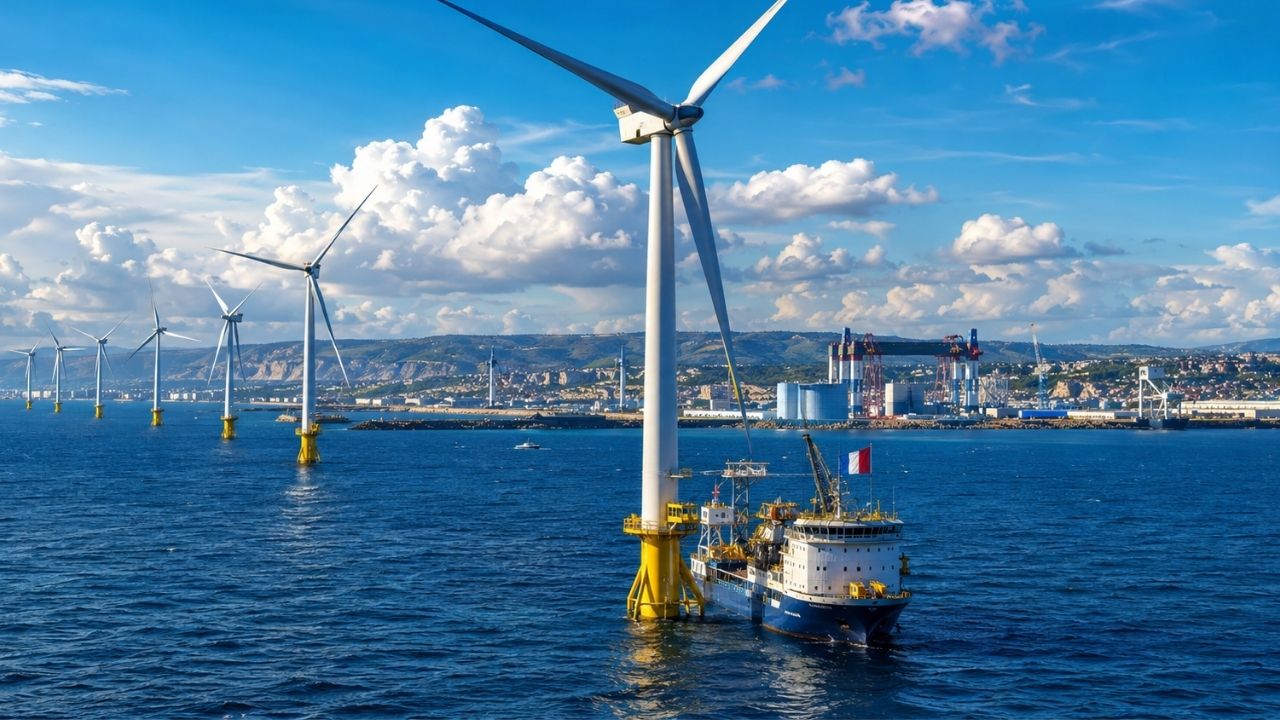
In France, Sweetch Energy began operations of the OPUS-1 demonstrator in 2024, in the delta of the Rhône River. The goal is to validate the technology under real conditions and advance to a network of plants that can reach up to 500 MW of installed capacity.
This volume would be sufficient to supply more than 1.5 million homes, equivalent to large urban centers.
Estimates indicate that the total utilization of osmotic energy could generate about 5,177 TWh per year, equivalent to almost one-fifth of the world’s electricity demand.
This potential is distributed globally, in all estuaries and deltas where mixing between fresh and saltwater occurs.
Continuous base energy positions osmotic technology as a strategic alternative in the electricity sector
The main advantage of osmotic energy is its predictability and consistency. Unlike intermittent sources, generation occurs continuously, allowing it to be used as a base source in the electrical system.
This characteristic makes the technology particularly relevant to complement renewable energy matrices.
After decades of technological limitations, recent advances indicate that osmotic energy is beginning to enter a phase of practical implementation. The combination of innovation in materials, integration with existing infrastructure, and increasing investments suggests a structural change in the sector.
Now we want to know: can osmotic energy become one of the main global sources in the coming decades?
The exploration of energy generated naturally in estuaries represents a significant shift in how natural resources are utilized.
In your view, does this technology have the potential to compete with traditional sources, or will it still face barriers to global expansion?










Be the first to react!