Portuguese
  Spanish


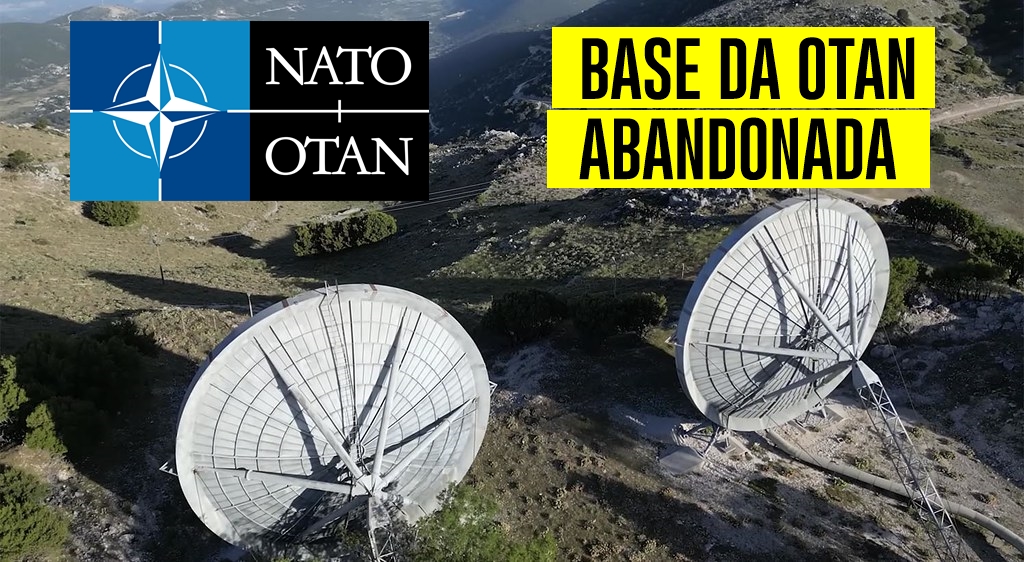

An Old NATO Military Base, Built in 1956 and Abandoned for Decades, Was Discovered by an Explorer, Revealing a Hidden Piece of Cold War History.
In the first ten years of its existence, NATO (North Atlantic Treaty Organization) concentrated significant investments in the construction and modernization of strategic military bases in its member countries.
These efforts aimed to reinforce collective defense in the face of increasing Cold War tensions, with the goal of protecting Western Europe from potential threats from the Soviet bloc.
The bases were strategically distributed to ensure an integrated military presence, including air, land, and naval infrastructure, as well as nuclear weapon depots in some cases. These investments not only strengthened defensive capacity but also promoted interoperability among the armed forces of the members, consolidating the cohesion and effectiveness of the alliance.
-
The large jar blender has a rival: Oster Ultra Power bets on 1,000 W, six stainless steel blades, and two portable cups with leak-proof lids.

-
Tesla injected an additional $250 million into the German factory, doubled the battery cell target, and opened its own production line for startups.

-
No more TV stuck on the wall: Samsung The Freestyle+, the new projector with over 400 lumens projects on walls, floors, and ceilings, bringing cinema to any corner of the house.
-
A Japanese governor single-handedly stalled the construction of the world’s fastest train for nine years, and only now has he agreed to allow a tunnel excavated at a depth of 1,400 meters.



From NATO Military Base to Astronomical Center
One of the examples was the GKFZ Kefallonia station, a NATO communication facility located on the island of Kefalonia, Greece. It was part of the Allied Command Europe Highband (ACE High) system, a high-frequency communications network established in 1956 to provide long-range communications, including telephony, telegraphy, and data transmission among NATO forces in Europe.
The network became operational in 1964 and connected several stations spread across 11 countries, including Norway, Greece, the United Kingdom, and France. One of the most iconic bases was GKFZ Kefallonia, located on Mount Ainos on the island of Kefalonia, over 1,000 meters high.
GKFZ Kefallonia was under the control of the Hellenic Air Force until 1995 when the ACE High system was deactivated, marking the end of an era following the fall of the Berlin Wall. In 1998, the base took on a new purpose: it was transformed into the Eudoxos Astronomical Observatory, the first robotic astronomy center in Greece, inaugurated the following year.
However, the excitement was interrupted by the global economic crisis of 2007, which led to the abandonment of the observatory. Today, the facilities remain as a silent landmark, witnesses to different times and varied purposes.
A Base Preserved in Time
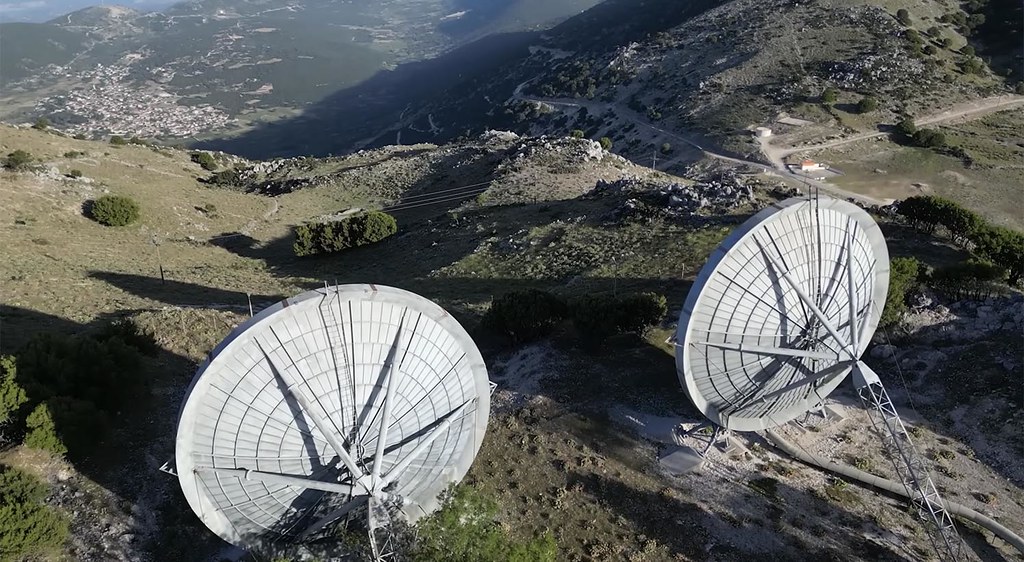
Recently, the channel Exploring the Unbeaten Path released a video documenting the old NATO base in Kefalonia. Unlike other ACE High bases, which were often vandalized and dismantled, GKFZ Kefallonia is relatively well preserved.
The images highlight the base’s isolated location, surrounded by mountains and with only one access road. An aerial view reveals impressive details, such as the four large parabolic antennas, strategically interesting – two facing east and two facing west. These antennas played a crucial role in communication with other stations in the network, connecting distant points like northern Norway and Cyprus.


Interestingly, one of the photos from the video shows the astronomical telescope of the observatory, located southwest of the base. Despite the abandonment, it still holds its historical and scientific value.
A Heritage of Strategic Value
The old GKFZ Kefallonia base encapsulates decades of technological advancements and strategic adaptations. From a pioneering military system to an innovative astronomy center, the facility reflects humanity’s capacity to transform the past into something new.