Portuguese
  Spanish




Votorantim Cimentos Decided to Use Biomass Fuels in Its Production Plant in Cajamar. The Factory Replaces Fossil Fuels with Biomass Fuels in Its Sand Drying Process, Thus Expanding the Sustainability of Production.
Last Monday, (07/25), Votorantim Cimentos, a construction and sustainable solutions company, announced that it has replaced fossil fuel with biomass fuels in mortar production at its factory located in Cajamar, in the metropolitan area of São Paulo, with the aim of ensuring more sustainability in its manufacturing plant.
The Biomass Used by Votorantim Cimentos Is the Result of Transforming Other Waste
Thus, it is important to note that the biomass used in the process is the result of transforming other industrial process waste into fuel. The Cajamar factory used biomass fuel for the industrial drying of limestone, one of the raw materials applied in mortar production. After undergoing the drying process, the limestone is ground and turned into sand, which makes up the mortar along with the additive and cement.
At the São Paulo unit in Cajamar, more than 200,000 tons of limestone are dried every year for sand production. Votorantim Cimentos invested approximately R$ 4 million in replacing specific equipment, and the company utilized biomass fuels in place of polluting fossil fuels entirely, with even greater environmental and economic gains, according to the company.
-
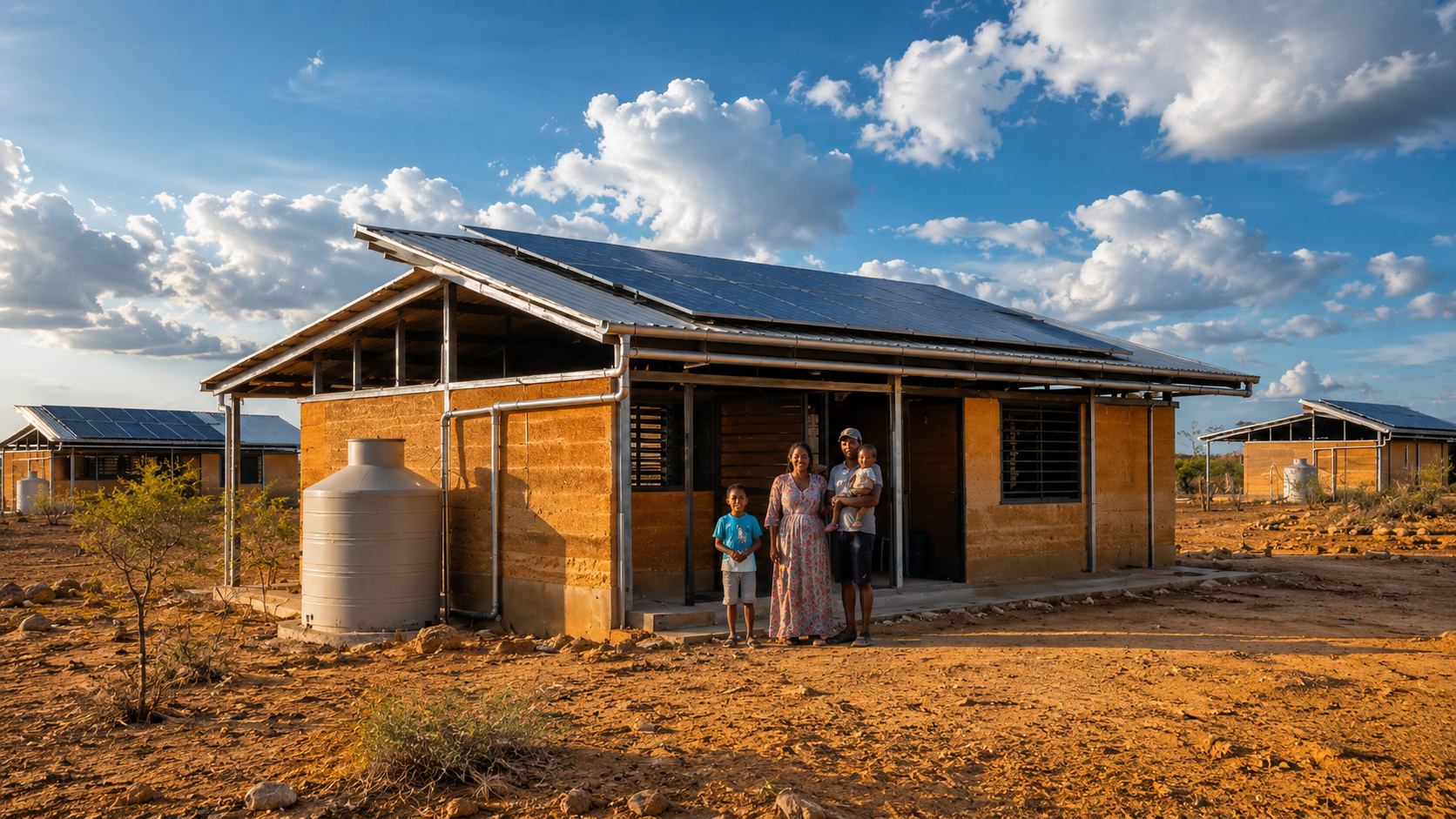
In Colombia’s desert, 30 families receive 80 m² homes with solar panels, waterless toilets, and rainwater collection systems amid water and energy shortages.

-
H2A to Invest $570 Million in 22 Biomethane Plants in Brazil, Converting Agricultural Waste into 700 Tons of Renewable Fuel Daily
-
Engie Secures 10-Year Use of 625 MWh in Batteries to Store Excess Solar and Wind Energy in Spain by 2028
-
Giant Batteries Take Center Stage in Chile Auction as Company Offers 960 GWh of Solar Energy for Nighttime Use, Aiming to Stabilize Solar Power Supply



Furthermore, according to the general manager of mortar at Votorantim Cimentos, Carlos Vicente Flores, the Cajamar factory operates sustainably under the concept of a circular economy: “We adopted a regenerative approach to doing business, eliminating waste, revaluing by-products from other industries, and increasing the use of renewable resources. This initiative in Cajamar reduces environmental impacts, as we are transforming into fuel a waste that was previously discarded,” says Carlos Vicente.
With this decision, Votorantim Cimentos increases the use of biomass fuels in its mortar production in Brazil. The company also has two more mortar units that utilize thermal energy recovery in sand production processes: Rio Branco do Sul (PR) and Belém (PA).
The Initiative Aligns with Sustainability Commitments for 2030
According to the company, the decision to use biomass fuels in Cajamar aligns with Votorantim Cimentos’ sustainability commitments for 2030, especially regarding the company’s environmental and economic footprint. The launch of these goals, back in 2020, aligns all of the company’s global operations with current and future societal demands, ensuring greater sustainability.
As such, Votorantim Cimentos aims to achieve about 53% thermal substitution, the percentage of alternative fuels compared to fossil fuels, and reduce the clinker factor — the main component in cement composition — by 68%, aiming for 2030. The company also emphasizes that the long-term expectation is that it will commit to developing and implementing technologies that will allow it to deliver carbon-neutral concrete to society by 2050.
“For Votorantim Cimentos, sustainability is a journey that goes hand in hand with its trajectory. In 2020, the company took another step by renewing its previously established sustainability commitments. To meet society’s new needs, the commitments are also integrated with the United Nations Sustainable Development Goals (SDGs), a global agenda with 17 goals and 169 targets to be achieved by 2030,” emphasizes Votorantim Cimentos in a statement released to the press.