Portuguese
  Spanish


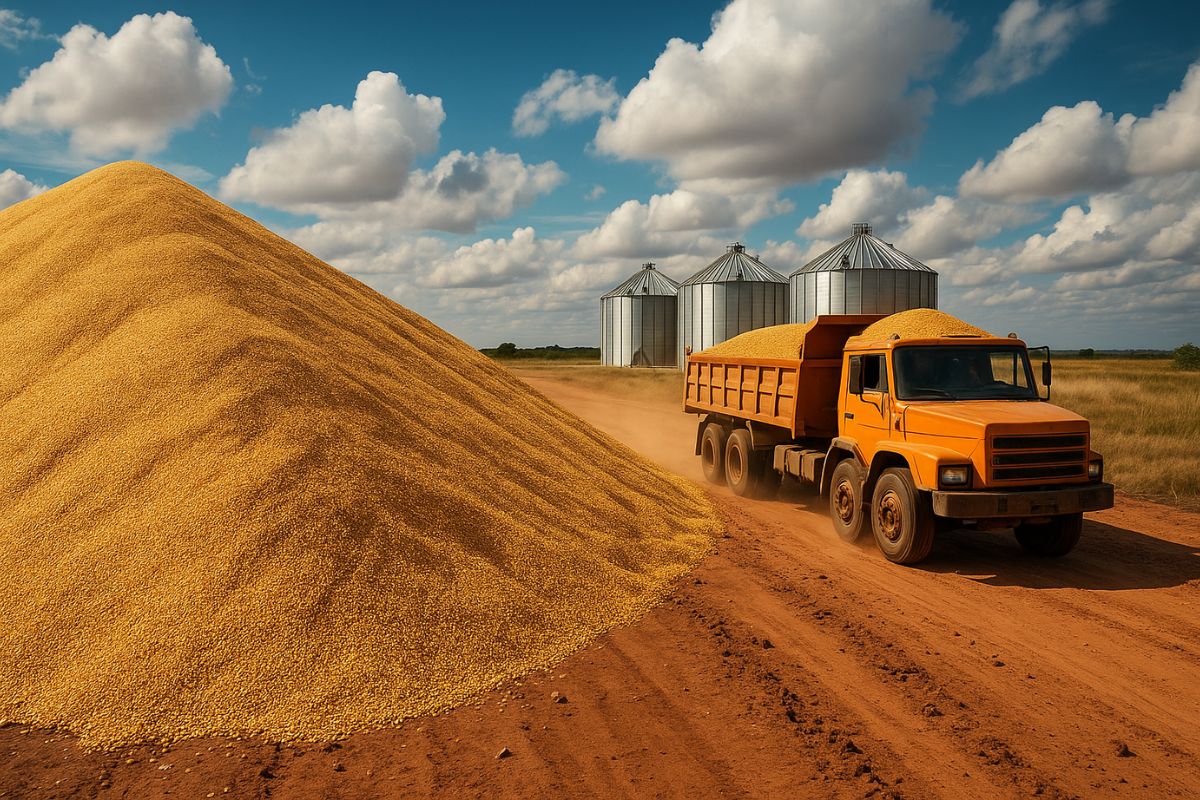


Lack Of Silos To Store Grains Brings Losses To Agriculture. Record Harvest Exposes Vulnerability Of Storage Network In Brazil And Forces Producers To Sell Faster, Reducing Profits
The lack of adequate storage capacity generates losses for Brazilian agriculture, according to a report published in O Globo. With the 2025 harvest estimated at 345 million tons of grains, the country is breaking production records but facing logistical bottlenecks that compromise producers’ bargaining power.
Almost 40% of the harvest has no space in silos and warehouses, which forces farmers to sell quickly to trading companies and cooperatives. This increases costs, reduces profit margins, and limits Brazil’s competitiveness against countries like the United States and Canada, which have significantly higher storage capacity.
Who Suffers Most From The Lack Of Silos?
The impact mainly falls on small and medium rural producers, who cannot afford the costs of building and maintaining their own silos. Only 16% of farmers in Brazil have storage structures on their properties.
-
India’s Sugar Export Cuts and Ethanol Shift Amid El Niño Threat Could Impact Global Prices and Stocks

-
Quarantine Pest Threatening Palm Trees Puts Brazilian Authorities on Alert, Prompts Monitoring at University of Taubaté and Potential Control Measures Across São Paulo
-
Global Alert: Report Finds 159 Pesticides in Coffee Beans Sold in Europe, Posing Serious Risks to Millions of Farm Workers
-
Low-Demand Brazilian Beef Offal Gains Popularity Abroad: Indonesia Purchases $19.5 Million, Boosting Revenue and Reducing Waste



This means that most producers need to sell right after the harvest, precisely when prices are at their lowest. In contrast, countries like the United States and Canada, which store up to 80% of their production on farms, can hold sales until prices rise.
How Big Is The Difference Between Brazil And Competitors?
According to FAO data and comparisons presented by O Globo, the United States has static storage capacity of 680 million tons, over 20% above its annual production of 540.5 million. This “slack” in the system is considered ideal for market balance.
In Brazil, however, the nearly 12,000 existing silos can only accommodate 62% of production, leaving the country at a competitive disadvantage. For comparison: in Argentina, 40% of grains are stored on farms; in the European Union, 50%; in the US, 65%; and in Canada, 80%.
Where Are The Silos In Brazil?
Another critical point is the location of storage units. Just over 10% are in rural areas, close to the fields. The rest are concentrated in urban areas, under the control of cooperatives and large trading companies.
This concentration increases logistical costs, as producers need to transport grains to these locations, often on poor roads, even before negotiating the sale.
Why Does The Producer Avoid Investing In Storage?
Building a silo is expensive and involves fixed costs such as energy, labor, and phytosanitary control against pests and moisture. For many farmers, the cost does not justify the immediate need for liquidity after the harvest.
Without their own storage space, producers become at the mercy of the market, having to sell at lower prices or incur additional costs for transportation and standardization of grains.
Is It Worth Investing In New Support Programs?
The federal government maintains lines of credit, through BNDES and Banco do Brasil, to finance the construction and expansion of warehouses. However, participation is limited, as programs do not effectively meet the sector’s needs.
Experts argue that stronger public policies are urgently needed to prevent losses to agriculture from becoming recurring, compromising export growth and the income of thousands of producers.
The lack of silos in Brazil is not just a logistical problem, but a strategic factor that directly impacts prices, producers’ income, and the country’s international competitiveness. Without new investments in storage, Brazilian agriculture will continue to lose billions every year, even with production records.
And you, do you believe that the government and the private sector should accelerate the construction of silos to prevent losses to agriculture, or can the current model still be sustainable? Leave your opinion in the comments—we want to hear from those who live this reality in the field.