






 Portuguese
  Spanish



Originating in Suzano, Massa X was born in 1995 after a client factory closed, taking advantage of eggs from the family farm, started with dough sold in buckets and, according to PEGN Magazine, reached R$ 17 million in revenue in 2023, with 70 employees and also expansion in the Brazilian supermarket retail.
The cheese bread that started as an alternative to utilize eggs from a family farm in Suzano, in the interior of São Paulo, turned into a million-dollar business almost three decades later. Massa X, created in 1995 by Tung Yun Wu, known as Mr. Tung, grew from a small 100 m² structure to an operation of about 3,000 m².
According to a report by PEGN Magazine published on August 19, 2024, the company reached approximately R$ 17 million in revenue in 2023, selling about 200 tons of cheese bread and frozen snacks monthly to more than 1,400 clients. The journey involves a change of course, family succession, and adaptation to the frozen food market.
From Family Farm to Cheese Bread Factory
The origin of Massa X is linked to the Tung family’s farm in Suzano. According to the report by PEGN Magazine, the turning point occurred when a cheese bread factory that was a client of the farm went bankrupt. At that moment, a salesman connected to the closed business suggested that the family start producing their own product.
-
Ancient 4,000-Year-Old City in Brazil Grew Wealthier and Reduced Inequality, Study Finds

-
Lost Page from Archimedes Palimpsest Resurfaces in French Museum After Decades, May Reveal Hidden Mathematical Calculations with X-ray and Multispectral Imaging
-
Brazilian Education Ministry Announces Tech Benefits for Teachers, Providing Smartphones, Notebooks, and Tablets to Enhance Digital Learning and Professional Development
-
Woman Stranded for Six Months in Brazilian Airport After Losing Passport and Ticket, Faces Agonizing Wait to Reunite with 15-Year-Old Son at Age 56.



The idea made sense because one of the ingredients used in the traditional recipe was precisely a supply that the family had in abundance: eggs. What seemed like just a way to keep the farm active ended up turning into a new business direction. Production began in 1995, with an initial investment of R$ 30,000.
In the initial phase, the structure was small. The factory occupied about 100 m² and had a production house and cooling freezer. The sales format was also different from the current standard: the cheese bread dough was sold in buckets to bakeries, grocery stores, and other establishments.
In the beginning, the monthly delivery was around 3.5 tons. The volume was still far from the current scale, but it already showed that there was demand. The company grew precisely by identifying a practical difficulty for customers and turning this pain into a product opportunity.
Buckets, spoonfuls, and the change that opened space for frozen products
About two years after the business was created, Mr. Tung identified a recurring problem among buyers. Since the dough was sold in buckets, each establishment prepared the products manually, in different portions. This made it difficult to control size, standardization, and yield.
From this observation, the company began selling cheese bread in frozen and portioned versions. The change seems simple, but it altered the business logic. Instead of relying on the dosage made by each customer, Massa X started offering a more standardized product, suitable for the routine of bakeries, markets, and points of sale.
The strategy also opened space for the expansion of the portfolio. From 1998, the company began selling other frozen snacks, such as coxinhas, croissants, and empadas. The entry of these products did not reduce the importance of the main item; according to the report, demand for the cheese bread itself more than doubled, reaching eight tons per month.
This growth shows how diversification can strengthen the original product when there is coherence with the market served. In the case of Massa X, the focus remained on frozen food aimed at practicality, but with more options for commercial customers.
Second generation took over the operation and expanded the brand’s reach
Massa X reached the second generation of the Tung family with Diego Tung, the founder’s son, acting as CEO, and Giovana Tung, commercial and marketing director. According to Revista PEGN, the children took over the business in 2020, at a time when the company already had a more robust industrial structure and presence in the frozen market.
Before that, in 2008, the company also started operating in the white label model, producing for other brands. This type of operation expanded the use of manufacturing capacity and brought the company closer to major clients in the food sector. In practice, Massa X ceased to be just a manufacturer of its own brand and also began to occupy the backstage of other brands.
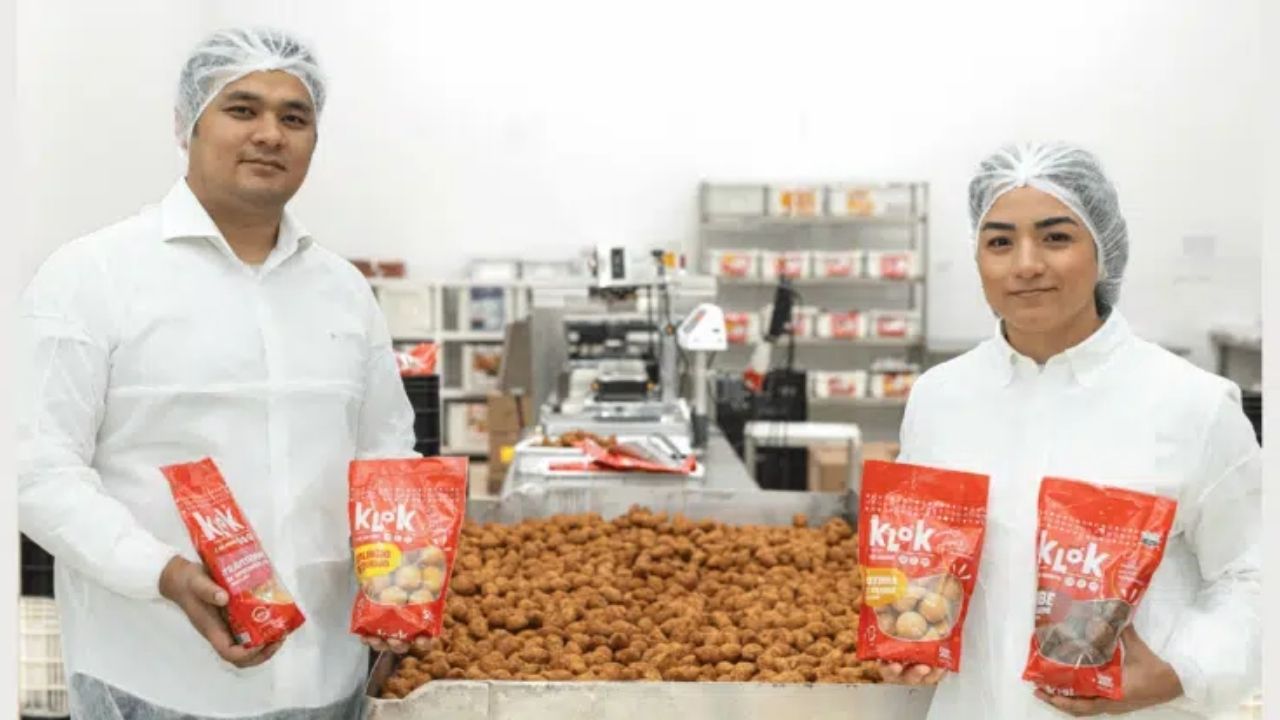
In 2023, according to the report, the siblings founded a second company, Klok. The focus of the new brand became retail and sales in supermarkets, with products like cheese bread and frozen snacks. The proposal follows the interest in practical foods, especially those prepared in air fryers.
The separation between Massa X and Klok also indicates a positioning strategy. While Massa X maintains the industrial structure and relationship with commercial clients and partner brands, Klok targets the end consumer on the shelves. Thus, cheese bread remains at the center of the story but appears in different market fronts.
Monthly production reached 200 tons and factory occupies area of the former farm

At the time of the report published in August 2024, the Massa X factory occupied the area of the family’s former farm, with approximately 3,000 m². The company had more than 70 employees and served over 1,400 clients, including Klok itself and major companies in the sector, such as the Dia supermarket chain, mentioned by PEGN.
The reported volume also draws attention: about 200 tons per month of cheese bread and frozen snacks. Of this total, approximately 60% were related to cheese breads, while the remaining 40% came from other snacks. Even after diversification, the product that originated the business continued to represent the majority of production.
The approximate revenue of R$ 17 million in 2023 reinforces the scale achieved by the company. For 2024, the expectation informed to PEGN was a 20% growth in value, but the provided source does not present the final result of this period. Therefore, the data should be understood as a projection made at the time, not as confirmed revenue.
The trajectory also connects to a broad market. The source mentions an industrial survey by IBGE, from 2020, according to which Brazilian production related to the segment reached about 892.5 thousand tons per year. This context helps explain why a family business managed to find space in such a prevalent product in national consumption.
From a farm in Suzano to a brand that grew by listening to the market
The story of Massa X shows how a business change can be born from a concrete difficulty. The family had a farm, saw a client close its doors, took advantage of the availability of eggs, and transformed the cheese bread into an industrial operation with thousands of clients, high monthly production, and presence in the frozen food market.
The case also draws attention because it does not rely solely on a traditional recipe, but on management decisions: product standardization, listening to clients, portfolio expansion, production for other brands, and family succession.
In your opinion, do family businesses like this grow more because of the tradition of the recipe or the ability to see opportunities in the market? Comment and join the discussion.


Be the first to react!