Portuguese
  Spanish


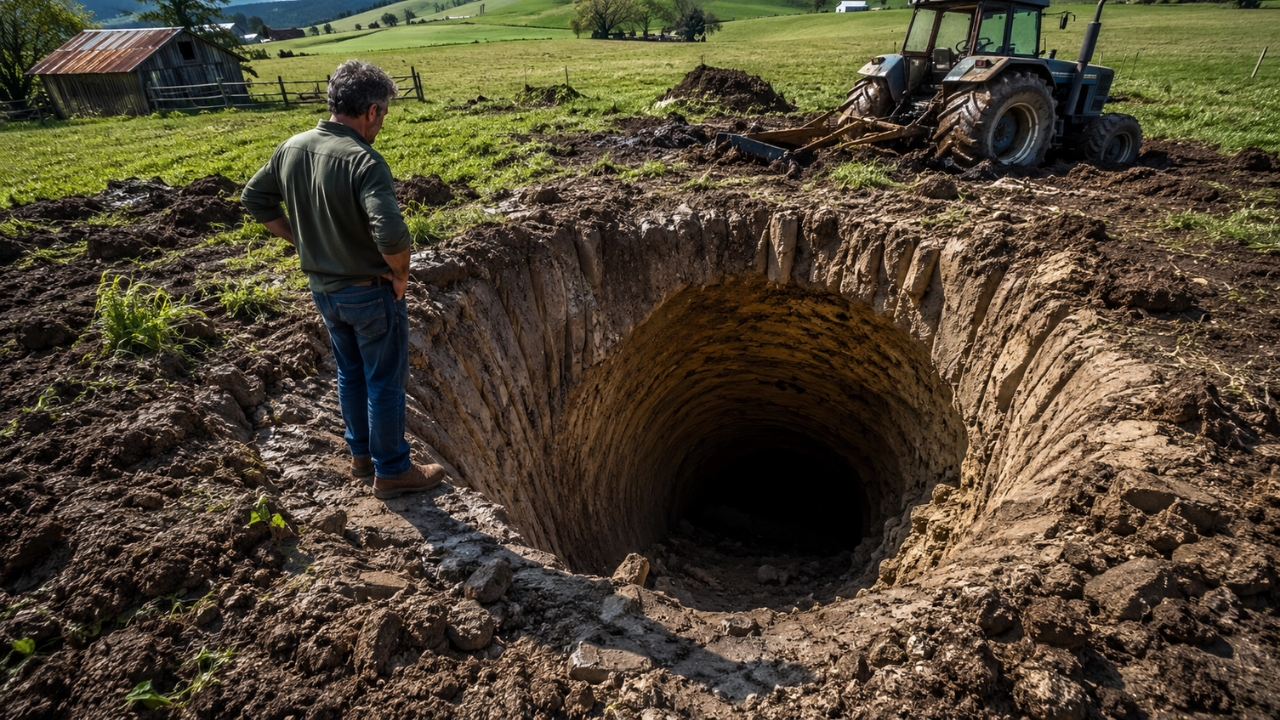

Brazil holds more than a thousand paleoburrows and a case discovered after a tractor sank reveals enormous tunnels made by giant animals before recent human history
A tractor sinking in the middle of a field would already be cause for alarm. But what appeared beneath the soil in southern Brazil seemed like a movie scene: a giant tunnel, with walls marked by deep claw marks, hidden where no one imagined.
The case gained attention because it touches on one of the most intriguing discoveries in Brazilian paleontology. It was not a common cave, nor a forgotten human construction. It was a paleoburrow, a subterranean structure excavated by enormous animals that lived thousands of years before the current cities, roads, and plantations.
The hole in the field that opened a window to the megafauna
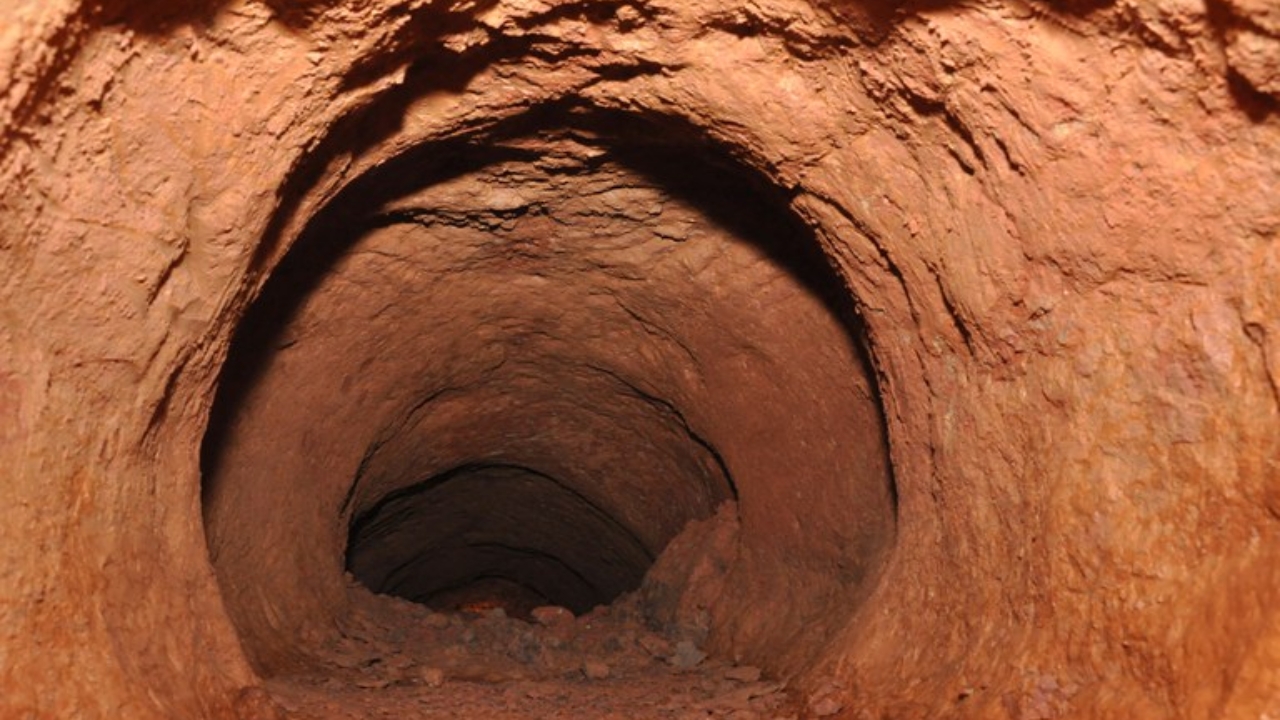
The report published by BBC News Brazil describes that in 2009, a farmer in the south of the country saw the tractor suddenly sink in a cornfield. Upon investigating the site, researchers found a gallery about 2 meters high, nearly 2 meters wide, and approximately 15 meters long.
-
What is a red flashlight used for, after all? See why it is so commonly used at night.

-
He has never read a line of code, but he already knows how to work: the French company UMA presented in Paris the Northstar, its first AI-powered humanoid robot designed for factories and warehouses, capable of copying tasks just by observing an employee in action.

-
A young Kenyan engineer collects plastic waste from the streets and transforms it into robots that translate physics lessons into sign language in real-time, a machine made with old bottles that teaches what was missing to deaf children left out of science.
-
What is the dark substance found in the sand of Ipanema Beach? Civil Police conduct an examination, collect samples of the material, and initiate an investigation to identify the composition, clarify the origin, and verify if there was an environmental crime.



The most impressive detail came from the walls. They held signs that looked like scratches made by large claws, making it clear that the tunnel had not been opened by human tools.
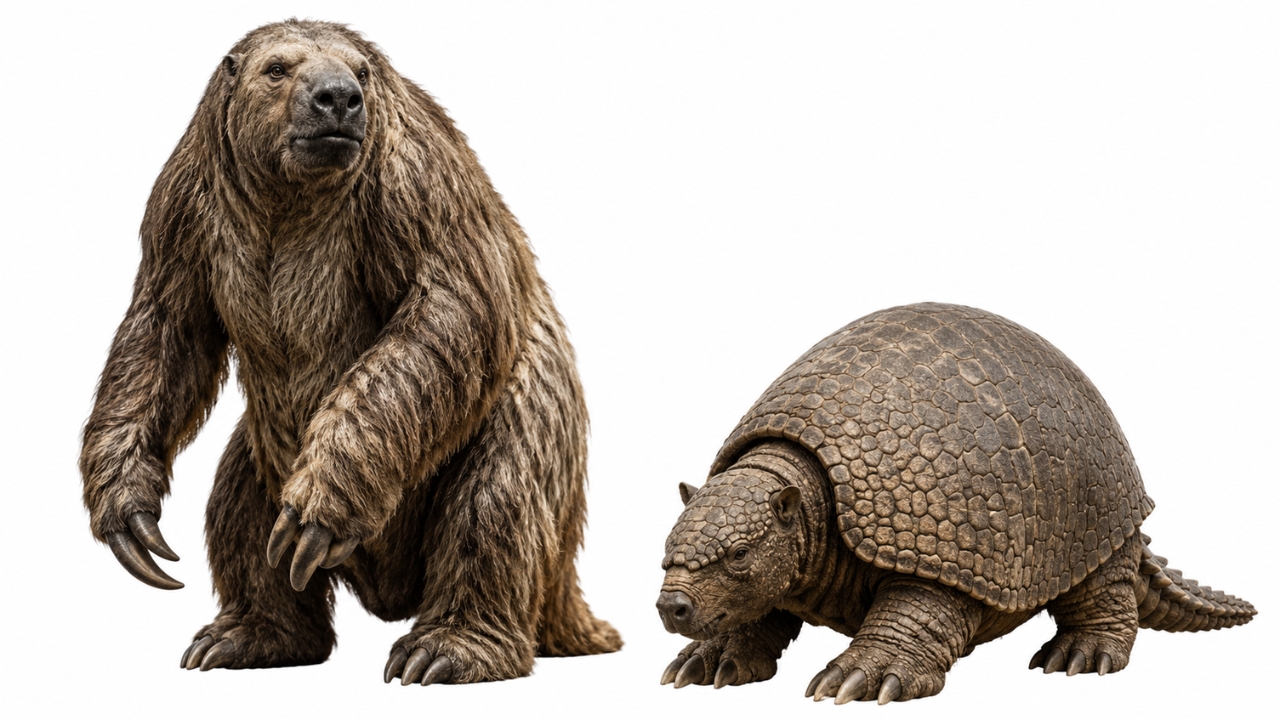
Geologist Luiz Carlos Weinschutz analyzed the find and pointed to an explanation that seems absurd at first glance but makes sense to science: the structure could have been excavated by a giant sloth or a giant armadillo, at least 10,000 years ago.
These animals were part of the South American megafauna, a group of enormous species that inhabited the continent before disappearing. The giant sloths, very different from today’s sloths, could reach frightening proportions, with several tons and a height comparable to that of a large modern terrestrial animal.
Cristal, in Rio Grande do Sul, holds one of the most important records
While the tractor incident became a powerful story on social media, the municipality of Cristal, in Rio Grande do Sul, appears in technical records as a key point to understand this phenomenon.
The Geological Service of Brazil records the Paleoburrow Cristal as SIGEP 048, located in the Longaray region. The site is primarily classified as paleontological and also has speleological interest, precisely because it reveals an underground activity produced by extinct giant mammals.
The Cristal structure was identified in an outcrop near BR 116. The technical survey indicated a gallery with 37 meters in length, an average width of 1.46 meters, and an average height of 0.9 meters. In some points, the width reached 2.13 meters.
And there is a detail that makes everything even more dramatic: researchers indicate that the gallery could have originally been about 70 meters, as approximately 30 meters might have been destroyed during the excavation of a road embankment.
The marks on the walls tell who passed through there
The Paleoburrow Cristal does not only attract attention due to its size. In the same outcrop, 6 crotovinas and 1 paleoburrow were recorded. The crotovinas are paleoburrows filled with sediments, as if the ancient gallery had been buried by time itself.
On the inner walls, studies point to excavation marks, claw marks, and impressions associated with the shell. This set suggests that the Cristal structure may have been produced by a giant armadillo, technically a xenarthran dasypodid.
In other words, it’s not just an ancient hole in the ground. It’s a type of behavioral fossil. The paleoburrow does not necessarily preserve the animal’s skeleton, but it preserves the trace of what it did. It’s like finding a signature left by a vanished giant.
Brazil has the highest known concentration of these tunnels
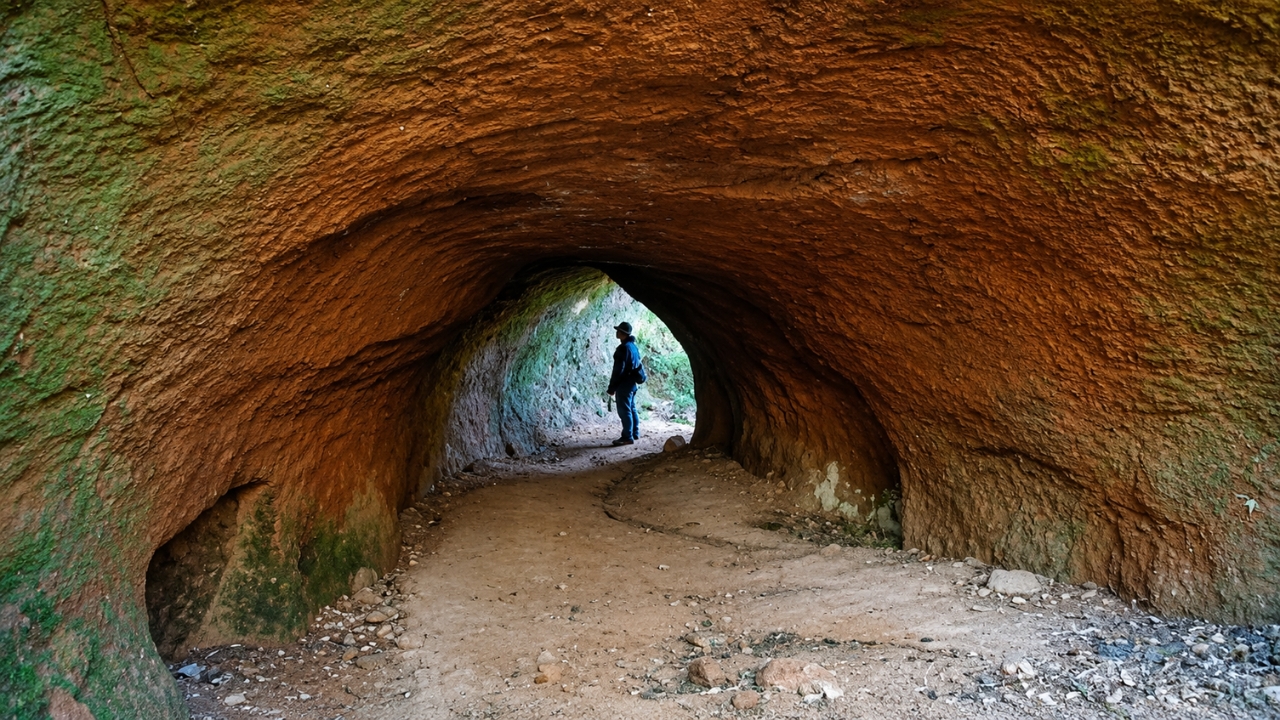
The impact becomes even greater when the case is not isolated. In recent years, more than 1,500 paleoburrows have been identified in the South and Southeast of Brazil. This concentration is regarded by researchers as the largest known in the world for tunnels excavated by giant animals.
The Fapesp Research has already highlighted large structures in Minas Gerais, with galleries reaching 40 meters in length and spacious chambers, some up to 10 meters wide and 4 meters high.
These numbers help explain why the topic fascinates scientists and readers. The paleoburrows show that, long before modern human presence transformed the landscape, the Brazilian underground was already used by enormous animals capable of excavating shelters, corridors, and chambers in altered rocks and sediments.
A hidden heritage that may disappear
The worrying aspect is that many of these records appear by chance, during construction works, road cuts, rural excavations, or natural erosions. The Cristal Paleoburrow, for example, has a degradation risk classified as high, with a score of 370 in the SGB system.
The same record points out vulnerabilities such as proximity to roads, lack of effective legal protection, and absence of access control. In practice, a heritage that has spanned hundreds of thousands of years can be damaged in a short time by construction, vandalism, or simple ignorance.
Therefore, the story of the tractor that sank is not just a viral curiosity. It serves as a warning. Beneath Brazilian fields, embankments, and highways, there may be real marks of a lost world.
Each preserved paleoburrow is a silent proof that Brazil was once a land of giants. And each tunnel destroyed before being studied is a page torn from the country’s natural history.