Portuguese
  Spanish


On Jeju Island, South Korea, the Batdam system uses volcanic stones to reduce strong winds, conserve soil, and protect crops. The walls have openings that allow some air to pass through and prevent excessive pressure. The network reaches 22,000 kilometers in length and has supported local agriculture for over a thousand years.
Farmers on Jeju Island removed volcanic stones that made planting difficult and transformed them into 22,000 kilometers of mortarless walls. The structures allow some air to pass through, reduce wind force, and help prevent soil erosion.
This agricultural system is called Batdam and protects fields of potatoes, barley, carrots, cabbage, radish, beans, and tangerines. The solution is directly linked to soil conservation and the continuation of production on an island marked by strong winds.
The information was released by the FAO, the United Nations agency for food and agriculture. The network of black stone walls has protected Jeju’s cultivated areas for over a thousand years and made it possible to utilize rocks that previously hindered land preparation.
-
Instead of gradually digging a tunnel under a busy railway, engineers built a 155-meter curved structure next to the tracks and pushed 11,000 tons of concrete at just 1.5 meters per hour.

-
They lived four people in an eight-square-meter van until a new pregnancy gave them a nine-month deadline: the 20-square-meter tiny house they built fits two bedrooms, a kitchen, and a living room in a carpentry puzzle.

-
She collected more than 10,000 glass bottles that were going to be thrown away and built a 70-square-meter house in Foz do Iguaçu: the bottle house cost R$ 3,000 and became an example of sustainable construction.
-
A house made of earth built with soil bags from the Arizona desert itself operates 100% off the grid, using solar energy and rainwater, and the hyperadobe technique creates walls that withstand the extreme climate without bricks.


Volcanic stones occupied the fields and made planting difficult
The large quantity of stones scattered across the terrain created an obstacle for farmers. Before cultivating, it was necessary to remove these rocks to make space and prepare the soil.
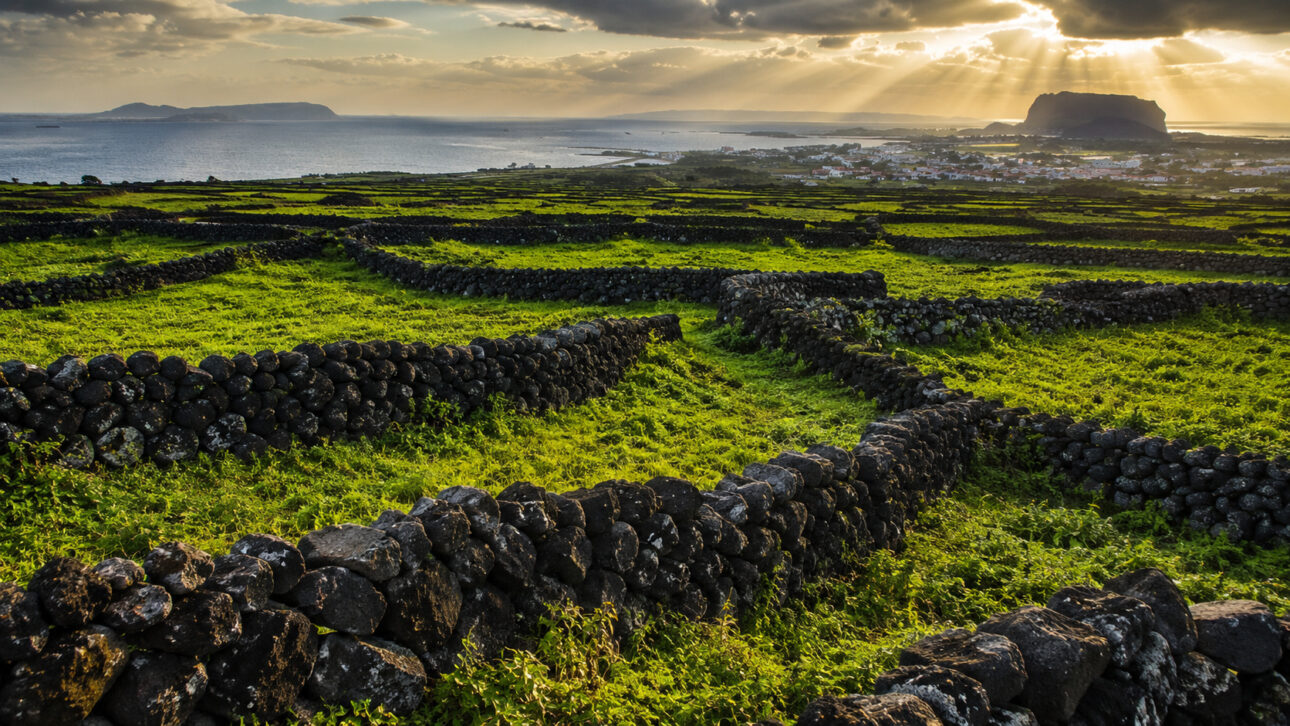
The work solved only part of the problem. After removal, the land remained exposed to the island’s intense winds, which could carry away parts of the fertile layer and reduce the moisture necessary for plant growth.
Instead of taking the stones away, the farmers began to stack them at the edges of the fields. The material removed from the soil formed protective barriers and also began to mark the boundaries between small rural properties.
Mortarless walls reduce wind without blocking all the air
The stones of the Batdam system are placed on top of each other without the use of mortar, a material used to bind bricks and fill openings. Therefore, the walls have visible spaces between the rocks.
These gaps do not represent a construction flaw. They are an essential part of the structure’s functioning, as they allow a portion of the wind to pass through the wall at a reduced speed.
A completely closed wall would receive greater pressure and could topple. The porous wall better distributes this force, allows air to pass through, and reduces the direct impact on the ground and crops.
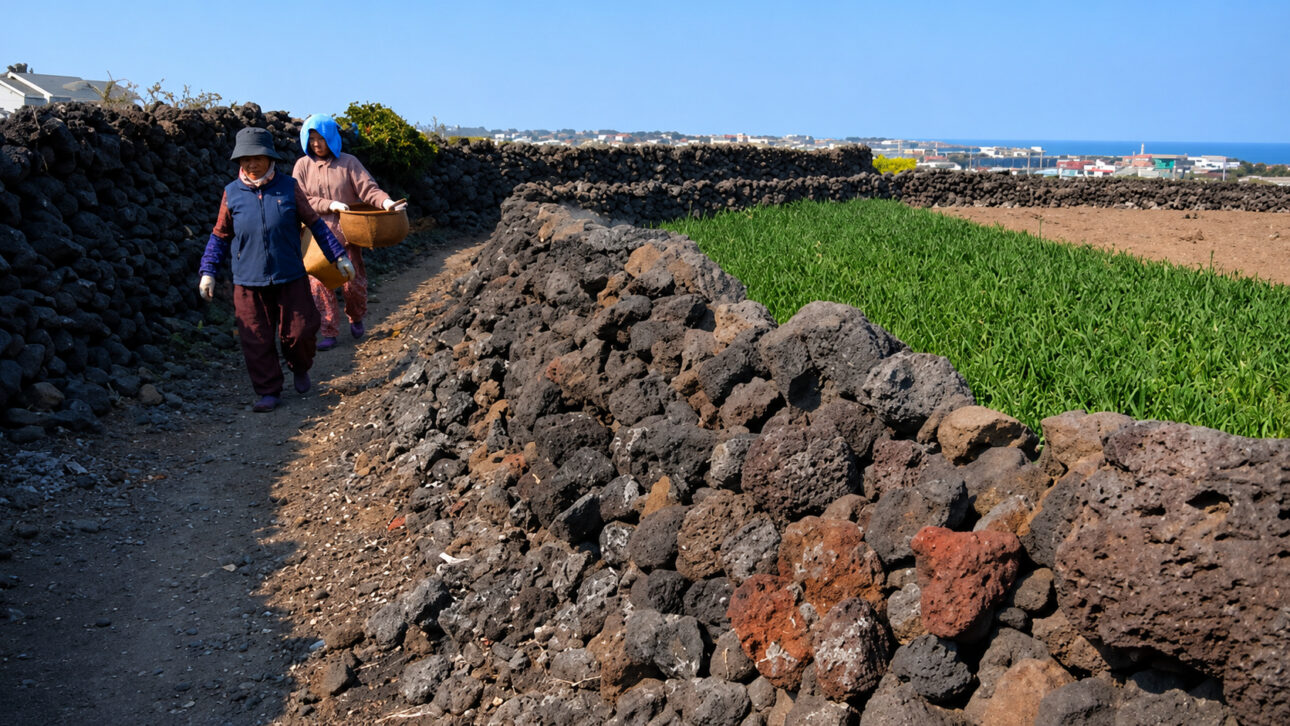
The result is a simple barrier that reduces wind-caused erosion, conserves some of the soil’s moisture, and provides better conditions for seeds to start growing.
Black dragon crosses the agricultural landscape of Jeju Island
Seen from above, the walls form dark, irregular lines that spread across the fields. The color of the volcanic stones and the continuous design of the network gave the Batdam system the nickname black dragon.
The total extension reaches 22,000 kilometers. This distance would be enough to cross Brazil between its northern and southern extremes repeatedly, although the Jeju network is formed by numerous sections distributed among different properties.
The walls also organize the occupation of rural space. In addition to reducing wind force, they separate cultivated areas and help keep animals away from the crops.
22,000-kilometer network protects agriculture for over a thousand years
The FAO, the United Nations agency for food and agriculture, records that the system has withstood natural disasters for over a thousand years. The long-standing presence of the walls shows that the structure remains linked to the productive use of the land.
The Batdam does not function solely as a division between properties. Without this protection, the fields would be more vulnerable to soil loss, water evaporation, and wind damage during the early stages of planting.
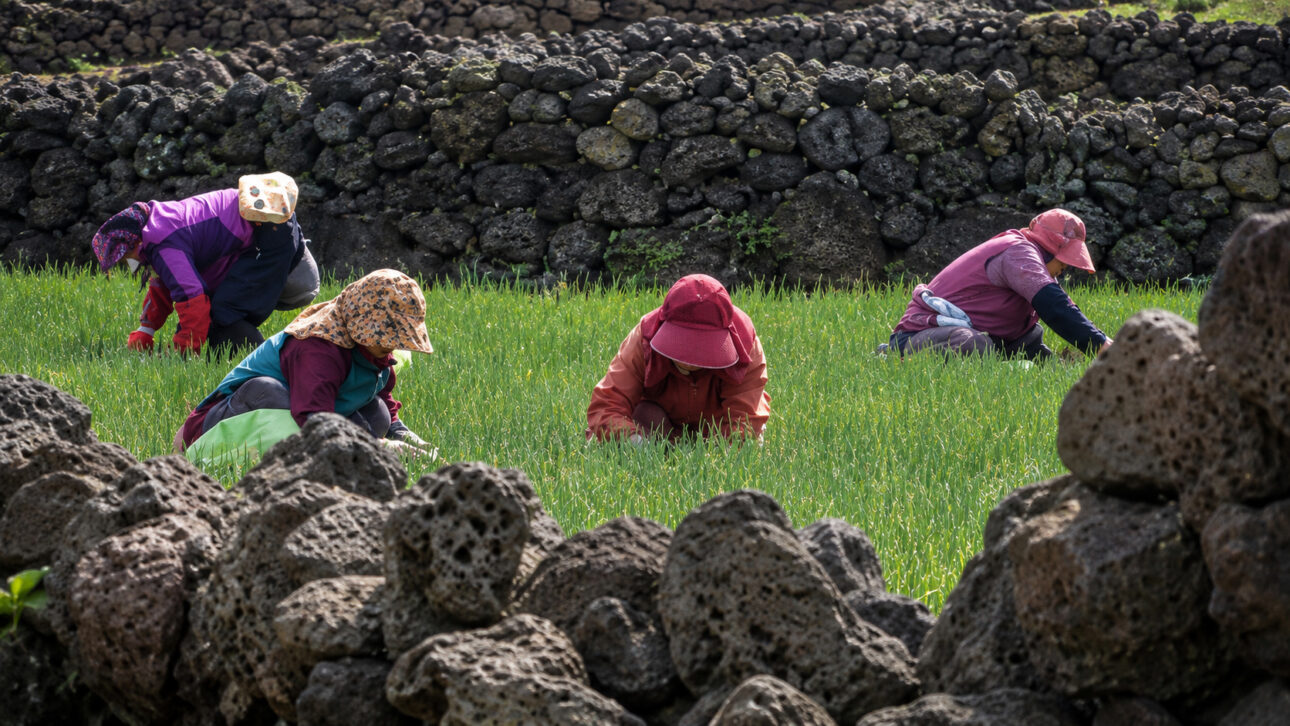
The network has become part of the physical foundation of dryland agriculture in Jeju. Stone, field, and cultivation have come to work together in a solution created from the island’s natural conditions.
Potato, barley, carrot, and tangerine grow between the walls
The fields protected by the walls receive crops such as potato, bean, barley, carrot, cabbage, and radish. Tangerine is also part of the island’s agricultural production.
The reduction of wind helps conserve the soil and favors the growth of plants. This protection is important when the seeds are beginning to grow and still have little resistance.
The walls also reduce moisture loss caused by intense air circulation. In this way, the system helps maintain more suitable conditions for cultivation without relying on a closed wall.
The importance of Batdam goes beyond the visual value of the landscape. It is a rural engineering structure linked to crop protection and the maintenance of agricultural activity.
Urbanization and mechanization put parts of the walls at risk
Urban expansion and the mechanized reorganization of properties threaten the conservation of the walls. The need to make room for machines may lead to the removal of sections of the Batdam system.
This removal facilitates the movement of equipment but also leaves the land more exposed. Without the barriers, the wind once again directly hits the soil and the planted crops.
The conflict involves two agricultural needs: expanding the use of machines and preserving a structure that offers protection against wind and erosion. Indiscriminate removal can eliminate a solution that continues to fulfill a productive function.
Urbanization exerts another pressure by replacing rural areas with new land uses. When the fields disappear, the walls also lose space, reducing a network built and maintained over many generations.
The Batdam system transformed stones that hindered planting into a structure capable of protecting the soil. Its gaps reduce wind speed, while the walls conserve the land and organize production areas.
After more than a thousand years, the 22,000 kilometers of volcanic walls continue to show how a simple construction can serve agriculture without ignoring the natural conditions of the place.
Can mechanization advance without destroying old agricultural structures that still work? Leave your opinion in the comments and share this story.