Portuguese
  Spanish


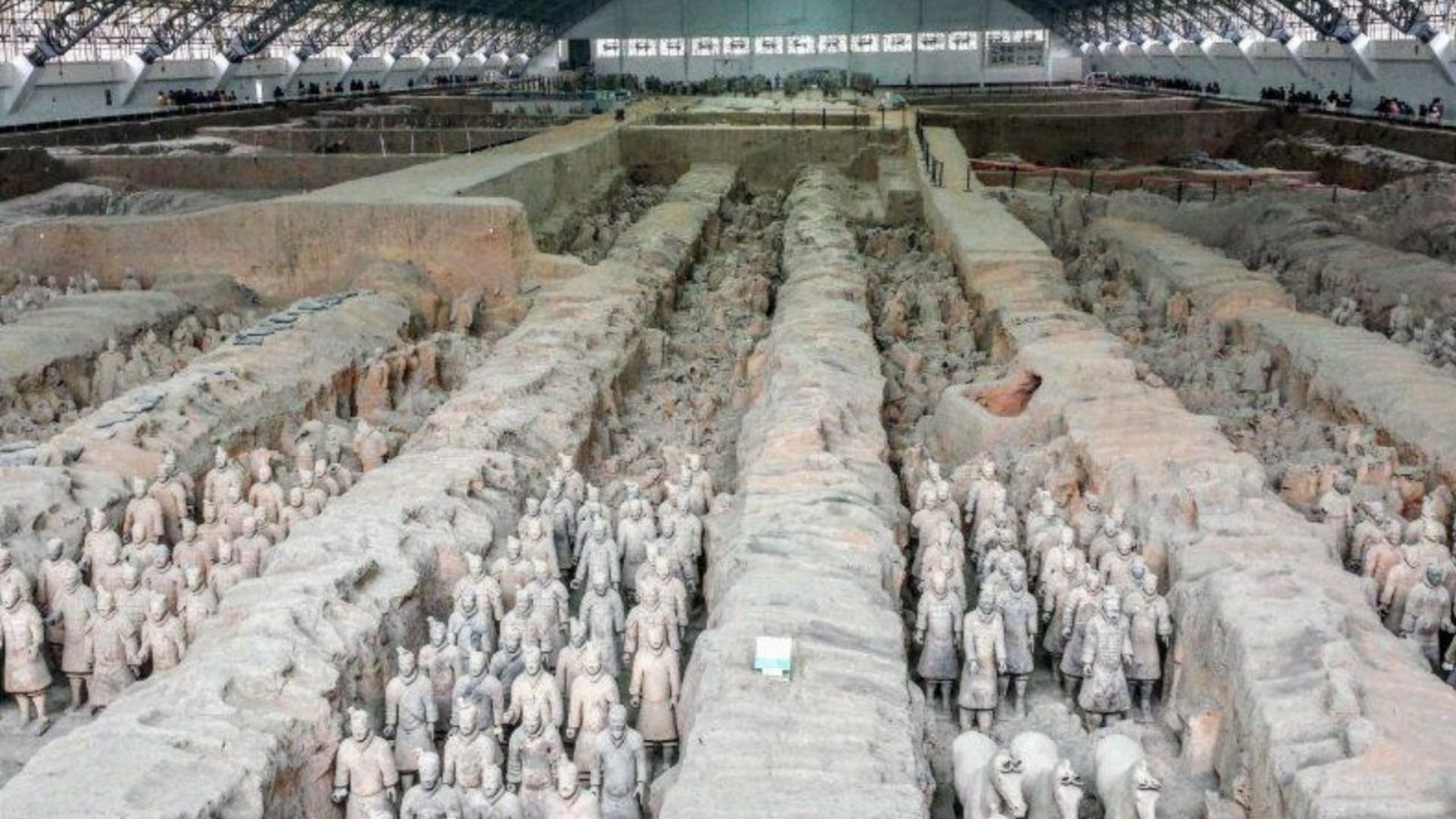


Farmers searching for water during a drought in China discovered the Terracotta Army in 1974, with more than 8,000 warriors buried over 2,200 years ago.
In March 1974, farmers in the province of Shaanxi, in northern China, were trying to find water to combat the drought when they hit something very different from what they expected. Instead of a common well, they found fragments of a clay figure that would lead to one of the greatest archaeological discoveries of the 20th century. According to National Geographic Education, on March 29, 1974, farmers digging a well near Xi’an found pieces of a clay statue. The discovery brought archaeologists to the site and revealed an immense funerary complex linked to Qin Shi Huang, the first emperor to unify China.
What was buried beneath the soil was not an isolated piece. It was an entire army built over 2,200 years ago to accompany the emperor in the afterlife. Today, the site is recognized as one of the most important archaeological discoveries on the planet.
The search for water revealed one of the greatest archaeological discoveries in history
The strength of this story lies precisely in its simple origin. It was not a planned scientific mission nor sophisticated technology that found the Terracotta Army. It all started with rural workers trying to solve an immediate survival problem: the lack of water.
-
Creative Uses for Toilet Paper Rolls That Will Change Your Perspective

-
Crab Trapped in Plastic Bottle for 62 Days Near Okinawa Highlights Little-Known Impact of Marine Pollution on Small Animals
-
Esperanza’s Bamboo Barrier in Oaxaca Redirects River and Reduces Erosion by 85% in Five Years

-
Family Builds Homemade Wind Turbine to Power Off-Grid Home, Video Reaches 555,000 Views on Ngô Thị Huyền’s Channel




According to National Geographic Education, the fragments found in the field paved the way for the archaeological investigation of a vast underground complex. From there, it became clear that the land hid a monumental structure, buried for centuries and preserved beneath the earth.
The episode transformed a common agricultural field into one of the most emblematic points of world archaeology. What began as a dig out of necessity ended up revealing a direct window into imperial China.
More than 8,000 terracotta warriors were buried to protect Qin Shi Huang
According to UNESCO, the mausoleum of the first emperor of China is surrounded by almost 200 auxiliary pits containing thousands of statues, as well as horses, chariots, and weapons. These sculptures are part of a funerary complex created to mirror the power of the empire of Qin Shi Huang in eternity.
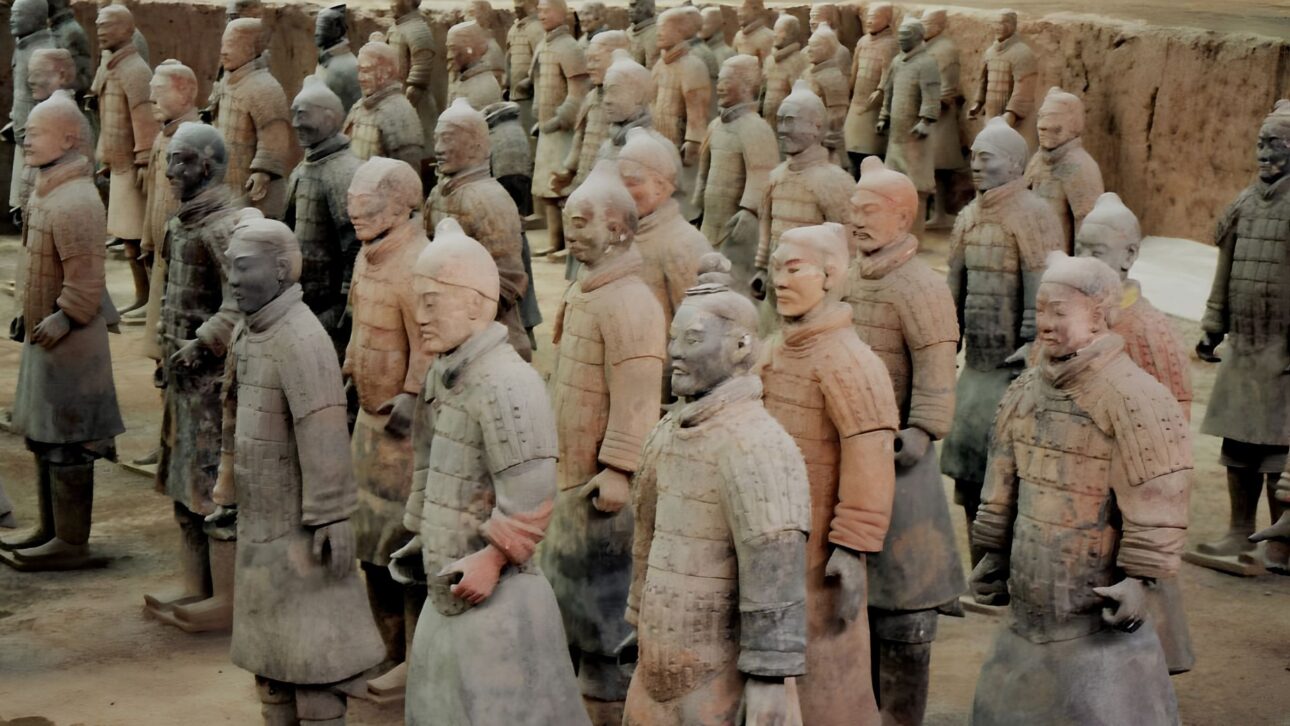
The most well-known number associated with the site is more than 8,000 terracotta warriors, organized in military formation. The impact of the discovery lies not only in the scale but also in the level of detail. The figures were produced to represent real soldiers, with differences in face, hairstyle, posture, and military position.
According to UNESCO, the sculptures, horses, chariots, and armaments are masterpieces of realism and have enormous historical value. This explains why the Terracotta Army has become one of the most recognized images in world archaeology.
Qin Shi Huang built an empire and took his military order to the grave
The underground army was created to accompany Qin Shi Huang, the ruler who unified China and laid the foundations of the Chinese imperial state. The mausoleum was not conceived as a simple tomb but as a monumental complex intended to reproduce the emperor’s authority even after death.
According to UNESCO, the site was conceived as a kind of reflection of the imperial capital, with structures and pits distributed around the main tomb. This shows that the funerary project aimed not only to honor the ruler but to symbolically reconstruct his power on a subterranean scale.

This context helps to understand why the discovery caused such an impact. The Terracotta Army does not represent just funerary art. It represents a complete vision of empire, authority, and eternity built in clay, metal, and underground architecture.
Much of the mausoleum of the first emperor of China remains closed
Despite the global fame of the Terracotta Army, much of the burial complex has yet to be fully excavated. According to National Geographic Education, the central portion directly linked to the emperor’s remains remains unopened.
The caution exists because sudden exposure to air can damage extremely sensitive materials. In archaeological sites of this type, paintings, coatings, and compounds preserved for centuries can rapidly deteriorate when removed from the environment in which they remained isolated.
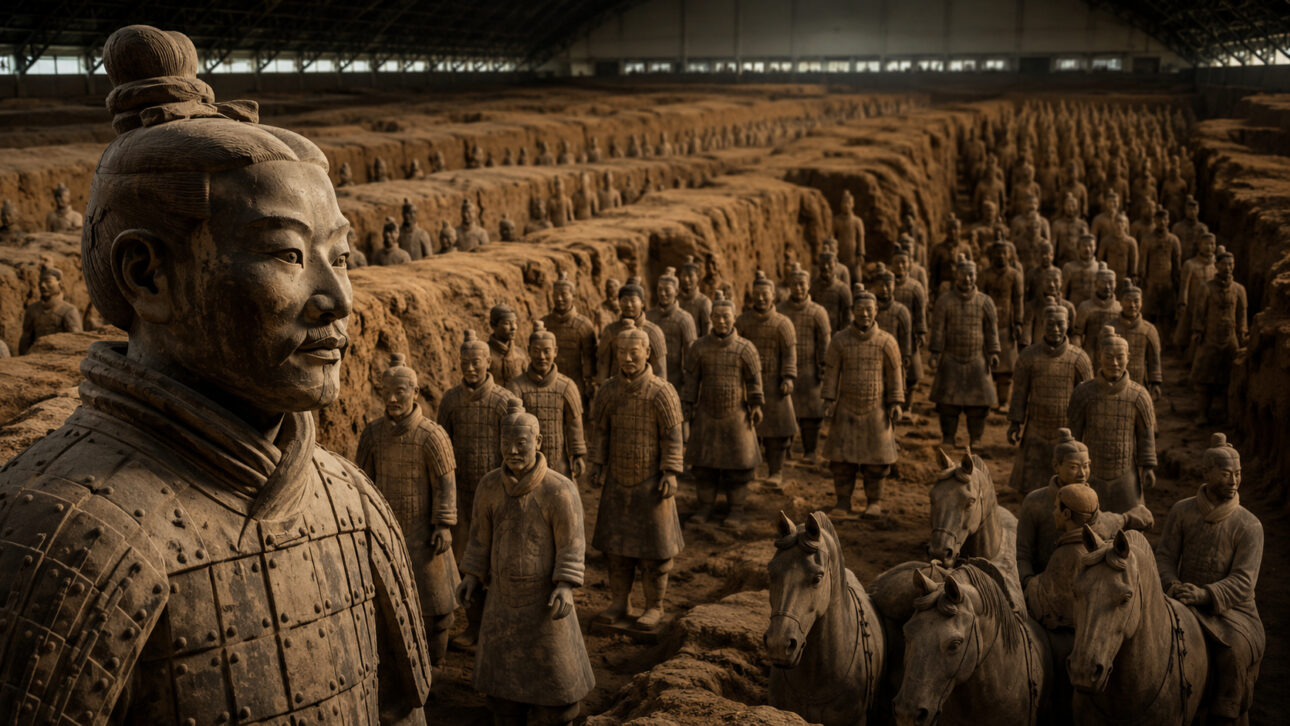
This means that one of the world’s most famous discoveries is still far from revealing everything it holds. The site continues to be studied, and the decision to keep areas closed shows that preservation today weighs as much as excavation.
The Terracotta Army remains one of the most impressive archaeological sites on the planet
What makes this discovery so fascinating is the combination of scale, chance, and historical importance. A group of farmers digging for water ended up finding an army buried for more than two millennia, linked to the man who unified China and built one of the most important mausoleums in history.
According to UNESCO, the site still holds thousands of elements not fully revealed. This means that the Mausoleum of the First Qin Emperor remains not only a monument of the past but also an active source of research and new archaeological questions.
In the end, the story of the Terracotta Army remains powerful because it unites immediate human need and imperial past in a single instant. The excavation carried out because of the drought did not find water but brought to light one of the most enduring images of ancient civilization. human history.