Portuguese
  Spanish


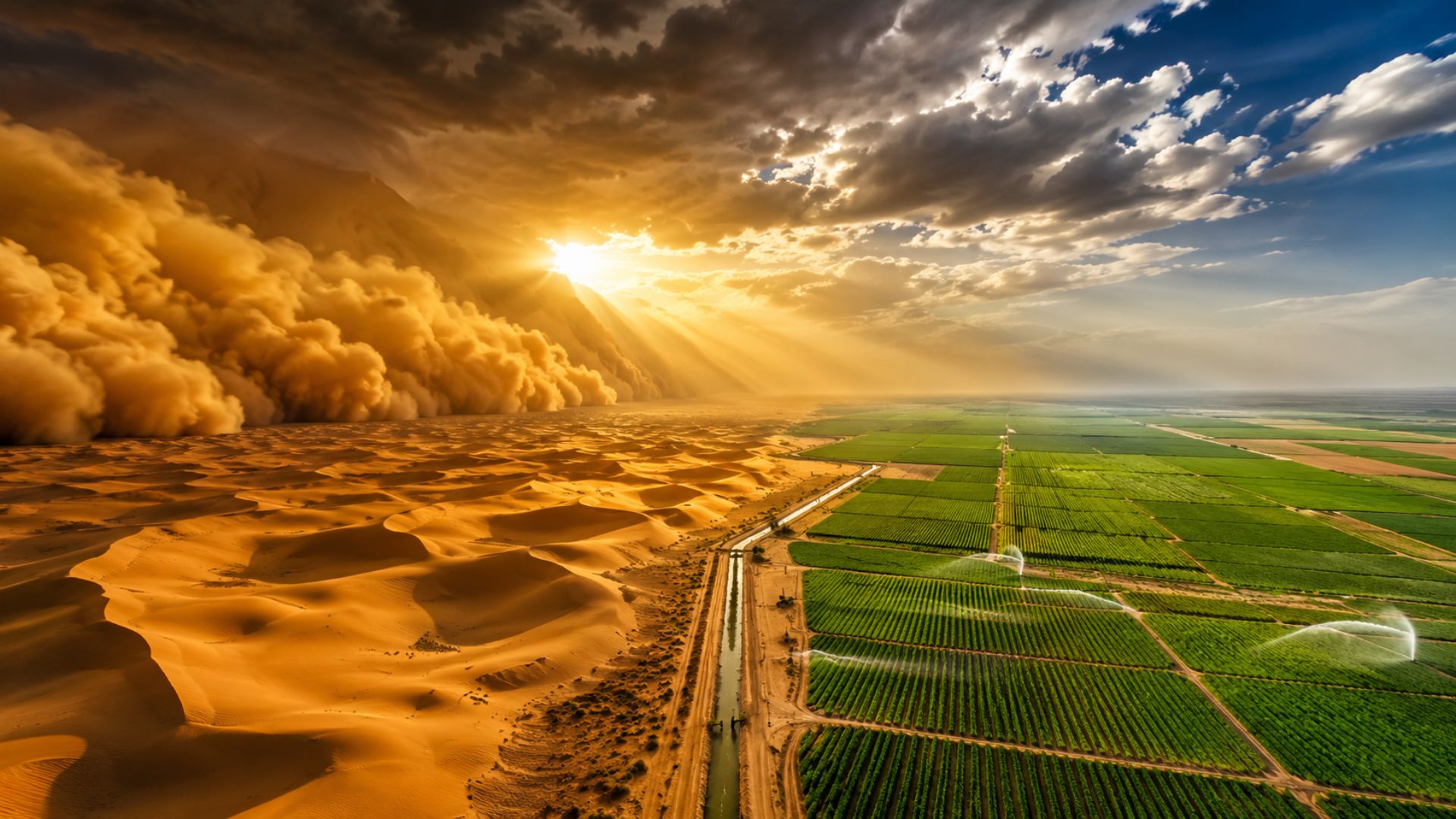


Without agricultural training, the young Chinese law graduate returned to the desert in 2019, tested 63 forage varieties, and tamed the sand with central pivot sprinklers. Today he cultivates alfalfa and wheat, but the plan to reach 20,000 hectares and produce grains is still an ambition.
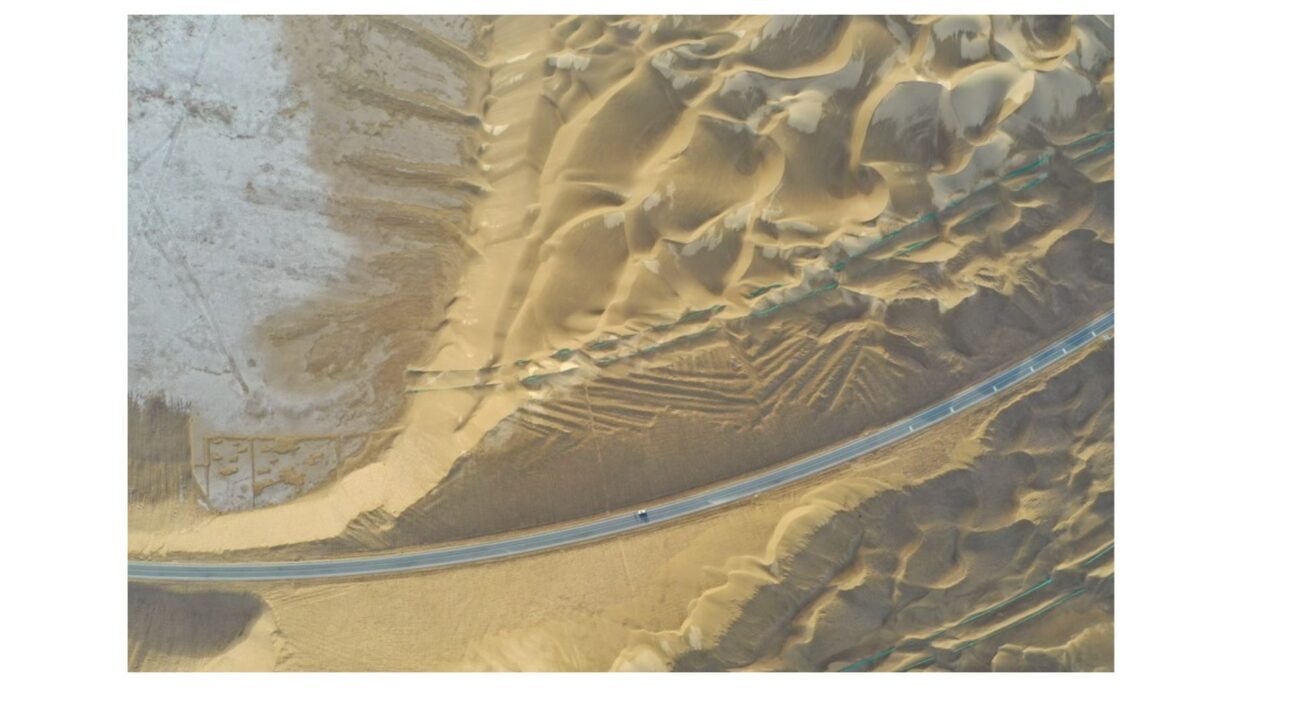
The young Chinese Xu Zhaoyang, 32, spent years doing what locals said was impossible: transforming part of the Taklimakan desert into farmland, where he now harvests alfalfa up to six times a year on more than 1,530 hectares. The report is from the newspaper China Daily, which followed the journey of someone whose father said he wouldn’t succeed and whose first crop was buried by a sandstorm.
The story mixes failure, stubbornness, and soil science. According to China Daily, Xu returned to the Hotan region, at the southern edge of the desert, in 2019, right after graduating in law and with no experience in agriculture. He started with just over 20 hectares of saline and alkaline land, and today he is known in the region as the “Grass King of Hotan,” leading a property that now includes almost 670 hectares of alfalfa and more than 530 hectares of wheat.
From Law to the Desert: A Farmer Without an Agronomy Degree
![Xu Zhaoyang gives an interview about the treatment of the Taklimakan Desert in Hotan, in April. [Photo provided to China Daily]](https://clickpetroleoegas.com.br/wp-content/uploads/2026/06/Pai-dizia-que-era-impossivel-e-uma-tempestade-enterrou-1290x726.jpg)
The young Chinese arrived at farming through an unlikely path. Xu has no agronomy training: at Anhui University of Technology, he studied civil engineering for two years, switched to management, and then prepared for a master’s in law, completed in 2018. Still, the desert ran in his veins, as at 10 years old, in 2005, he moved to the Xinjiang Uygur Autonomous Region with his parents, coming from Henan province.
-
13-Year-Old Raises Funds to Build Well, Transforming Lives in Cambodian Community Lacking Clean Water

-
Man with Metal Detector Finds Medieval Silver Seal in England, Uncovers 2,000-Year-Old Roman Gem with ‘Richard’s Secret’

-
Thailand Converts 8 Tons of PET Bottles into 3,500 School Backpacks, Showcasing Circular Economy with Over 40 Factories Involved

-
Mysterious Bats Spotted in Paris’s Père Lachaise Cemetery, Drawing Tourists to the “Vampire Cemetery”



Childhood memories pushed the decision. He remembers the black sandstorms that turned day into night, forcing families to turn on lights indoors at midday, and the habit of shaking sand from clothes every night. Driven by the desire to do something for his city’s environment, he returned in 2019 and lived alone for more than two years in a simple shed at the southern tip of the desert, digging drainage channels and washing salt from the soil by hand.
The storm that buried everything and the turnaround
The hardest blow came in May 2020. The first crop of seedlings had just opened two green and tender leaves when a wall of sand howled through the desert for 12 consecutive hours. The next morning, months of work were buried. “When I ran to the field the next morning, everything was buried,” Xu recounted, remembering that he lost everything at once.
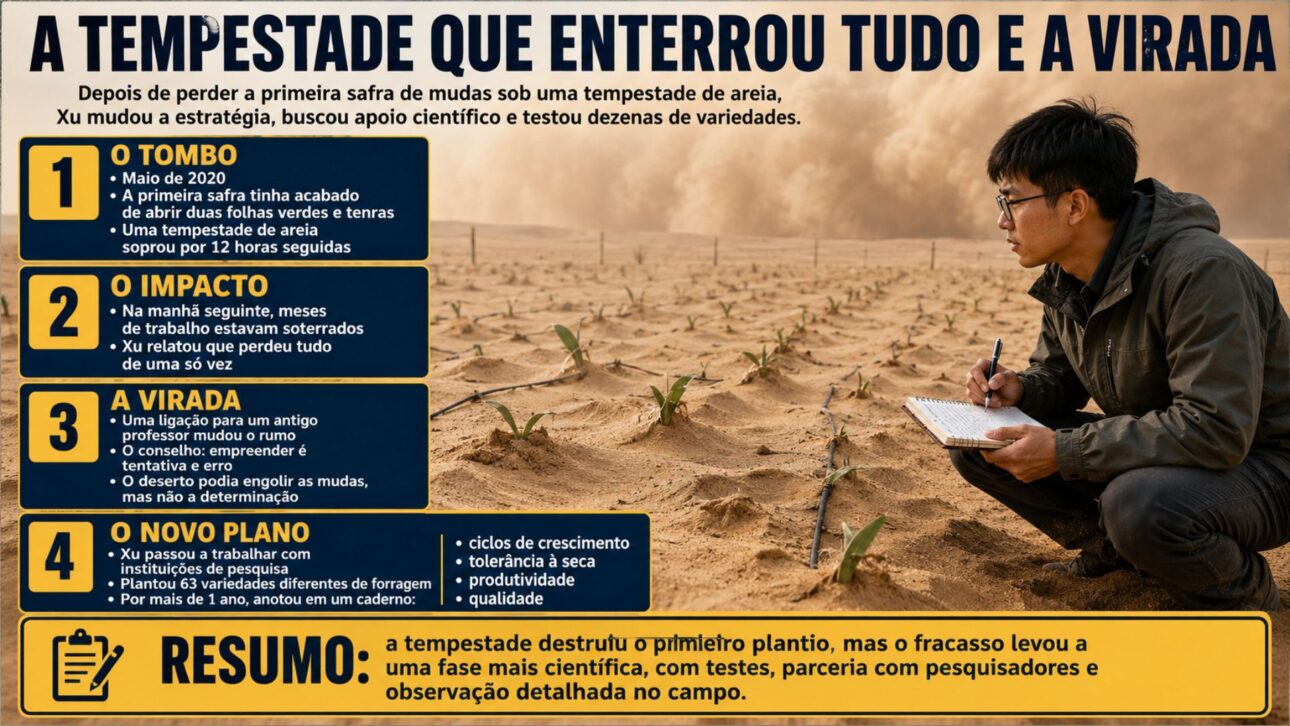
A call to a former professor changed the course. The teacher reminded the young Chinese that he himself had written, in his thesis, that entrepreneurship is a constant process of trial and error, and that the desert could swallow the seedlings, but not the determination. Reinvigorated, Xu began working closely with research institutions, planted 63 different varieties of forage, and for over a year, carried a notebook everywhere, noting growth cycles, drought tolerance, productivity, and quality.
Alfalfa, water, and mechanization
The answer to the shifting soil came from a legume. The young Chinese identified alfalfa as the ideal plant because its root nodules fix nitrogen and enrich the soil, while the deep roots hold the sand and allow harvesting for seven years from a single planting. Under the intense sun of southern Xinjiang, he now makes five to six harvests a year.
Water was the biggest obstacle until the arrival of technology. Traditional drip irrigation failed in the sandy soil because evaporation was too fast, so Xu adopted large-scale central pivot sprinkler systems, with a single person managing the irrigation of 1,330 to 2,000 hectares. Mechanization did the rest: a machine sows almost 70 hectares a day, and the harvesters cut, collect, bale, and load almost without human hands, with a net profit from alfalfa between 10,500 and 12,000 yuan per hectare.
The father who doubted and the plans for the future
The greatest resistance came from within the home. The father, Xu Daobin, had opposed his son’s plan to venture into desert agriculture, warning that even an experienced farmer would struggle there and that the family had worked hard to send the son to university in search of a stable job. “I said he wouldn’t succeed. Now he really has,” the father acknowledged. The young Chinese man’s property has grown to over 1,530 hectares, with nearly 670 of alfalfa and more than 530 of wheat.
The next goals are much larger, but still in the project phase. Xu plans to expand the planting area to 13,300 or even 20,000 hectares in the next three to five years and, in the more distant future, transform the Taklimakan into grain fields to bolster the country’s rice production. He assures that the established machinery and technology make this feasible, although the numbers still depend on the coming years. For him, what grows in the desert is not just alfalfa, but the roots of his generation.
The young Chinese Xu Zhaoyang, a law graduate without any agronomy degree, spent years transforming the saline land of the Taklimakan desert, near Hotan, into farmland, overcoming a sandstorm that buried his first crop in 2020 and his own father’s skepticism, and now harvests alfalfa up to six times a year on more than 1,530 hectares, along with over 530 of wheat. The turnaround came with 63 tested varieties, central pivot irrigation, and strong mechanization, in an operation he describes as rarely profitable for the desert. The larger plans, to reach 20,000 hectares and cultivate grains for national rice production, are still ambitions, but the farmer sums up the effort as planting the roots of his generation in what was once wasteland.
And you, would you bet against someone everyone said would fail, or do you believe that persistence and technology can indeed tame a desert? What makes the difference between turning sand into farmland and giving up halfway? Share your opinion and exchange ideas with other readers about agriculture and innovation, respecting different views.