Portuguese
  Spanish


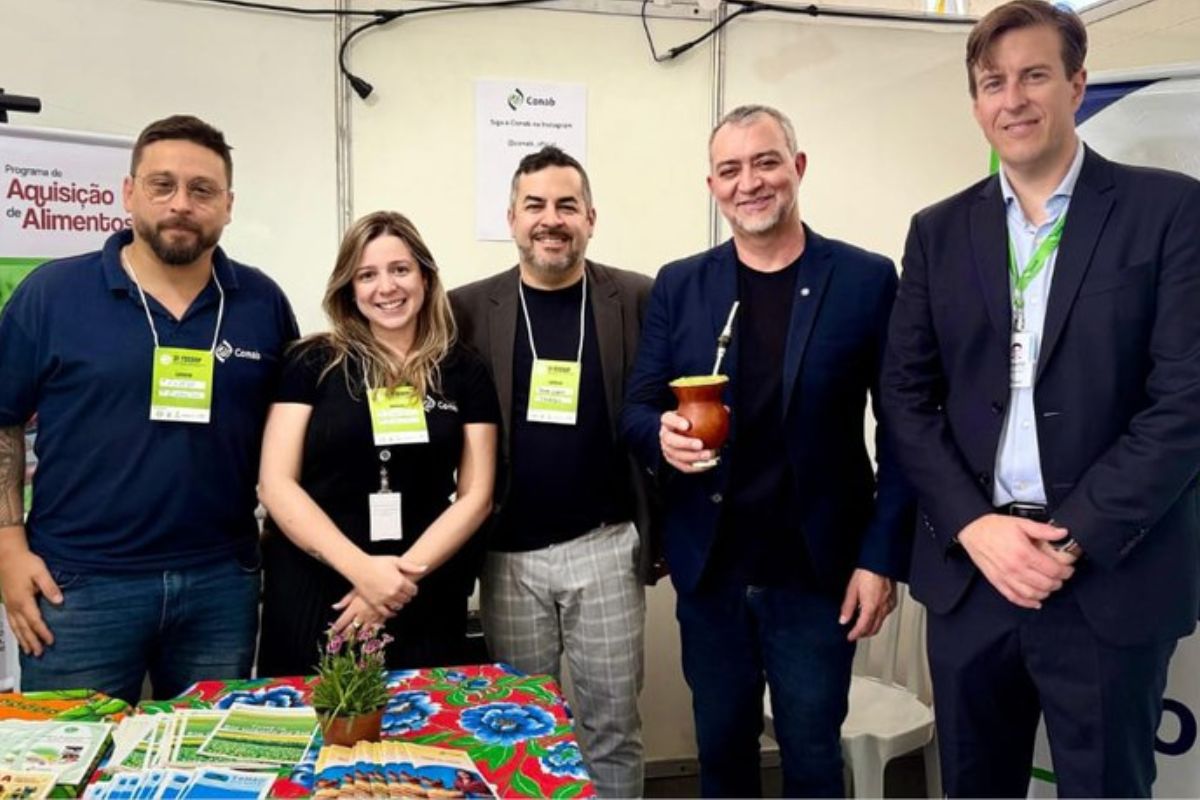

At This Meeting, Conab Reinforces the Strategic Role of FEICOOP 2025 by Supporting Food Acquisition Programs, Strengthening Cooperativism, and Promoting Food and Nutritional Security
The 31st FEICOOP 2025 gained prominence on the national scene by bringing together farmers, cooperatives, and social movements from October 10 to 12 at the Dom Ivo Lorscheiter Solidarity Economy Reference Center in Santa Maria (RS).
The participation of the National Supply Company (Conab) marked a concrete commitment to family farming and the solidarity economy, according to an article published.
With actions involving the PAA (Food Acquisition Program) and ProVB (Counter Sales Program), the state company sought to strengthen relationships with cooperatives, associations, and rural producers.
-
Producer receives news and had to cull almost the entire herd, bounced back with the help of compensation, and is now producing 450 liters of milk per day in SC.

-
Quail Eggs Reveal a “Secret Code” on Their Shells Explaining Unique Patterns and Colors

-
Rare Tropical Fruit Canistel, with Egg Yolk Color and Caramel Flavor, Gains Interest from Researchers and Small Producers in Brazil
-
Farmer Revives Arid, Abandoned Land in Brazil’s Bahia into Thriving Forest, Demonstrates How ‘Syntropic Agriculture’ Can Transform Rural Futures


The event mobilized 550 exhibitors from the South and Southeast regions, as well as representatives from Argentina, Uruguay, and Paraguay, attracting around 100,000 visitors.
Through debates, workshops, and panels, the audience at FEICOOP 2025 was able to learn about public policies with social and environmental impacts in rural and urban areas.
Sustainable Public Policies for Family Farming at FEICOOP 2025
During the official opening of the fair, Conab President Edegar Pretto highlighted Conab’s return as an instrument for executing public policies on family farming, particularly through the PAA, benefiting farmers, settlers, indigenous peoples, and quilombola communities.
He emphasized that “millions of reals” are already being directed toward purchasing food from family farming, ensuring that these products reach the tables of people in vulnerable situations.
The strategy stipulates that each cooperative or association benefitted by the PAA project must ensure, at a minimum, 50% female participation.
Today, according to state data, 80% of PAA purchases are made from rural women workers.
Through these measures, Conab strengthens family farming and enhances the effectiveness of policies aimed at ensuring income, dignity, and autonomy.
Food Acquisition Program and Support for Cooperatives
At Conab’s booth at the 31st FEICOOP 2025, technicians clarified the food acquisition program and ProVB, outlining deadlines, marketing models, and eligibility criteria for cooperatives and associations.
Conab’s presence at the fair emphasized its role in Rio Grande do Sul, a state of great importance for the national agricultural sector. Direct guidance was provided to local producers and entities on accountability, legal requirements, and marketing mechanisms.
There were 80 activities throughout the event, such as seminars and discussion rounds, to enhance participants’ knowledge.
This direct approach strengthened the participation of social organizations in the field and valued cooperativism in local production chains.
Sustainable Solidarity Economy and Territorial Cooperation
With the motto “Building Integral Ecology in the Face of Climate Emergencies,” the FEICOOP 2025 emphasized models of sustainable solidarity economy that value traditional knowledge, productive diversification, and agroecological practices.
In the institutional space, Conab highlighted the importance of its commitment to sovereignty and food and nutritional security, supply, and support for small rural producers.
The 31st FEICOOP 2025, an event internationally recognized since 1994, is acknowledged as a reference in solidarity economy in Brazil.
This edition attracted delegations from Latin America, drawing 100,000 visitors and establishing itself as a platform for coordination, integration, and new partnerships.
Conab increased its visibility and reinforced its mission of distributing public power in rural and urban areas.