Portuguese
  Spanish


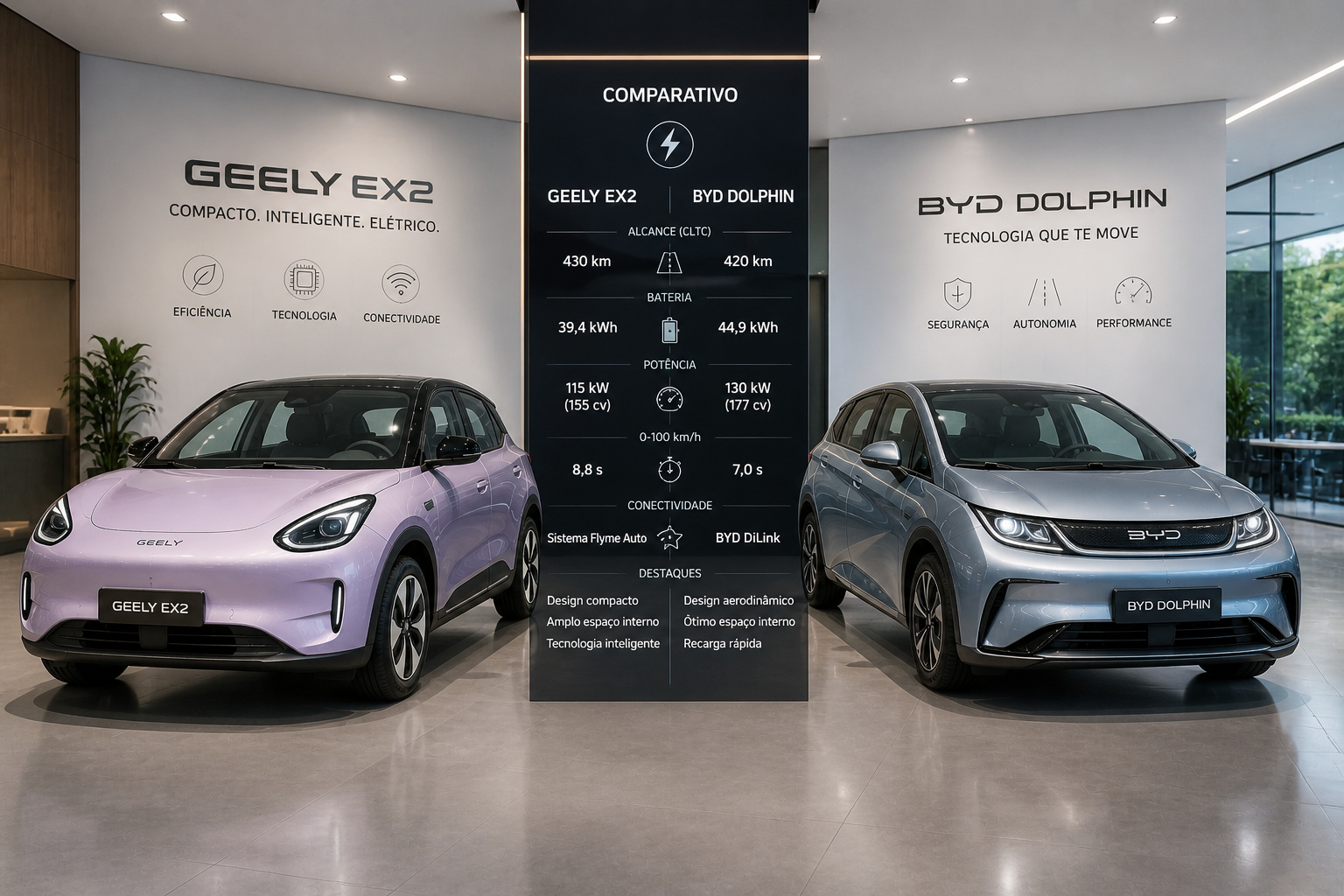

With fierce competition between traditional and electrified models, ranking reveals important changes in consumer behavior and points to new trends in the national market
The Brazilian automotive market once again showed its strength and dynamism in April 2026. The latest new vehicle registration data reveal a competitive scenario, with the growth of electrified models, the consolidation of historical leaders, and important changes in consumer preferences.
The information was released by “K.Lume Consultoria”, based on the official sales survey for the month, indicating not only the best-selling cars in Brazil, but also a silent transformation in the sector. Analyzing the numbers, it is evident that the dominance of some models remains strong, but new disputes are beginning to gain prominence.
Fiat Strada extends lead and dominates with significant advantage
First of all, it’s impossible to ignore the performance of the Fiat Strada, which remains absolutely at the top of the ranking. In April 2026, the pickup truck registered an impressive 14,905 units sold, opening up a lead of over 6,500 units compared to the second place.
-
Brazilian Factory Restores Truck Engines and Parts, Reducing Raw Material Use by Up to 85% After 80 Years in Business

-
British Marines Set Record by Changing Ford Escort Engine in 42 Seconds, Unbroken for 40 Years

-
BYD Owners in Brazil Raise Concerns Over Warranty After 87,000 km, Two Repairs in Three Days, and Over $500 in Costs

-
Classic Volkswagen Beetles of Brazilian Presidents to Swap Museums in Historic Partnership



Right behind is the Volkswagen Polo, with 8,367 units, consolidating its position as the most relevant hatchback in the country at the moment. However, the difference to the Strada reinforces the dominance of Fiat’s pickup truck, which continues to be the preferred choice among consumers looking for versatility and cost-effectiveness.
Meanwhile, the battle for third place was extremely fierce. The Fiat Argo secured the position with 7,991 units, surpassing the Chevrolet Onix, which closed the month with 7,847 units — a difference of less than 150 cars. This balance shows how competitive the compact hatchback segment remains.
Subsequently, the Volkswagen T-Cross (7,810) managed to react in the last days of the month and regained the lead among SUVs and crossovers, surpassing the Hyundai Creta (7,649), which had been ahead until the final stretch of April.
Furthermore, the top 10 was completed by well-established models in the market: BYD Dolphin Mini (6,880), Hyundai HB20 (6,764), Volkswagen Saveiro (6,457), and Renault Kwid (6,453), showing the diversity of Brazilian consumer preferences.
Electrified vehicles gain ground and Geely EX2 surprises market
While traditional models remain strong, the advancement of electrified vehicles is starting to attract more consistent attention. One of the biggest highlights of the month was the Geely EX2, which registered 3,602 units and managed to surpass the BYD Dolphin, which had 3,022 units.
This difference of almost 600 units shows that the electric and hybrid car market is far from being dominated by a single brand. On the contrary, the dispute between Chinese and traditional automakers is rapidly intensifying.
Another important highlight was the BYD Dolphin Mini, which finished the month in 7th position with 6,880 units, reinforcing its growing presence in the Brazilian market. This indicates that consumers are already beginning to consider electrified options more consistently at the time of purchase.
Meanwhile, models such as the BYD Song Pro (3,136), BYD Song Plus (2,905), and BYD King (1,645) also appear in the ranking, demonstrating that the brand continues to expand its operations in the country.
Complete ranking reveals strategic changes in the automotive market
In addition to the main highlights, the complete ranking of best-selling cars in April 2026 provides valuable information about market behavior.
The Volkswagen Tera, for example, fell out of the top 10 by registering 6,231 units, even after a good performance in previous months. The Fiat Mobi (5,361) had a lower-than-expected result, being comfortably surpassed by the Renault Kwid (6,453) among entry-level models.
Among mid-size SUVs, the Jeep Compass (4,219) managed to recover and regained relevance after a weaker start to the month. At the same time, the Toyota Yaris Cross (3,628) once again surpassed the Corolla Cross (3,176), winning the internal dispute for the second consecutive month.
Another interesting point was the performance of the Caoa Chery Tiggo 5X, which registered 3,924 units, maintaining a consistent pace, although below the peak observed in March.
On the other hand, traditional models like the Jeep Renegade (3,144) fell out of the top 25, even with recent updates, indicating a possible shift in consumer interest.
Furthermore, the presence of models such as the Ford Ranger (3,103), Toyota Hilux (4,078), Honda HR-V (4,078), and GWM Haval H6 (2,573) reinforces the diversity of the Brazilian market, which continues to balance utility vehicles, SUVs, and compact cars.
What the numbers indicate about the future of the sector
Given all this data, it is clear that the Brazilian automotive market is undergoing an important transition. On one hand, traditional models like the Fiat Strada, Volkswagen Polo, and Fiat Argo continue to lead comfortably. On the other hand, electrified vehicles are starting to gain ground and put pressure on traditional automakers.
Moreover, the growth of Chinese brands and the competitiveness among models show that the Brazilian consumer is more open to new technologies and proposals.
Therefore, the April 2026 ranking is not just a sales list. It represents a faithful portrait of a transforming market, where price, technology, and energy efficiency are beginning to define the future of choices.
Do you think electric cars will dominate the Brazilian market in the coming years, or will traditional models still lead for a long time?