






 Portuguese
  Spanish


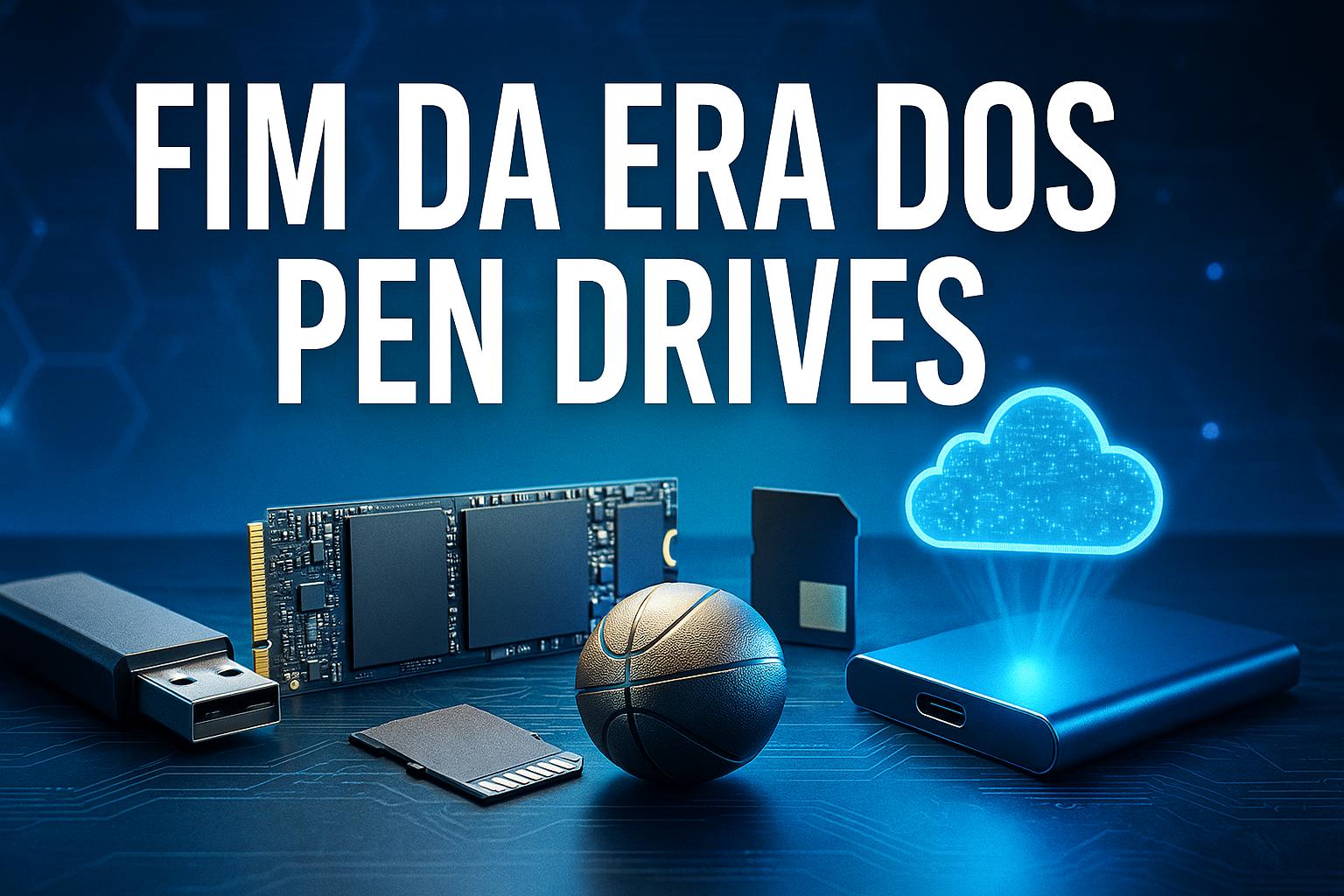


The Era of Flash Drives Is Ending. Portable SSDs, Hybrid Cloud, and Smart Storage Are Definitively Retiring USB Devices and Transforming the Way We Store Information.
For over two decades, flash drives have been synonymous with convenience. They fit in your pocket, could store photos, videos, and documents, and seemed to be the pinnacle of digital mobility. But time has passed — and by 2025, this technology that revolutionized the early 2000s is showing clear signs of retirement. With the rise of cloud services, portable SSDs, and integrated storage systems, old USB devices are becoming technological relics of an era that is beginning to fade.
The Rise and Fall of a Portable Revolution
Commercially launched in the early 2000s, the flash drive replaced floppy disks and rewritable CDs. It was fast, durable, and could store gigabytes at a time when 128 MB seemed like a lot.
At its peak, between 2008 and 2015, companies distributed branded flash drives, schools and government offices relied on them, and the simple presence of a USB port ensured universal access to data.
-
Spain Launches World’s Largest Floating Dry Dock: 56-Meter Giant Produces Massive Concrete Structures in A Coruña Using Technology Proven in Brazil

-
AI-powered toys that talk, recognize faces, and collect data face scrutiny from Brazilian government over children’s privacy concerns

-
4,000-Year-Old Child’s Skull Unveils Ancient Burial in 7,500-Year-Old Norwegian Rock Shelter, Impressing Archaeologists

-
Norway Defeats Brazil in World Cup but Invests Billions to Preserve the Amazon, Strengthens Amazon Fund, and Joins Brazil in Leading Global Effort Against Tropical Deforestation





However, the advancement of global connectivity changed everything. What once needed to be physically transported now exists in digital clouds. Services like Google Drive, Dropbox, and OneDrive made instant and secure sharing possible. In just a few clicks, a user can send a gigabyte file to anyone on the planet, without relying on cables, ports, or compatibilities.
According to data from Statista, the number of physical storage devices sold globally fell by more than 70% between 2015 and 2024, while the use of corporate cloud services surged by over 250% in the same period.
Why Flash Drives Have Lost Ground
The main reason for the decline is functional obsolescence. As laptops become thinner and lighter, traditional USB-A ports began to disappear, giving way to USB-C, Thunderbolt, and Wi-Fi Direct connections. This isolated millions of old flash drives.
Furthermore, limited capacity and vulnerability to viruses and physical failures have made their usage increasingly unreliable. The flash drive, which was once a symbol of convenience, is now seen as a security risk and a hindrance to productivity.
TechRadar noted in a recent report that new portable SSDs, such as the Nano SSD, offer speeds up to 10 times higher than conventional flash drives, reaching 450 MB/s with encryption and biometric authentication features — something unthinkable for traditional models.
The New Ways of Storing and Transporting Information
The replacement of flash drives did not come solely from the cloud. A new generation of devices is filling the space left behind:
- Portable SSDs: Small, durable, and ultra-fast, they are now common among photography, video, and engineering professionals. Models from Samsung, Kingston, and Crucial offer up to 8 TB of storage in devices smaller than a credit card.
- Hybrid Cloud Storage: Companies are adopting combined systems, with automatic local backup and instant cloud synchronization. This redundancy reduces the risk of data loss and eliminates the need for physical transport.
- Integrated Storage in Devices: Current smartphones, cameras, and laptops operate with solid internal memory, eliminating the need for removable cards. The concept of “taking data with you” is now literal — it travels within the device itself.
These technologies align with a global trend: the dematerialization of storage. Data no longer requires a physical body — it lives on servers, accessible at any time, from anywhere.
The New Paradigm of Digital Security
The shift from flash drives to connected solutions has brought another crucial benefit: security. According to consultancy Kaspersky, over 20% of corporate malware attacks in 2018 were spread via infected flash drives. Today, cloud systems feature end-to-end encryption, multi-factor authentication, and remote control, allowing for instant access deletion or blocking.
In addition, the advancement of distributed computing — used by giants like Amazon, Google, and Microsoft — has made cloud storage more stable than any physical medium. Even hardware failures in data centers are mitigated by geographic redundancy systems, ensuring that data never “dies” completely.
The Environmental Impact of Digital Transition
The replacement of flash drives also has a significant ecological impact. According to ArXiv (2024), removable I/O devices like flash drives and SD cards account for tons of plastic and precious metal waste discarded annually. With the digitization of data and the use of shared servers, the waste of physical materials tends to decrease significantly.
Companies like Western Digital and SanDisk, pioneers in this market, are already redirecting investments towards solid storage technologies and corporate services based in the cloud.
Is There Still Room for the Flash Drive?
Despite the decline, the flash drive still persists in specific niches — especially in disconnected sectors, such as security forces, rural areas, and institutions that operate without constant internet access. In public schools and universities, it is still common to use them for transporting simple files.
But even in these environments, the advancement of mobile devices and integrated networks begins to eliminate reliance on physical media. Flash drives survive more out of nostalgia and accessibility than necessity.
The Future of Storage Has Already Arrived
What began as a replacement for floppy disks has evolved into an invisible revolution. Information has stopped occupying physical space. Today, it is made of clouds, bits, and speeds of gigabits per second.
Soon, technologies like quantum computing and synthetic DNA molecular storage — already being tested by companies like Microsoft Research and Twist Bioscience — could take the concept even further, storing billions of gigabytes in a space smaller than a grain of salt.
If flash drives marked a generation, the coming years will be characterized by borderless, cable-free, and limitless data. Their era has truly come to an end — and the future is definitely already connected.








Pendrive nunca irá acabar, serviços nuvens fica inúteis sem internet, qualquer coisa que depende de alguma coisa externa pra funcionar já se torna limitado.
o pendrive você leve seus arquivos no bolso sem depender de nada,apenas espetar e usar.
não é todo lugar e toda hora que você terá uma conexão com internet.
Acho que os sistemas de armazenamento em nuvem não prestam pra quem não tem dinheiro pra pagar por mais espaço. E se a empresa tiver algum problema nos servidores deles, tu pode perder tudo ou ficar sem acesso aos seus arquivos por um tempo. Prefiro hd e ssd externo. O pendrive é muito útil ainda pois as pessoas, em geral, só querem um local pra armazenar fotos, e um pendrive de 64GB é mais barato q assinar o Google drive e mais barato q um ssd externo.
Acho que a redação so se esqueceu de mencionar que o mercado de pendrives vai muito bem obrigado.
A ponto da Kingaton ter oançado o meor dispositivo do mundo recentemente com capacodade de 1TB e do minusculo tamanho de uma moeda de no max 10 centavos