





 Portuguese
  English
  Spanish
  3 min of reading
  0 comments


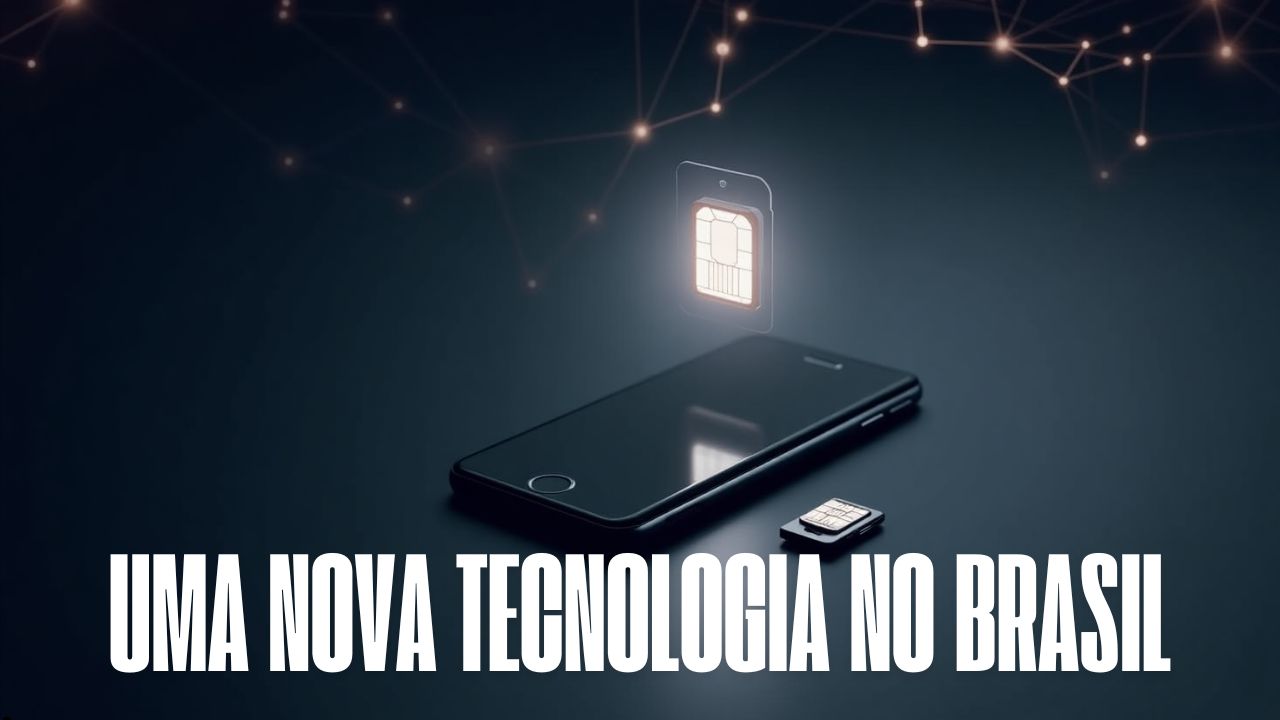
The End of Physical Cell Phone Chips Is Near! Carriers Like Claro, Vivo, and TIM Have Already Adopted eSIM, A Technology That Promises More Security, Flexibility, and Global Connectivity
The telecommunications industry is undergoing a major transformation with the replacement of physical chips by eSIM (Embedded SIM), a technology that is already being adopted globally. In Brazil, carriers Claro, Vivo, and TIM have begun implementing this innovation, allowing users to activate lines without the need for a physical chip. According to a survey by Juniper Research, it is expected that by 2025, around 3.4 billion people worldwide will use eSIM as the standard. The end of physical cell phone chips is increasingly imminent as device manufacturers adopt this new technology.
The eSIM is a chip integrated directly into the device’s motherboard, eliminating the need for a removable physical card. This allows users to store multiple carrier profiles in a single device and switch between plans and services without needing to change chips. This technology also offers more security against cloning and data loss, according to industry experts. The transition to this new model is already underway in several countries, including Brazil, where major carriers already provide support for eSIM activation on compatible devices.
How Does eSIM Impact Users?
The main advantage of eSIM is convenience and ease of use. With it, users can activate a new plan or switch carriers without needing to visit a physical store. The end of physical cell phone chips eliminates the need for removable cards, streamlining the user experience and reducing the risk of loss or damage to the chip.
-
Scientists uncover surprising secrets of a mysterious man buried in Finland 400 years ago

-
Former xAI engineer says he tried to warn about security flaws in Grok, ended up fired, and has now put Elon Musk’s company in a legal dispute that could reveal explosive behind-the-scenes details of artificial intelligence.

-
Finnish startup transforms recycled wood and agricultural waste into a renewable supercapacitor, promises up to 80% lower cost and targets more stable power grids without relying heavily on lithium, nickel, and cobalt.
-
Argus robot with 20 eyes and 20 legs surprises by walking on sand, concrete, and vegetation without relying on front or back.


In Brazil, Claro was one of the first carriers to adopt eSIM, allowing its customers to activate the service via QR Code. Vivo and TIM have also expanded their operations to include the technology, offering support on the latest smartphones and IoT devices. eSIM activation can be done directly in the carriers’ apps, speeding up the process and modernizing the consumer experience.
The Future of Telephony with eSIM and the Farewell to Traditional Chips
According to GSMA Intelligence consulting, eSIM is expected to become the global standard in the coming years as manufacturers of smartphones, tablets, and wearable devices adopt the technology. Newer models from Apple, Samsung, and Google no longer have slots for physical chips in some versions, accelerating the end of physical cell phone chips as we know them today.
eSIM is also being implemented in the automotive sector, allowing 5G connectivity in smart cars, as well as facilitating the management of telecom services for companies that need to manage multiple lines. This evolution could represent a revolution in how we handle mobile connectivity in our daily lives.
Challenges and Concerns
Despite the advantages, the transition to eSIM also raises some concerns. For users with two physical chips (dual SIM), the change can be an issue, as some manufacturers still do not offer full support for the use of two eSIMs simultaneously. In cases of device failure, recovering the number may be more bureaucratic, requiring direct contact with the carrier.
Another issue involves migration costs, as not all current devices are compatible with eSIM. This may lead some consumers to postpone the transition until the technology becomes more accessible. Still, experts believe that in the medium term, the trend is for eSIM to become a universal standard, rendering the need for physical chips obsolete.






Be the first to react!