Portuguese
  Spanish


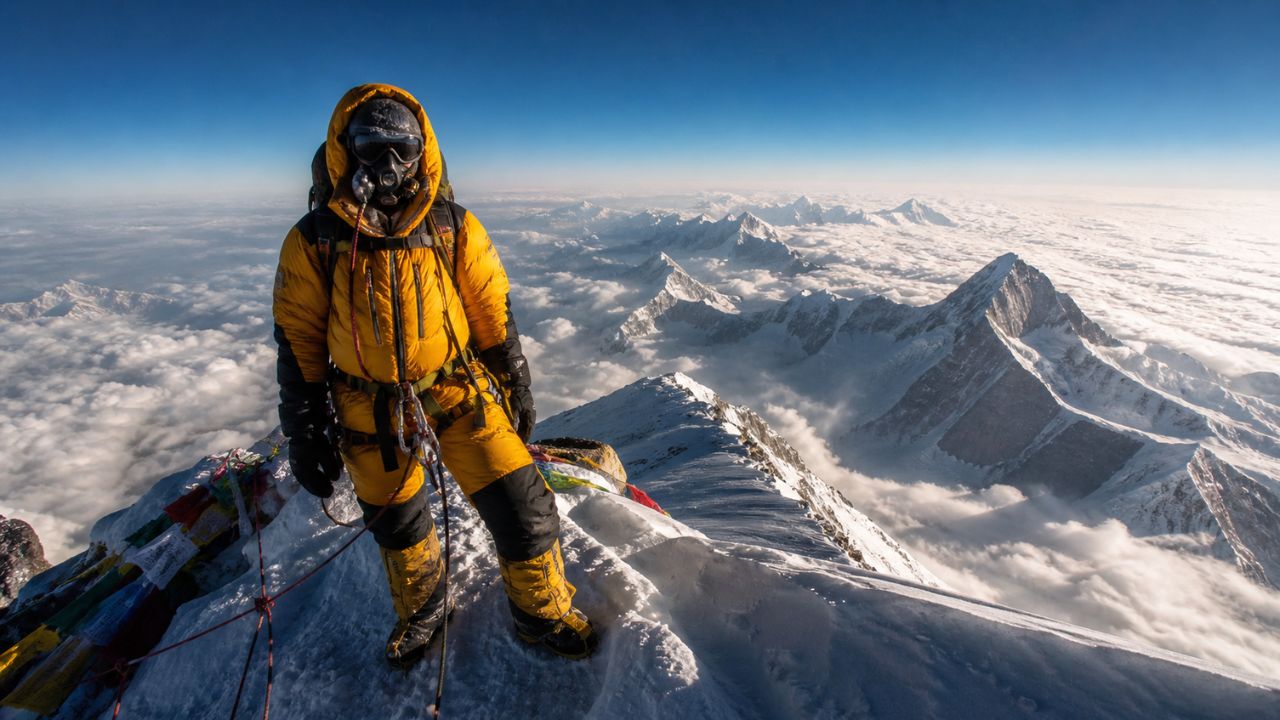


Death on Mount Everest: Nepalese guide dies during trek to base camp, raising alert about risks.
The 2026 climbing season on Mount Everest began with the report of a death on Sunday (3) in Nepal. High-altitude guide Lakpa Dende Sherpa, 52, died after losing consciousness while heading towards base camp.
The incident occurred on the route between Gorak Shep and the base of the mountain and is being investigated by authorities. It is the first confirmed fatality of the year on Everest’s main route.
Experienced career and recognition in mountaineering
Even before the official start of the season, Lakpa Dende was already preparing to work as a guide, a role he had performed for decades.
-
12-Year-Old Girl Survives Over a Day Trapped in Rubble After Devastating Venezuela Earthquake, Credits Ketchup, Cheese, and Hope

-
Venezuela Earthquakes: 1,430 Dead, Widespread Destruction, and International Task Force Deployed for Survivors
-
Magnitude 6 Earthquake Strikes Afghanistan, Notable Detail Emerges as Tremor Reaches Pakistan
-
Beijing Investigates Possible Collision After Smoke and Debris Seen Near City’s Tallest Building, Citic Tower.


Since 2001, he participated in about 30 expeditions in the mountains of Nepal. Among the main milestones of his career is reaching the summit of Everest in 2017.
In addition, he had experience on other relevant mountains in the region, such as Manaslu and Makalu. The company Seven Summits Treks, responsible for his hiring, highlighted his importance in an official statement.
“Lakpa Dende was part of our family. He worked with us for over a decade,” said director Thaneswar Guragai.

Expected compensation and the reality of guides
Nepalese law provides for the payment of US$15,000 (about R$75,000) to the family of workers who die during expedition activities. This amount will be allocated to Lakpa Dende’s family through insurance.
High-altitude guides play an essential role in climbs, being responsible for guiding climbers, transporting equipment, and ensuring the smooth running of operations.
On the other hand, they are among the most exposed to risks, as they traverse the mountain multiple times throughout the season, facing extreme conditions.
Mount Everest: death occurred during essential transit
The incident happened on a stretch well-known to those participating in expeditions. Lakpa Dende was traveling about 3.2 kilometers between Gorak Shep and base camp when he suffered a sudden illness.
Gorak Shep is located at approximately 5,164 meters of altitude and is considered the last inhabited point before Everest. Base camp is about 5,334 meters above sea level.
Despite the short distance, the journey requires significant effort due to the low oxygen concentration. This factor can cause complications even in people accustomed to altitude.
The body was removed by helicopter and taken to Lukla on the same day. Initial information indicates natural causes, but Nepalese police have opened an investigation to clarify the case.

Debate after Mount Everest death
The fatality recorded at the beginning of the season once again brought to light an old discussion among experts: which deaths should be included in Everest statistics.
The criteria vary according to interpretation:
- Some only count deaths above base camp
- Others also include occurrences on the way to the mountain
- There are also those who consider all fatalities linked to expeditions
This difference in methodology directly impacts the numbers released each year.
In 2025, for example, two workers died at base camp — one due to altitude sickness and another from a cerebral hemorrhage — reinforcing the complexity of this type of record.
The first fatal record of 2026 occurred precisely at the beginning of the climbing season, when teams are still in the organization and adaptation phase.
The episode highlights that, even in the initial stages, Everest presents significant challenges. The combination of high altitude, intense physical exertion, and unpredictable factors demands constant attention.
Thus, the death of the Nepalese guide not only marks the beginning of the season but also serves as a warning to all involved in the expeditions that will extend over the coming weeks.
Source: último segundo