Portuguese
  Spanish


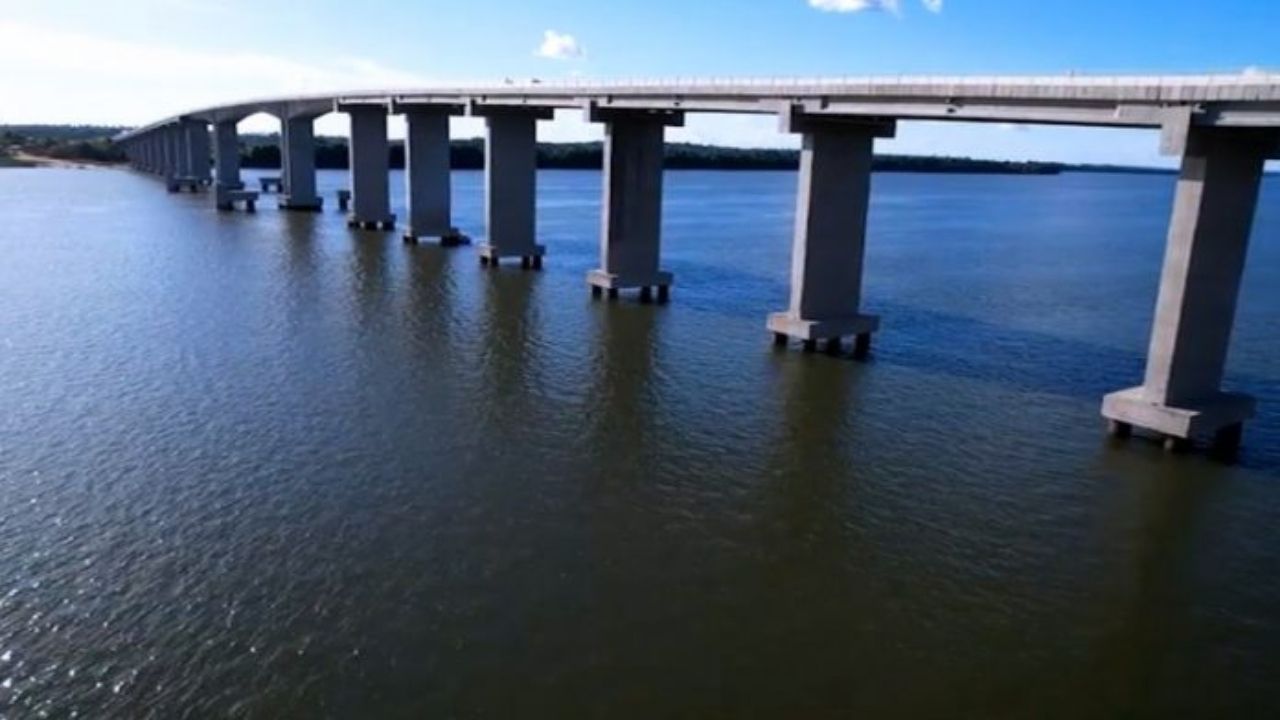

The Transaraguaia bridge on BR-230 was closed after technical analyses indicated severe deterioration in foundations and central pillars. With reconstruction planned by DNIT, drivers between Araguatins and Palestina do Pará must deal with detours, waiting for an emergency ferry, and doubts about the maintenance of federal structures.
The Transaraguaia bridge, a 900-meter crossing over the Araguaia River, was kept closed by DNIT in 2026, on BR-230, between Araguatins, in Tocantins, and Palestina do Pará, after technical evaluations identified severe deterioration in the foundation blocks and pillars of the central section. The agency reported that investigations were conducted between February and April 2026 and that the structure will be rebuilt.
In a video published by the channel Urbana, the decision affects drivers, residents, producers, and transporters who rely on the Transamazônica to cross the border between Pará and Tocantins. The crossing that replaced decades of ferries now forces the region to once again discuss the very temporary solution that the project promised to overcome.
The young bridge that became a problem sooner than expected

Inaugurated in 2010, the Transaraguaia bridge became a strategic link for communities on both sides of the Araguaia River. The structure replaced the direct dependence on ferries and provided BR-230 with a permanent road crossing at a sensitive point of the Transamazônica.
-
Two-Bedroom Home Built in a 40-Foot Shipping Container Delivered and Ready for Same-Day Living in São Paulo Countryside

-
China Constructs Artificial Island 32 km Offshore for Yangshan Port, Connected to Shanghai by 32 km Bridge, Unloading 3,000 Containers in 20 Hours
-
China’s $70 Billion River Diversion Project, the World’s Largest, Moves 44.8 Billion Cubic Meters Annually, Crosses Under the Yellow River, and Displaced 330,000 People
-
Indian Driver Spends 14 Years Digging 10-Meter Tunnel Through Mountain to Connect Isolated Village to the World



The alert gained strength because the bridge is only 15 years old, an age considered relatively low for a structure of this size. The problem has moved beyond just a local closure and has raised a bigger question: how did such a recent project reach the point of needing to be rebuilt from scratch?
What the engineers found in the central pillars
According to DNIT, the bridge assessment was not limited to a visual inspection. Non-destructive tests with ultrasound, extraction of concrete samples, vibration monitoring, topographic surveys, and controlled load testing with a heavy vehicle were used. This set of procedures served to verify how the structure responded both internally and externally.
The diagnosis indicated high deterioration in the elements supporting the main span over the river channel, especially foundation blocks and central pillars. In practice, these are essential parts for distributing the bridge’s weight and maintaining the stability of the crossing. When this type of component reaches a critical condition, the external appearance may not reveal the true severity of the damage.
Total reconstruction enters DNIT’s plan
In light of the report, DNIT confirmed that the Transaraguaia bridge will be rebuilt. The service bidding notice, within the Structure Maintenance and Rehabilitation Program, PROARTE, was scheduled for June 26, 2026. The new structure should follow current technical standards for safety, durability, and load capacity.
While the new construction has not started, the closure remains as a preventive measure. The agency also informed that it has initiated procedures to hire an emergency ferry and reestablish the crossing safely. The provisional return of the vessels shows the extent of the impact caused by the loss of a connection that supported part of the regional routine.
BR-230 returns to relying on detours and waiting


With the bridge closed, vehicle flow needs to resort to alternative routes. Among the options disclosed are routes via BR-153 and BR-226, the use of ferries in Esperantina, Tocantins, and a detour involving BR-222, MA-125, and BR-010. For those who depend on the highway, this means more time, more planning, and less predictability.
This effect is more felt by those who use BR-230 as a work connection, production flow, or access to services. A closed bridge does not only interrupt traffic: it changes the logistics of entire cities, increases travel costs, and returns uncertainty to a crossing that seemed resolved since 2010.
After the fall of the JK Bridge, the country began to look differently at its structures

The closure of the Transaraguaia occurs in a scenario of increased attention to federal bridges after the collapse of the Juscelino Kubitschek de Oliveira Bridge over the Tocantins River in December 2024. The tragedy, between Tocantins and Maranhão, left 14 dead and exposed the need for more rigorous inspections of old and strategic road structures.
In the case of the Transaraguaia, the most striking factor is the age of the construction. It does not belong to a generation of bridges with more than half a century of operation. Therefore, the closure brings to the forefront not only the aging of Brazilian infrastructure but also the quality of monitoring throughout the lifespan of the constructions.
PROARTE promises monitoring with satellites and artificial intelligence
DNIT also restructured PROARTE in 2026, with new guidelines for the management of Special Art Works, a category that includes bridges, tunnels, viaducts, walkways, and containment structures. The update provides technical criteria for maintenance, recovery, replacement, and implementation of these structures in the federal network.
Among the announced changes are the use of satellite monitoring, artificial intelligence, team training, and response protocols. The logic is to try to anticipate risks before they become emergencies. The difference between finding a deformation early and discovering severe damage after closure can be the difference between planned maintenance and total reconstruction.
Now, the region returns to relying on detours and the future hiring of a ferry while awaiting the new bidding. And the question that remains goes beyond the Araguaia: how many bridges still seem normal on the surface but hide critical signs inside? Do you think it’s acceptable for a bridge with only 15 years to need to be demolished and rebuilt? Leave your opinion in the comments.