






 Portuguese
  Spanish




Tridymite Surprises Researchers by Combining Properties of Glass and Crystal with Constant Thermal Conductivity — Study Could Transform Several Technologies
Scientists from Columbia University in the United States have announced a breakthrough in understanding heat in materials. They confirmed the existence of a compound with unprecedented behavior. It is a specific form of silicon dioxide called tridymite, with hybrid thermal properties that combine characteristics of crystal and glass.
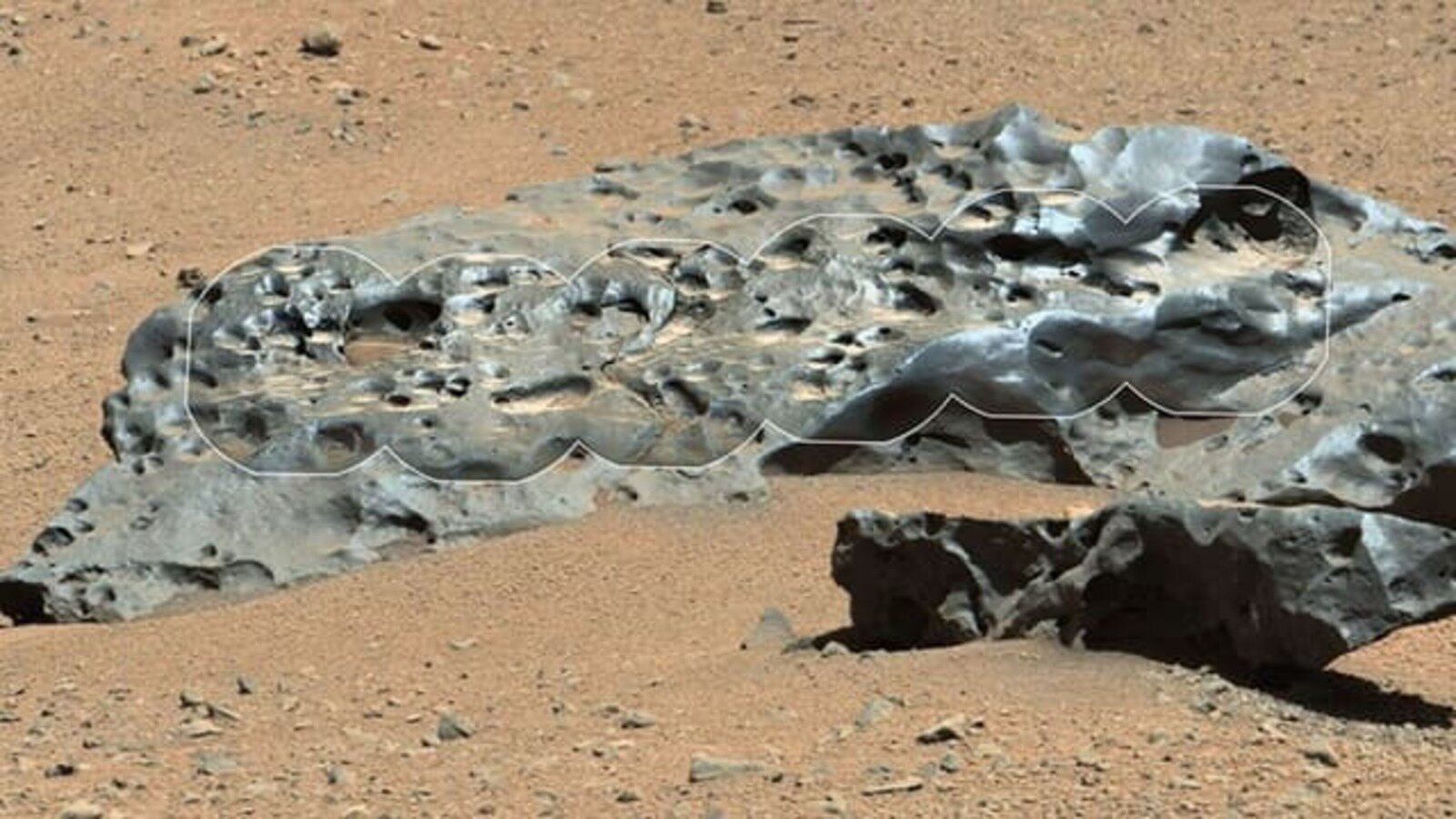
This tridymite was initially found in meteorites and is also present on Mars. The discovery highlights the importance of understanding the thermal behavior of materials in different environments.
According to the researchers, tridymite could transform sectors such as electronics, metallurgy, and aerospace.
-
China Develops Custom 140-Ton Electric Mining Truck with 770 kWh Swappable Battery, Deploys 290 Units in Xinjiang’s Largest Zinc Mine

-
Meta to Launch Arena, a New Prediction App Targeting 3.56 Billion Users, Competing with Polymarket and Kalshi

-
Scientist Challenges Famous Human Evolution Theory, Argues Homo Sapiens Evolved Gradually Over Thousands of Years
-
15-Year-Old American Builds Ocean Generator with PVC Pipe and 3D-Printed Propeller for $12, Wins National Prize, Presents at White House, and Makes Forbes 30 Under 30 List




Heat Is a Constant Challenge
In microchips and rockets, heat control is essential. This is because the performance and durability of these systems depend on how materials dissipate or retain thermal energy.
Typically, crystals and glasses behave oppositely when heated. In crystals, thermal conductivity tends to decrease with increasing temperature. In glasses, it usually increases. This contrast makes efficient use of hybrid materials challenging.
Equation to Unite Extremes
The research led by Michele Simoncelli from the Fu Foundation School of Engineering and Applied Science tackled this problem head-on.
The team developed, in 2019, a unified equation that describes how heat moves in both crystals and glasses.
According to the official statement, this equation can explain the behavior of partially disordered materials or those with defects.
Examples include compounds used in perovskite solar cells, thermal shields, and heat recovery devices.
Prediction with Machine Learning
The team used machine learning to simulate the behavior of a specific material: silicon dioxide, which makes up sand.
The form studied was tridymite, found in meteorites. The hypothesis was bold: to predict that its thermal conductivity would remain constant regardless of temperature.
Based on this, the group sought experimental validation. The collaboration involved researchers from Sorbonne University in Paris.
They used a sample of tridymite from a meteorite that fell in Steinbach, Germany, in 1724.
Tests Confirm the Theory
The tests showed that the meteoric tridymite indeed exhibits an atomic structure intermediate between crystal and glass.
Moreover, its thermal conductivity remains practically the same between 80 and 380 Kelvin. This validates the prediction made by Simoncelli and his team.
Additionally, the researchers claim that tridymite can form naturally in refractory bricks used in steel furnaces. This would occur after decades of exposure to extreme heat.
Promising Applications
The discovery could help improve thermal management in the steel industry, which is one of the most polluting in the world.
If it is possible to apply materials derived from tridymite in these processes, there is potential to reduce carbon emissions.
Another important point is that tridymite has been detected on Mars. Understanding its thermal behavior could reveal new details about the geological history of planets.
Finally, the study may bring advancements in areas such as wearable energy, artificial intelligence, and magnetic information processing.
The research is ongoing, with new stages expected in the coming years.
With information from Interesting Engineering.





