Portuguese
  Spanish


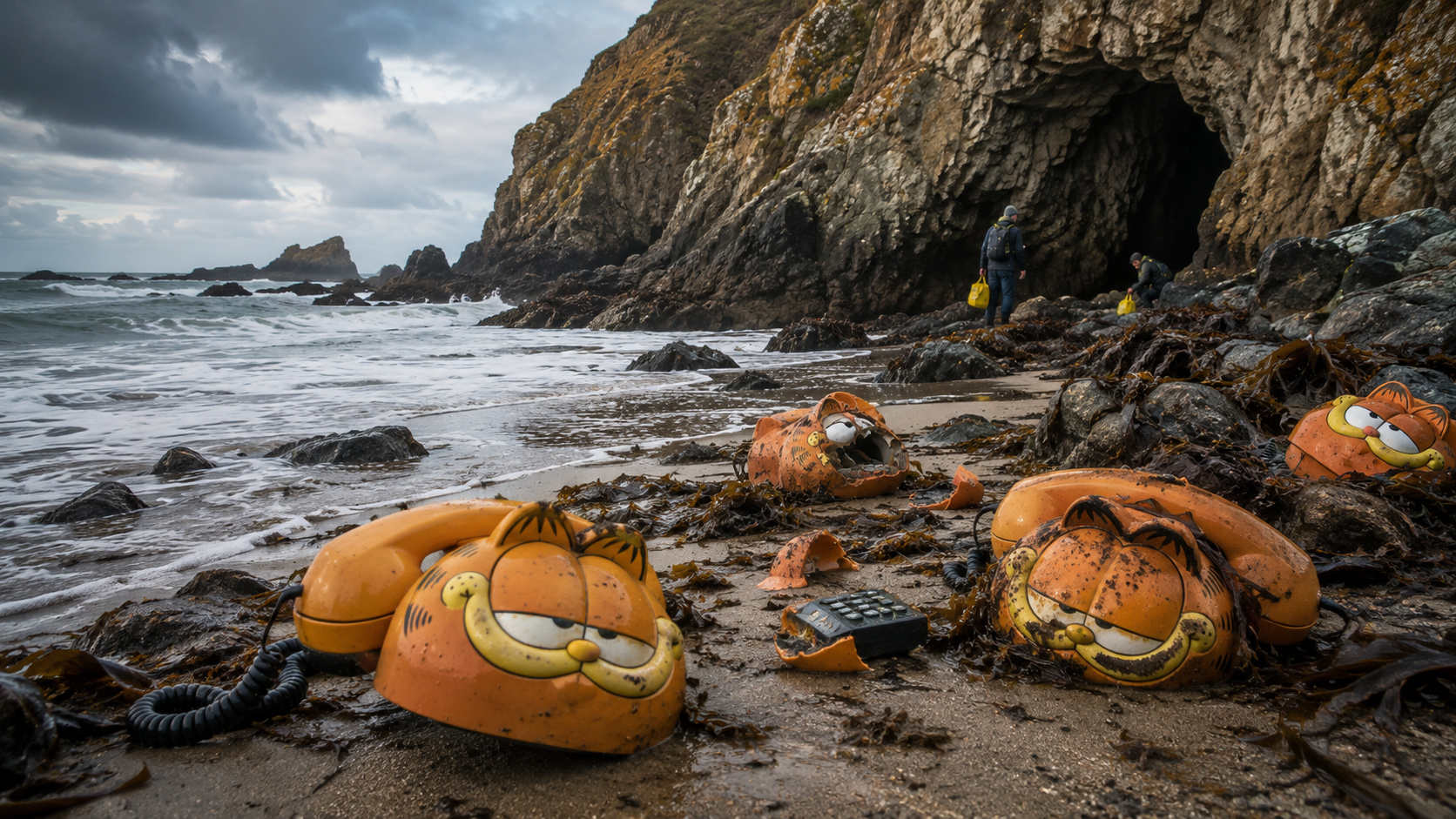

The mystery of the Garfield phones on the beaches of France exposed a lost cargo at sea, a marine cave in Brittany, and the trail of old plastic that kept returning to the sand for decades, as a warning about plastic pollution in the ocean
For 35 years, the sea returned pieces of Garfield phones to the beaches of France. They were orange parts of old devices, shaped like the famous cartoon cat, which repeatedly appeared on the coast of Brittany.
The mystery gained momentum because the pieces did not appear just once. Bases, faces, wires, and other parts of the phone kept arriving on the sand, as if a forgotten cargo was still being opened by the ocean. The information was published by TIME, an international news and reporting outlet.
The origin pointed to a lost cargo from a container carried away by a storm in the 1980s. The case became a symbol of how plastic in the sea can endure for decades and return to the beaches long after the accident.
-
With two giant sails instead of relying solely on the engine, a modern cargo ship crosses the Atlantic carrying cars, forklifts, and goods to test using less diesel in maritime transport.

-
Coastal City Converts Part of Bay to Freshwater with 350-Meter Dam and Nine Gates to Prevent Flooding
-
Singapore Expands into the Sea to Build 1,337-Hectare Port with 66 Berths, Electric Cranes, and Driverless Vehicles by 2040s
-
55 km Link Between Hong Kong, Zhuhai, and Macau Includes 33-Block Undersea Tunnel to Avoid Disrupting Ships and Planes




How the mystery of the Garfield phones in Brittany began
The case began with strange finds on the beaches of Brittany, a coastal region of France. Volunteers and residents found parts of Garfield phones during cleanups and walks along the sand.
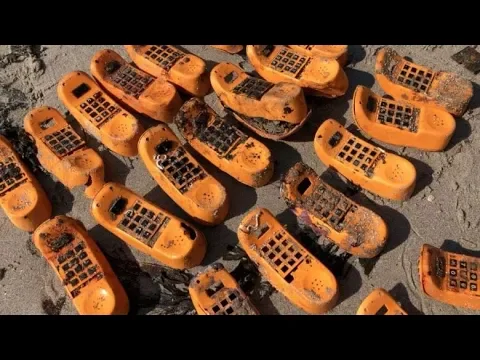

The object immediately drew attention. It was not just common trash brought by the tide. They were pieces of an orange phone, with the face of a well-known character, scattered across different points of the coast.
Over the years, the mystery grew larger. The repetition of the finds indicated that there was a continuous source in the sea, capable of releasing new pieces gradually.
The hidden cave that revealed the lost cargo
The answer appeared when a marine cave was located with remnants linked to the container. Inside it, there were parts of the phones and pieces of the cargo that explained the constant appearance of the objects on the beaches.
The suspicion is that the container was carried away by a storm in the 1980s. Stuck in a hard-to-reach spot, it would have remained hidden for decades, while the sea tore off and carried away parts of the phones.
This discovery helped solve an old mystery. What seemed like an unexplained sequence came to be understood as the result of a lost cargo in the ocean.
Why Garfield phones kept appearing for 35 years
The long duration of the case is impressive because it shows the resilience of plastic. An object can break, lose parts, and change appearance, but still remain in the environment for many years.
On the beaches of France, pieces of Garfield phones appeared for 35 years because the cargo was in a region where the waves could gradually release the material. The tide carried the fragments to the sand, and volunteers collected what they found.
TIME, an international news and reporting outlet, recorded that members of the environmental association Ar Viltansoù visited the cave with journalists and found pieces of Garfield and remnants of the container at the site.
What a lost cargo reveals about maritime trade
A container is a large box used to transport goods on ships. When one of these cargos falls into the sea, the contents can spread and become a difficult problem to locate.
In the case of the phones, the cargo did not disappear after the storm. It got stuck, was affected by the waves, and continued releasing parts over the years. This shows how an accident in maritime transport can result in a slow and lasting consequence.
The story also makes the problem easier to visualize. Instead of just talking about plastic pollution in the ocean, the case shows a known object, with a strong color and curious shape, returning from the sea for decades.
Why old plastic still reaches the beaches
Plastic does not disappear quickly in the sea. It can break into smaller pieces, circulate with the currents, and get stuck in rocks, caves, and hard-to-reach areas.
Therefore, the discovery of the marine cave did not mean the immediate end of the problem. Parts already loose or scattered in the environment could still reach the beaches later.
The case of the Garfield phones shows that the impact of a lost cargo can surpass the generation that witnessed the accident. The sea keeps the material, moves the fragments, and returns part of them over time.
The work of the volunteers turned the mystery into an environmental alert
The association Ar Viltansoù played an important role in the search for the origin of the pieces. The group monitored the findings, collected the material, and helped keep the question about the source of the phones alive.

The discovery showed that beach cleaning is not just about the visible trash of the day. Often, it reveals old problems, linked to accidents that have remained hidden in the sea for decades.
The image of the Garfield phones emerging from the ocean made the alert stronger. The case unites popular culture, maritime transport, and plastic pollution in a scene that is simple to understand but hard to ignore.
The mystery of the beaches of France ended with the discovery of the cave, but the alert continues. A lost cargo may seem small compared to the size of the ocean, but its effects can last 35 years or more.
The story shows that plastic in the sea does not stay in the past. It can return in pieces, contaminate landscapes, and remind us that every loss in the ocean can become a problem for those living far from the accident.
When an object lost at sea continues to return for decades, who should be responsible for this trail: companies, authorities, or all of us as consumers? Leave your opinion in the comments and share the publication.