Portuguese
  Spanish


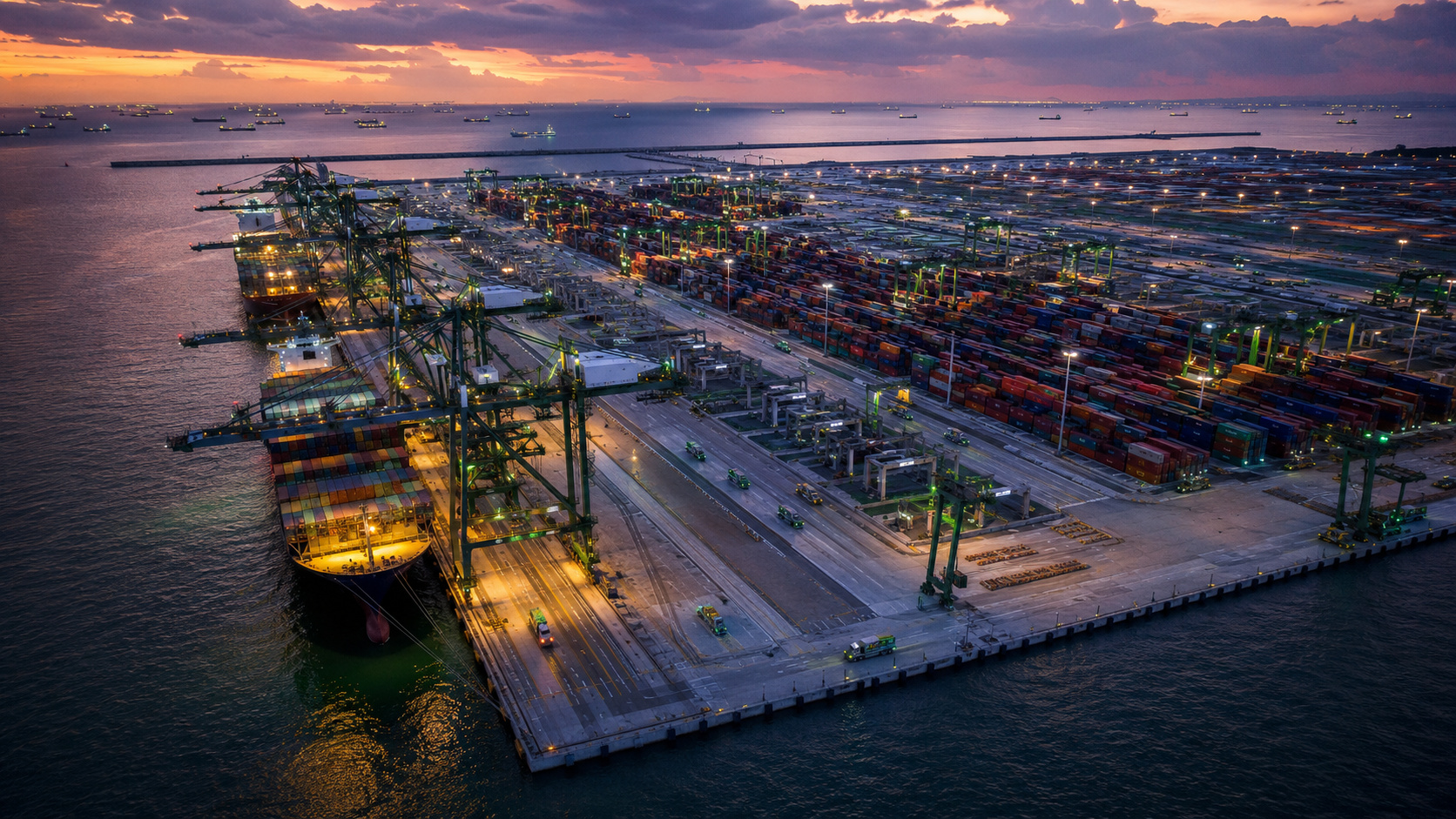

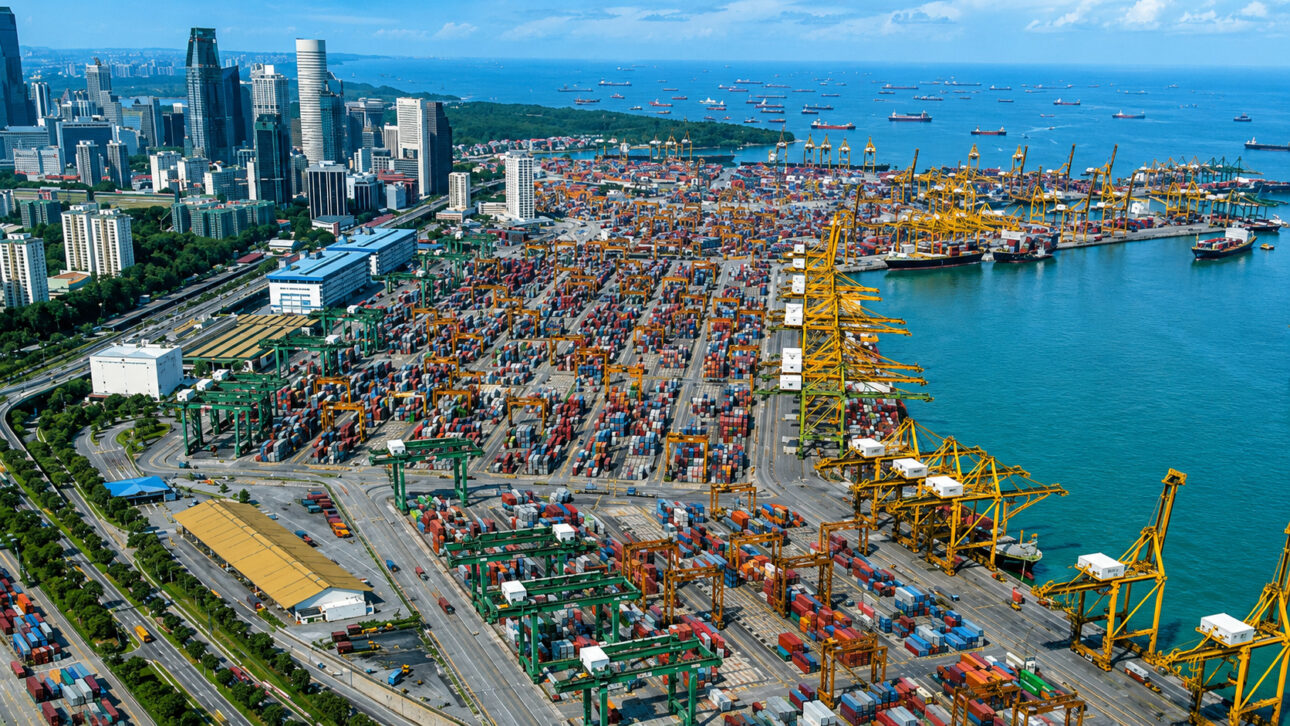
The Tuas Port brings together the Port of Singapore, automated yards, and large ships in a project that expands space at sea, concentrates containers, and prepares an automated port operation for the coming decades.
The Tuas Port is already operational in Singapore, but the project aiming to form a large container complex is still undergoing construction stages. By the 2040s, the Port of Singapore is expected to cover 1,337 hectares and include 66 berths for ships.
A berth is the point on the quay where the vessel is docked to load or unload containers. The plan also includes electric cranes, driverless vehicles, and systems that organize the work within the yard, the large land area where the boxes are stored.
The information was released by the Maritime and Port Authority of Singapore, the public authority regulating Singapore’s maritime sector. The Tuas Port was officially opened on September 1, 2022, but the full projected capacity still depends on the phases planned for the 2040s.
-
55 km Link Between Hong Kong, Zhuhai, and Macau Includes 33-Block Undersea Tunnel to Avoid Disrupting Ships and Planes

-
Giant Ship Appears to Sink as It Takes on Water to Load 91,000-Ton Platform from China to Rio de Janeiro
-
Giant Floating Gates Protect Rotterdam from Rising Sea Levels at One of Europe’s Largest Ports
-
Chinese Ship Elevator Lifts Vessels 113 Meters in 40 Minutes, Bypassing Five Locks
The port that brings together terminals scattered throughout the city
The project was created to move the handling of containers from various terminals to a single area in Singapore. Once completed, the Tuas Port is expected to consolidate all of the city’s container operations.
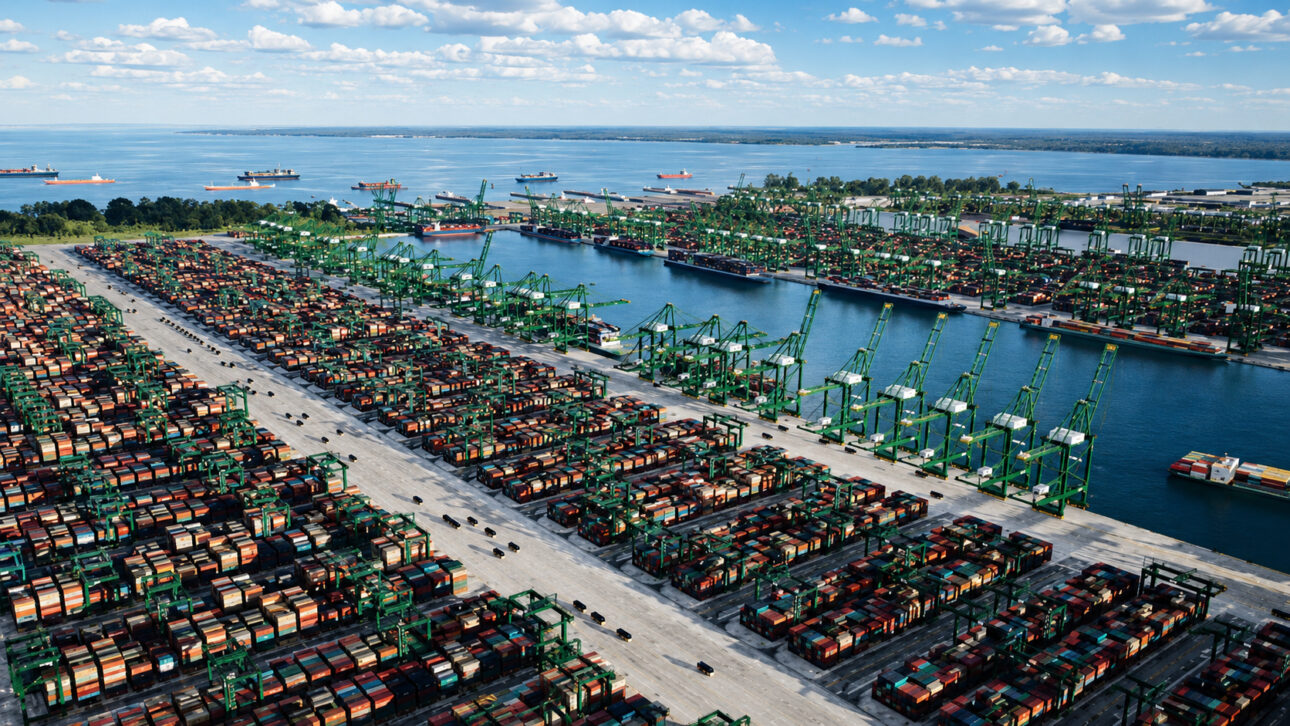
The transfer was planned in stages, as the new complex receives its berths, yards, and control systems. The concentration places in one area the spaces that receive ships, store containers, and distribute the cargo.
In practice, the automated port combines physical infrastructure and digital tools to organize the movement of containers between ships, yards, and land exits.
1,337 hectares and 66 berths form a city of containers over the sea
The final planned area for Tuas Port is 1,337 hectares, a measure equivalent to about 3,300 football fields. The comparison helps visualize the size of a project that advances over areas reclaimed from the sea.
The 66 berths will be distributed over 26 kilometers of quay. Each berth functions as a ship’s parking space, with a structure to dock vessels and transfer containers between the ship and the land.
The number of berths does not mean that 66 ships will always be present. It shows the planned physical capacity to receive vessels at different points of the port, including large ships.
How driverless vehicles transport containers across the yard
The yard is the space where containers are sorted, stacked, and prepared for the next journey. At Tuas Port, automatically guided vehicles are expected to travel between the quay and the yard without a person driving inside each unit.
These vehicles do not work without supervision. Control is done remotely by a central unit that monitors internal traffic, organizes routes, and reduces the risk of one piece of equipment crossing paths with another.
In practice, port automation aims to keep containers moving with fewer stops between unloading a ship and the next stage of the operation.
Electric cranes and 5G network will be part of the automated port
The yard cranes planned for Tuas will be electrified and automated. They lift containers and place them in defined positions on the ground, like a large cargo shelf.
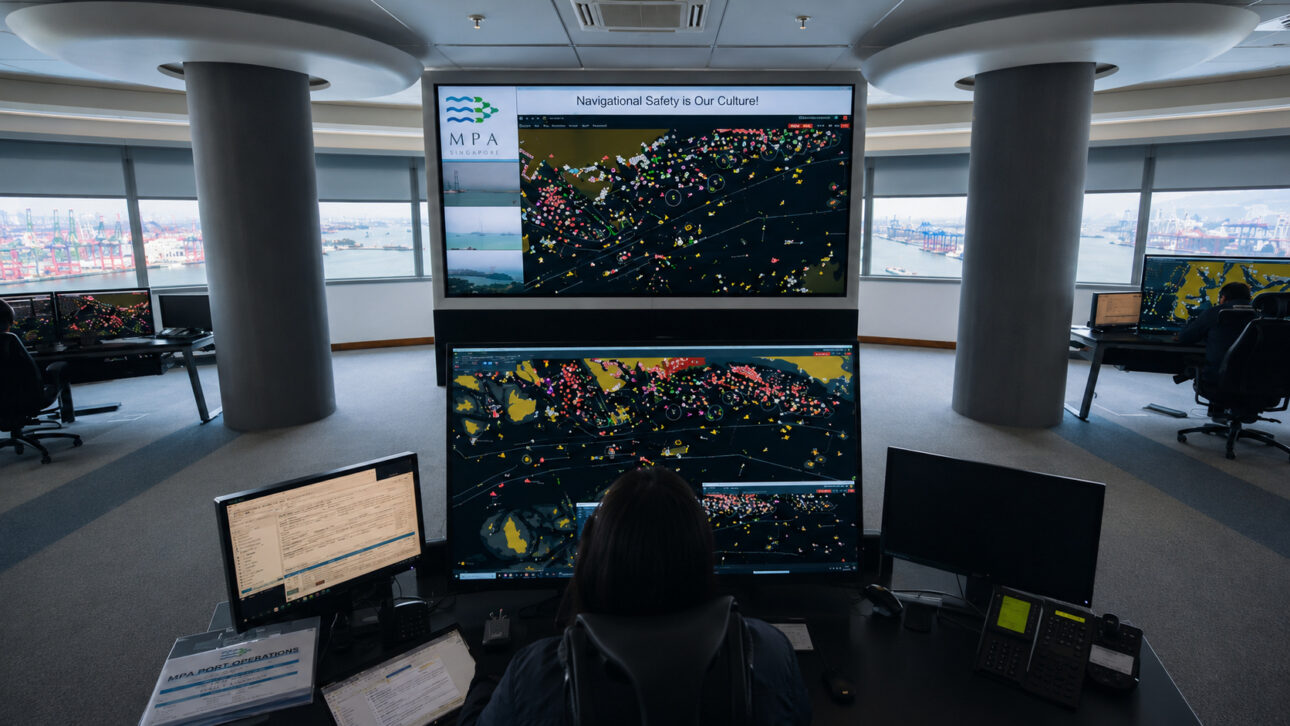
The movement will be monitored by a control center. The structure also includes a private 5G network, used to maintain communication between cranes, vehicles, and port management systems.
Maritime and Port Authority of Singapore, the public authority regulating Singapore’s maritime sector, detailed that automatically guided vehicles and automated cranes will be used in the transportation of containers between the yard and the quay.
Reclaiming land from the sea requires four construction phases
The expansion of Tuas Port is divided into four phases. The first phase had its land reclamation works started in February 2015 and completed in November 2021.
This phase involved soil improvement over 414 hectares, including 294 hectares of new area created over the sea. The work prepares the ground to receive docks, yards, internal roads, and cargo handling equipment.
The construction started in 2015 is still scheduled for the 2040s. The project maintains the goal of gathering the container terminals in Tuas when all phases are completed.
The 65 million containers per year are still a future goal
The most striking number of the Tuas Port is the planned capacity of 65 million twenty-foot equivalent units per year. This measure is used to compare the space occupied by cargo, even when containers are of different sizes.
The first phase is expected to have 21 deep-water berths and handle 20 million twenty-foot equivalent units per year when fully ready in 2027. The rest of the capacity depends on the other phases of the work.
Therefore, the 65 million units do not represent the capacity already available. The number shows where Singapore intends to reach when the port is complete, with the 66 berths, automated yards, and the structure gathered in one area.
The Tuas Port already incorporates automatically guided vehicles and remotely controlled operations in a real port project, but its final dimension will still be built over the coming years. The project combines physical expansion over the sea and automation to receive more cargo in the same location.
For you, can a port with driverless vehicles and remote control make logistics faster without reducing the importance of specialized workers? Leave your opinion in the comments and share this post.