Portuguese
  Spanish


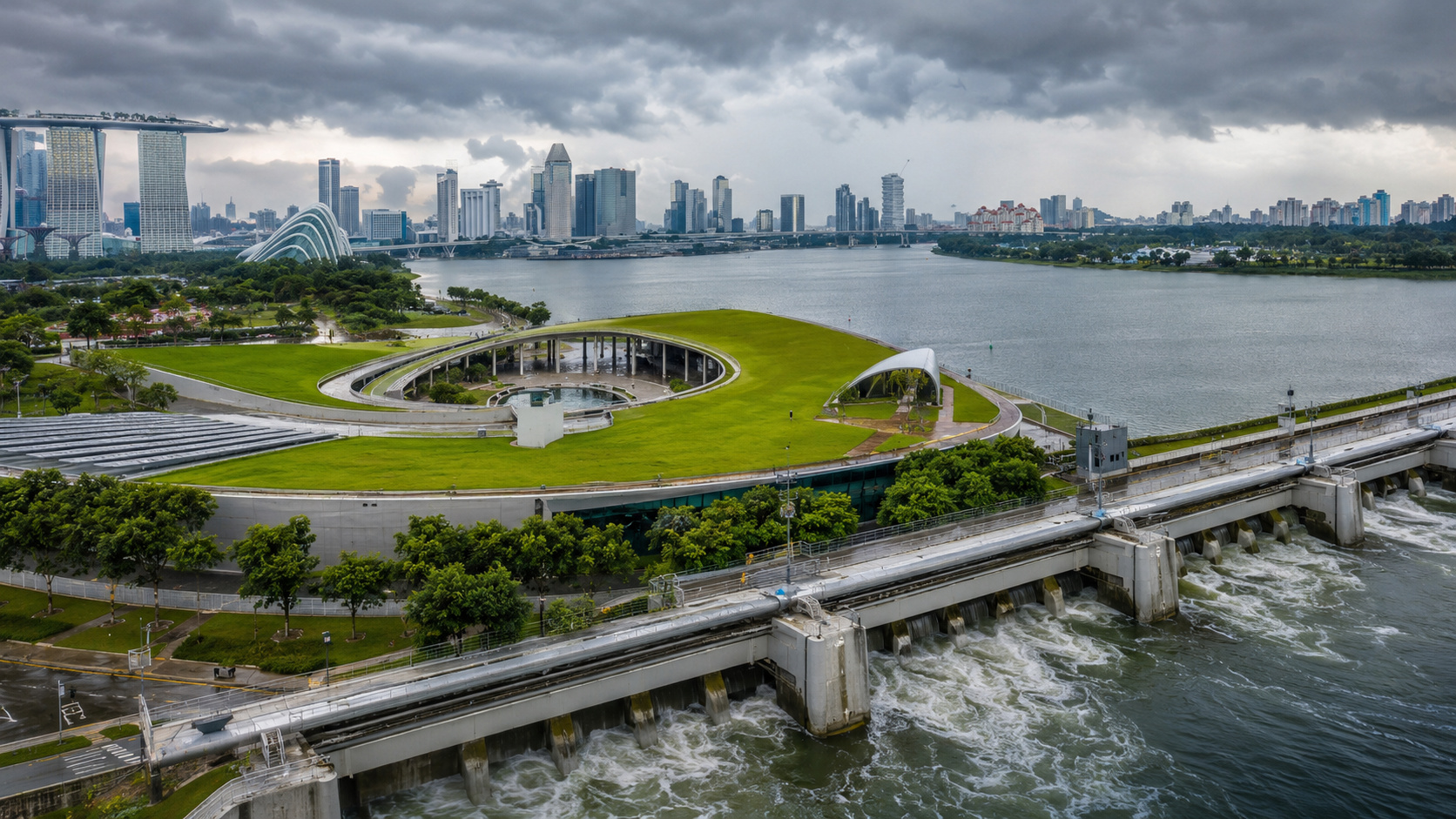

The Singapore dam holds back the sea, stores fresh water, and uses nine gates and pumps to manage rain in urban areas when the tide allows.
A city living by the ocean transformed part of the bay into fresh water using a 350-meter dam. The Marina Barrage holds back the saltwater on the sea side and maintains an urban freshwater reservoir on the other side.
The information was released by PUB, Singapore’s national water agency. The structure is located at the entrance of the Marina Channel and combines water supply, flood control, and leisure space for the population.
On days of heavy rain, nine gates release water to the sea when the tide is low. When the ocean level is high, large pumps perform this task, as the water cannot exit on its own.
-
Singapore Expands into the Sea to Build 1,337-Hectare Port with 66 Berths, Electric Cranes, and Driverless Vehicles by 2040s

-
55 km Link Between Hong Kong, Zhuhai, and Macau Includes 33-Block Undersea Tunnel to Avoid Disrupting Ships and Planes
-
Giant Ship Appears to Sink as It Takes on Water to Load 91,000-Ton Platform from China to Rio de Janeiro
-
Giant Floating Gates Protect Rotterdam from Rising Sea Levels at One of Europe’s Largest Ports
The bay that became a freshwater reservoir in Singapore
A reservoir is an area prepared to store water. In the case of the Marina Barrage, it occupies a central region of Singapore that was previously directly influenced by the tide.


The dam prevents the entry of saltwater and allows rainwater collected by the city to be stored in the reservoir. This water reinforces Singapore’s supply and reduces the immediate outflow of rain to the sea.
The Marina Barrage was officially inaugurated on October 31, 2008. The reservoir began functioning as a source of fresh water on November 20, 2010, after the gradual replacement of saltwater by rainwater.
Why the nine gates depend on the tide and do not open at any time
Gates are large doors used to control the passage of water. At the Marina Barrage, the nine gates release excess rainwater to the sea only when the tide is low.
The explanation is simple. When the ocean is lower than the water accumulated inside the reservoir, the water can exit by the natural force of the gradient.
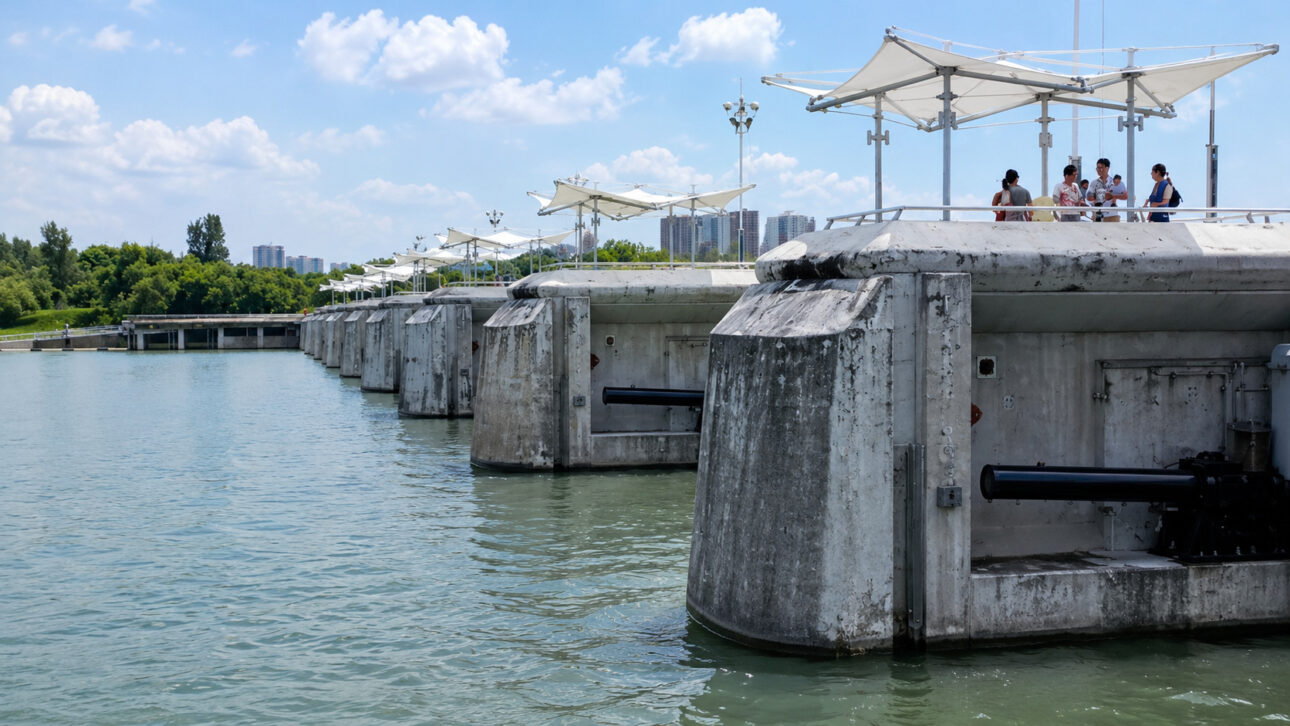
When the sea rises, the exit becomes more difficult. Opening the gates alone does not solve it, as the high tide forms a barrier outside and prevents the rain from draining easily.
Pumps take the water to the sea when the ocean blocks the exit
PUB, Singapore’s national water agency, details that large pumps remove excess water when the tide is high. They push the water to the sea when the level difference prevents natural exit.
It’s similar to removing water from a place where it got trapped, but on a much larger scale. The operation needs to keep up with the volume of rain, the reservoir level, and the tide height.
This combination prevents the dam from relying on a single measure. The gates operate when the tide helps, and the pumps take over when the ocean prevents the water from exiting.
The dam helps in flood control, but does not work alone
The Marina Barrage is part of flood control in low-lying areas of Singapore. It helps to alleviate the amount of rainwater reaching urban regions more vulnerable to flooding.
The result also depends on channels, drains, pipes, and other structures that lead the rain to the reservoir. This network is called urban drainage, that is, the path created for the water to leave the streets.
The dam does not automatically eliminate floods. It needs to work together with drainage, pumps, and rain monitoring, especially when storms and high tide occur simultaneously.
More stable level transforms the infrastructure into a leisure space
The dam reduces the tide’s influence on the reservoir and keeps the water level more stable throughout the year. This allows activities like kayaking, sailing, and dragon boating.
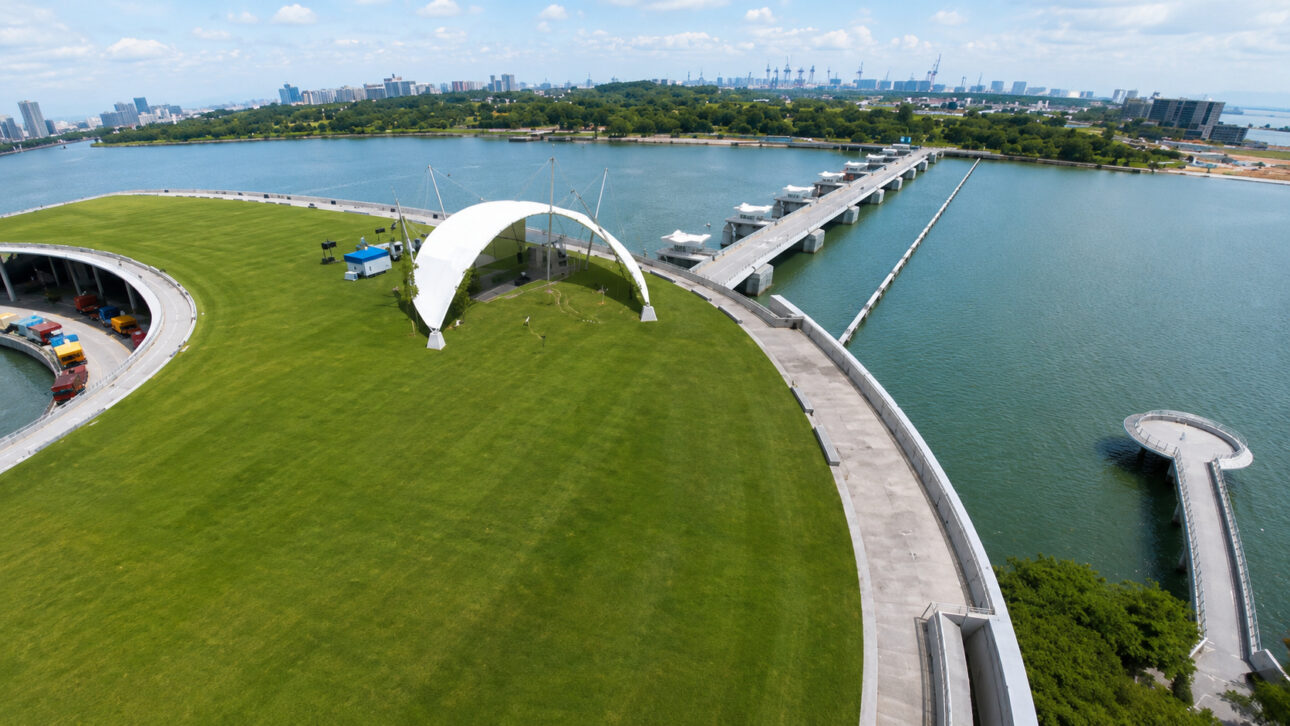
On the roof of the structure, a green area welcomes visitors for picnics and kite flying. The location combines a supply and drainage work with an open area for the population.
The Marina Barrage shows that urban infrastructure can have more than one function. Even as a leisure space, it remains connected to water storage and rain control.
What Brazilian cities can learn from the Singapore barrage model
Brazilian cities near the ocean also face difficulties when heavy rain and high tide occur simultaneously. In these situations, water may take longer to drain from streets, channels, and galleries.
The example of Singapore shows that a freshwater reservoir, a drainage network, and pumps need to work as parts of a single system. The drainage network includes channels, manholes, and pipes that direct rainwater to the exit points.
Each city has different terrain, tide, rainfall volume, and urban occupation. Therefore, the Marina Barrage is not a ready-made solution for every place, but a reference for planning, maintenance, and continuous operation.
With 350 meters, the Marina Barrage separates saltwater and freshwater, stores part of the rain, and uses nine gates or pumps according to the sea level. The result depends on the joint operation of each stage.
More than a barrage, the structure shows that reducing flooding requires preparation before the rain reaches the streets. Storing water, keeping channels operational, and considering the tide effect are part of the same challenge.
Do you think the biggest challenge for Brazilian cities near the sea is storing rain, quickly removing water, or keeping the entire drainage system functioning? Comment and share.