Portuguese
  Spanish


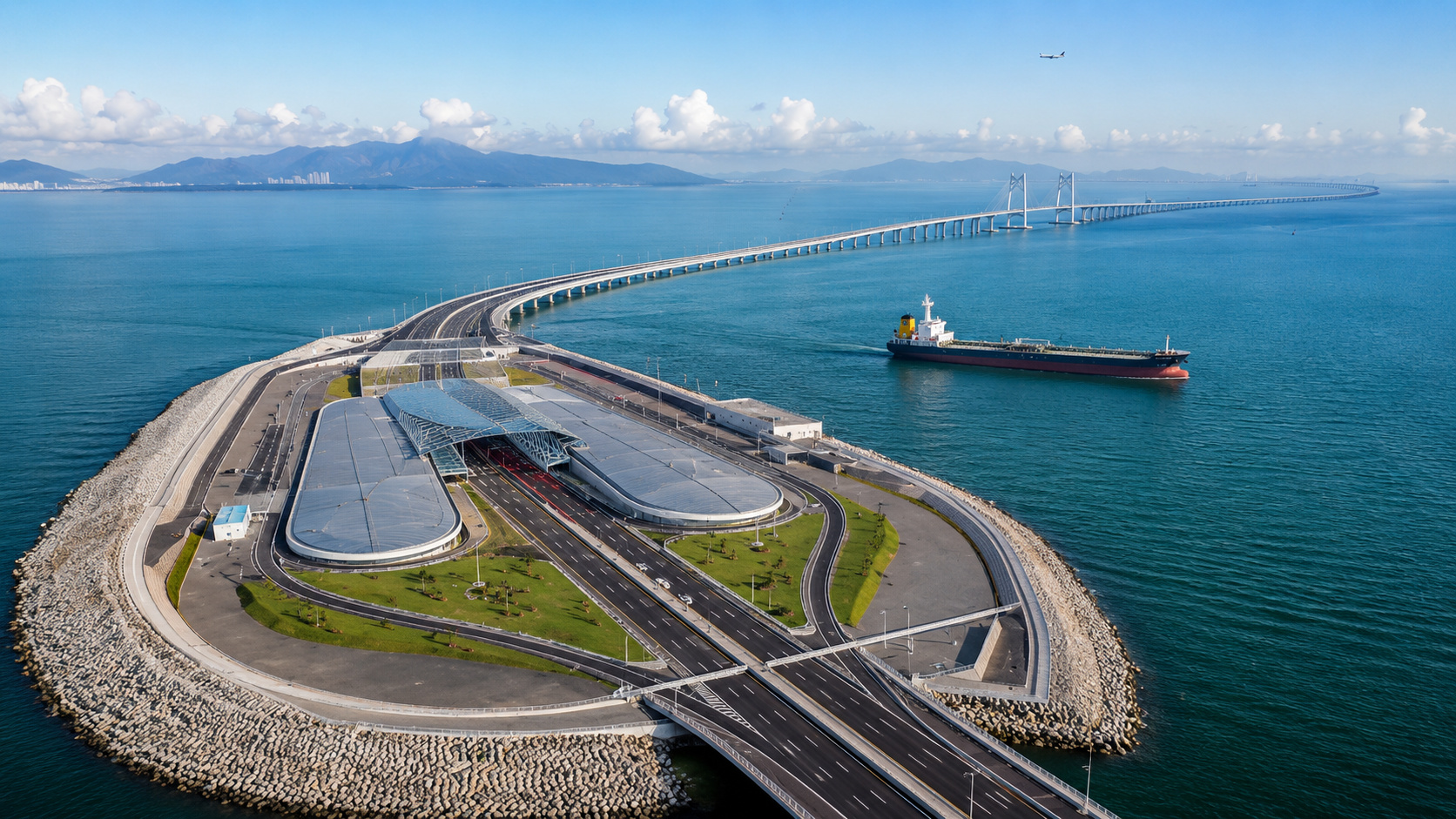

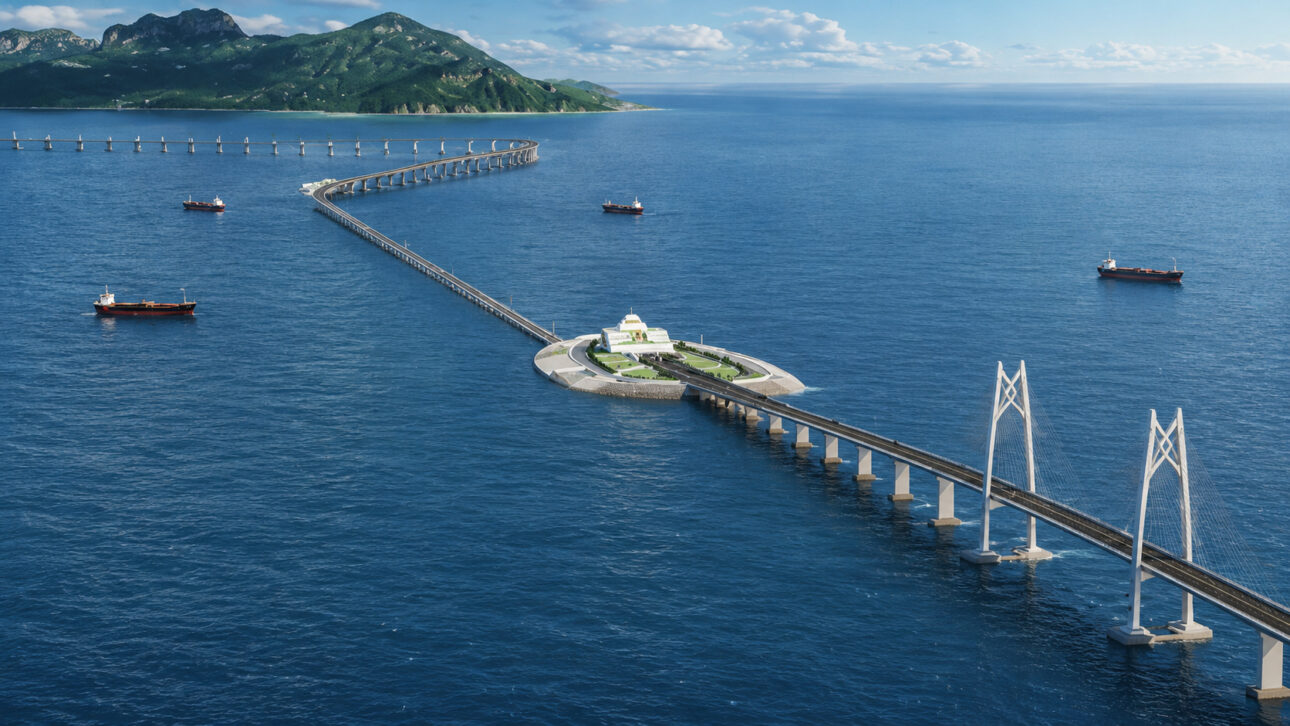
The Hong Kong Zhuhai Macau Bridge connects three cities with artificial islands, an underwater bridge, and a 6.7 km immersed tunnel that preserves the passage of ships in the Pearl River Delta and respects height limits near airports.
The 55 km connection called the Hong Kong Zhuhai Macau Bridge does not only follow viaducts over the water. In one part of the route, cars leave the elevated structure and enter a 6.7 km tunnel installed under the sea.
The choice avoided an even higher bridge over a busy maritime channel. The design also needed to respect the height limits near airports, as a larger elevated structure could conflict with the space used by aircraft.
On November 15, 2018, the International Tunnelling and Underground Space Association, an international association dedicated to tunnels and underground spaces, published the technical data of the submerged section, formed by 33 elements and linked to two artificial islands.
-
Giant Ship Appears to Sink as It Takes on Water to Load 91,000-Ton Platform from China to Rio de Janeiro

-
Giant Floating Gates Protect Rotterdam from Rising Sea Levels at One of Europe’s Largest Ports
-
Chinese Ship Elevator Lifts Vessels 113 Meters in 40 Minutes, Bypassing Five Locks
-
Wooden Ship Lost Under Antarctic Ice for 107 Years Found Nearly Intact at 3,008 Meters Depth, Filmed by Robots Without Human Contact
Why the bridge disappears into the sea
The passage of ships required that the surface remain clear in one of the most delicate sections of the crossing. A very high bridge would need to overcome the navigation channel and, at the same time, comply with the height limits imposed by the proximity of airports.


The solution was to take the cars underwater. The road enters the tunnel, crosses under the sea, and returns to the surface after passing through the channel used by vessels.
For those observing from afar, the bridge seems to end suddenly. In practice, the path continues hidden, without placing pillars in the area reserved for large-scale navigation.
The artificial islands become gateways to the underwater tunnel
Two artificial islands were built at the ends of the tunnel. They provide the transition between the bridge sections and the road that continues underwater.
An artificial island is an area of land created in the sea. In this project, each one functions as a gate: vehicles leave the bridge, enter the tunnel, and on the other side, return to the elevated section.
This junction between bridge and tunnel needed to be well-defined to maintain a continuous route. The islands concentrate the entrances and exits of the submerged section, while the maritime channel remains open above.
The 33 blocks form the 6.7 km immersed tunnel
International Tunnelling and Underground Space Association, an international association dedicated to tunnels and underground spaces, detailed that the tunnel was assembled with 33 elements each about 180 meters long.
These large blocks were joined to form the 6.7 km passage. Some modules weigh up to 80 thousand tons, which shows the size of the pieces taken to the sea and fitted into the right position.
An immersed tunnel is a passage created with large parts positioned underwater. After fitting, the joints form a continuous path for vehicle circulation.
The work is not just about placing blocks at the bottom of the sea. Each piece needs to be aligned with the previous one so that the road maintains a firm passage protected from water.
How ships pass over the bridge under the sea
The submerged section is about 45 meters below the sea. This distance allows large oil tankers to cross the channel while vehicles continue on the lower level.
The separation is simple to visualize: navigation uses the surface and the road uses the tunnel. Thus, the two flows do not compete for the same space.
The structure prevents the car path from blocking the maritime route. The tunnel allows for the passage of ships and creates a road crossing at the same point in the Chinese delta.
The tunnel base faced hard and soft soil
The sea floor does not have the same resistance throughout the area. The construction needed to combine solutions for parts of hard soil and soft soil, which respond differently to the tunnel’s weight.
The foundation is the base that holds the structure from below. In this case, it distributes the load of the modules and helps prevent one point of the tunnel from moving more than another.
This care is important because the passage involves very heavy pieces, moving water, and terrain with different characteristics. The prepared base keeps the structure supported along the route.
The 55 km connection between Hong Kong, Zhuhai, and Macau shows why a bridge doesn’t always need to be entirely visible. Instead of elevating the road to cross the channel, the construction changes level and enters a tunnel under the sea.
The 33 blocks, the artificial islands, and the 6.7 km stretch created a route that allows cars to pass underneath and ships to continue above.
Would you feel at ease entering a road that disappears under the sea to keep the path clear for ships? Leave your opinion in the comments and share this post.