Portuguese
  Spanish


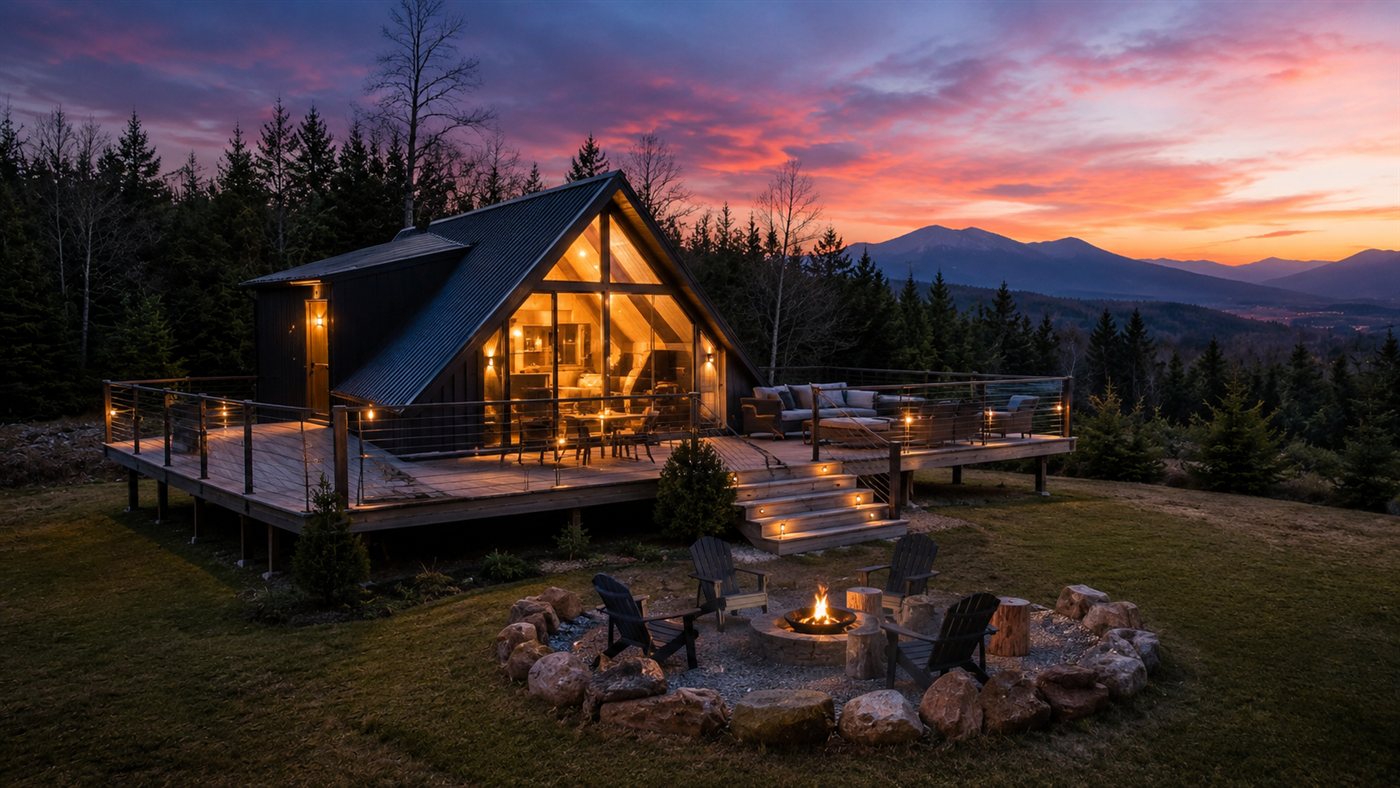

The story told by investor Kai Andrew shows software engineer Doug building the glamping business in West Virginia with a $1,500 license, debt-free and with a data-driven turnaround
An 11-acre raw land, a full-time tech job, and only nights and weekends free: this is the raw material of the project that could turn into a $6 million resort. According to the Kai Andrew channel, in a video published on May 29, 2026, software engineer Doug is transforming the empty area in the Fayetteville region, West Virginia, USA, into the Star Farm lodging complex, evaluated door-to-door by the income each cabin generates.
The path to this point was far from a straight line. At launch, the calendar was empty, a storm burst pipes, the few reservations were canceled, and the founder even lost the job that was funding the construction, as Kai Andrew narrates. The turnaround came from the most unlikely place: a spreadsheet.
The bet: 11 acres 4 minutes from a new national park
The choice of location was the engineer’s first decision. According to Kai Andrew, the property is just a 4-minute drive from the main entrance of the New River Gorge, elevated to a United States national park in 2021, and visitation to the area jumped from about 1 million to 2 million people per year after the change in status.
-
In the Amazon Flood Season, Life Transforms: Riverside Family Near Parintins Relies on Fishing Nets, Stingrays in the Yard, and Canoe-Only Transport

-
Man Converts Water Tank into $20,000 Luxury Boat, DIY Video Reaches 571,000 Views on World Tech Channel
-
Inventor Builds Amphibious Vehicle with Kayak and Electric Motors, Gains 223,000 Views on Quiet Nerd Channel
-
Former Yale Hospital Cleaner Returns as Resident Doctor After a Decade; Shay Taylor-Allen Transitions from Janitorial Duties to Medical Practice





There were also two advantages that few people saw. West Virginia has been shifting from a coal and mining economy to tourism, and the land is one of the last commercial mixed-use parcels available in the region, as the Kai Andrew channel on YouTube highlights, allowing for a complete hospitality business where most would only see wilderness. Location, growing demand, and little competition: the recipe was set before the first nail.
The $1,500 license approved on the same day
Anyone who has tried to approve commercial construction knows the pain: months of waiting and fees reaching hundreds of thousands of dollars in states like Texas, Florida, and California, a comparison made by the founder himself in the video. According to Kai Andrew, Doug went to the local city hall with minimal plans in hand and left the same day with the license approved.
The amounts seem like a typo. The dome license cost $1,500 on a project estimated at $150,000, the county’s minimum fee is $50, and the total spent on licenses was below $4,000, according to Kai Andrew. The video also reveals a legal shortcut discovered by chance: cottages classified as park trailers, with recreational vehicle certification, count as mobile structures in local zoning and do not require a construction license.
From zero to the first cottage: 6 months and a pivot in the project
The invisible phase swallowed an entire year. According to Kai Andrew, the land had nothing: electricity, water, and septic tank had to be brought from scratch, and the flat topography in a mountainous region became a trap because all the neighborhood’s water flows into the property, which required about $15,000 in stormwater drainage and French drains.
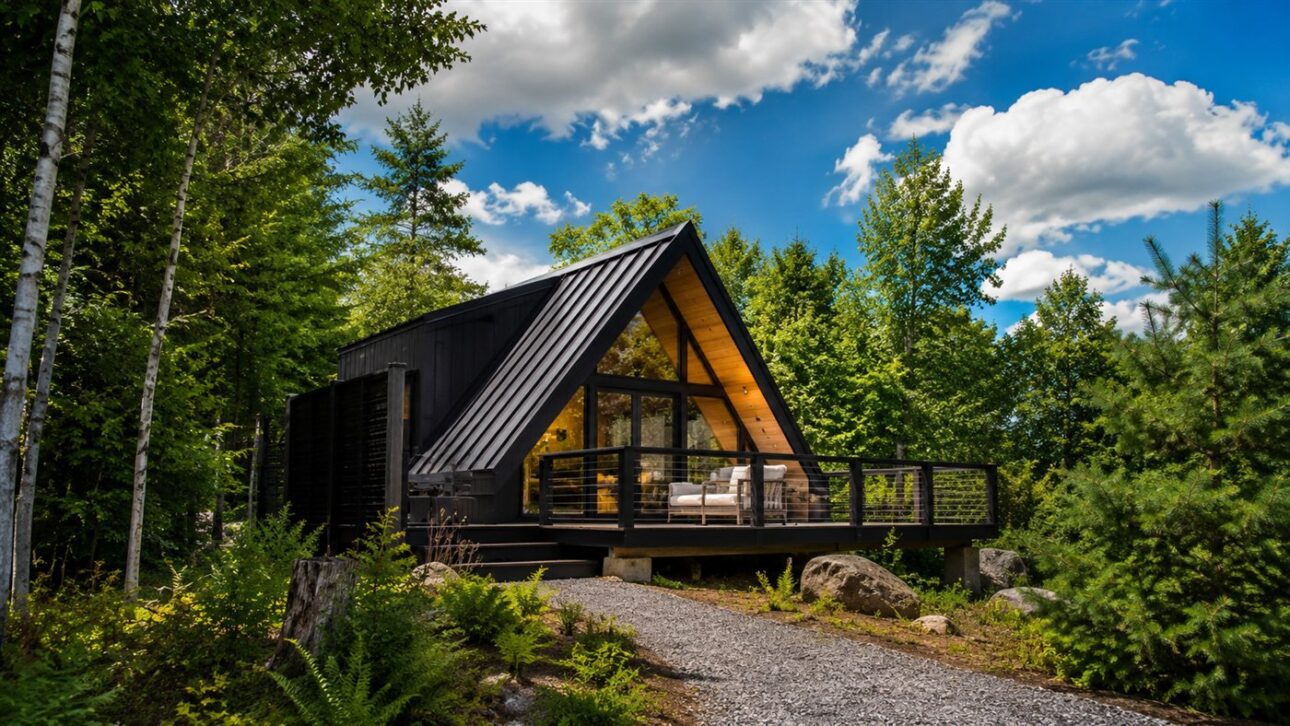
In the structure, the original plan bowed to reality. The 30-foot dome that would open the complex was delayed, and the solution was to pivot to a prefabricated triangular cottage, which even factory-ready took 6 months to become operational, according to the Kai Andrew channel on YouTube. All this with the founder learning construction on the job, working nights and weekends, with no labor available in the region and a small child at home.
The disastrous launch: storm, burst pipes, and dismissal
January 2026 was supposed to be the dress rehearsal, and it turned into a test of endurance. According to Kai Andrew, the debut in the low season was intentional, to adjust the operation before the peak, but a major winter storm blocked roads with snow and 10 centimeters of ice, burst pipes in the cottages, and canceled the few existing reservations.
The next blow came from the paycheck. In the middle of the crisis, Doug was fired from the tech job that funded the project, after already sacrificing savings and retirement on the construction, as Kai Andrew reports. And the most bothersome detail: competitors in the region operated with almost double his occupancy, even in the low season, with much simpler cottages.
The number no one looks at: lead time of 9 days

Instead of lowering prices in desperation, the engineer opened the data. According to Kai Andrew, Doug went after a metric that almost no one tracks, the lead time, the number of days in advance that guests book, and discovered that the median for his property was only 9 days.
The diagnosis explained the empty calendar of Star Farm. The automatic pricing offered aggressive last-minute discounts, charged 3 to 4 times the base value on distant dates, and varied so much that it confused the guest, as detailed by the Kai Andrew channel on YouTube. In practice, the system trained the customer to wait: those who planned in advance saw a frightening price and gave up, and those who waited got a discount. The video calls this effect the death spiral of bookings, the empty bakery that no one enters precisely because it is empty.
The 3 changes that turned the game around in 72 hours
The correction fit into three moves. According to Kai Andrew, Doug removed the strong last-minute discounts, created discounts for bookings made in advance, and narrowed the range of rate variations to compete with the local market.
The result came in days, not months. More than 30 new nights were booked in about 2 to 3 days, and the median lead time jumped from 9 to 19 days, according to Kai Andrew, who says he applied the same strategy to his own properties and saw bookings 3 to 4 months in advance, with nightly rates reaching close to US$ 2,000. The lesson applies to any hospitality business: price is not just a number, it’s a message, and the wrong message empties the calendar.
The mathematics of the resort: how a chalet becomes US$ 750,000
The ultimate goal is not the nightly rate, it’s the asset valuation. According to Kai Andrew, Star Farm is a commercial venture evaluated by net operating income: if the first chalet of about 37 square meters generates US$ 5,000 net per month, or US$ 60,000 per year, dividing by the capitalization rate of 8%, the typical cap rate for the region, results in a valuation of US$ 750,000, more than everything that was invested in land and construction so far.
The staircase to 2030 is drawn. With the 8 planned units in operation, including dome, triangular chalets, container, and mirrored cabin, the projected valuation is between US$ 5 million and US$ 6 million, according to the Kai Andrew channel on YouTube. All without debt: the founder says he pays for the construction month by month, living paycheck to paycheck for the first time in 20 years, to own the entire complex without owing a dollar. The sign that the thesis is good came from the market: the largest competitor in the area has just been purchased by a private equity fund.
What the case teaches Brazilian glamping


Brazil is experiencing its own glamping rush, with domes and triangular chalets sprouting near national parks and mountain ranges from the South to the Northeast, and the case of Star Farm provides an involuntary manual. The location is worth more than the structure: being minutes away from an attraction with growing visitation is what sustains the high daily rate all year round.
The second lesson is the one that appears least in course advertisements. Accommodation is a data business: those who do not measure booking lead time, competitor occupancy, and price response are driving blind, and the 72-hour turnaround of the engineer shows that sometimes the problem is not the product, it’s the pricing scale teaching the customer not to book. Tell us in the comments: have you ever kept an eye on accommodation and given up because of the price of a distant date?
Watch the story of Star Farm
The video shows the raw land, the work on weekends, the disastrous launch, and the data analysis that turned the game around, as well as the complete tour of the chalet.
Star Farm still has 7 doors to open by 2030, and the story so far has already yielded the best synthesis of the sector: a resort is not built in a hurry, it is built with location, data, and one weekend at a time. Tell us in the comments: would you trade your days off for a project like this?