Portuguese
  Spanish


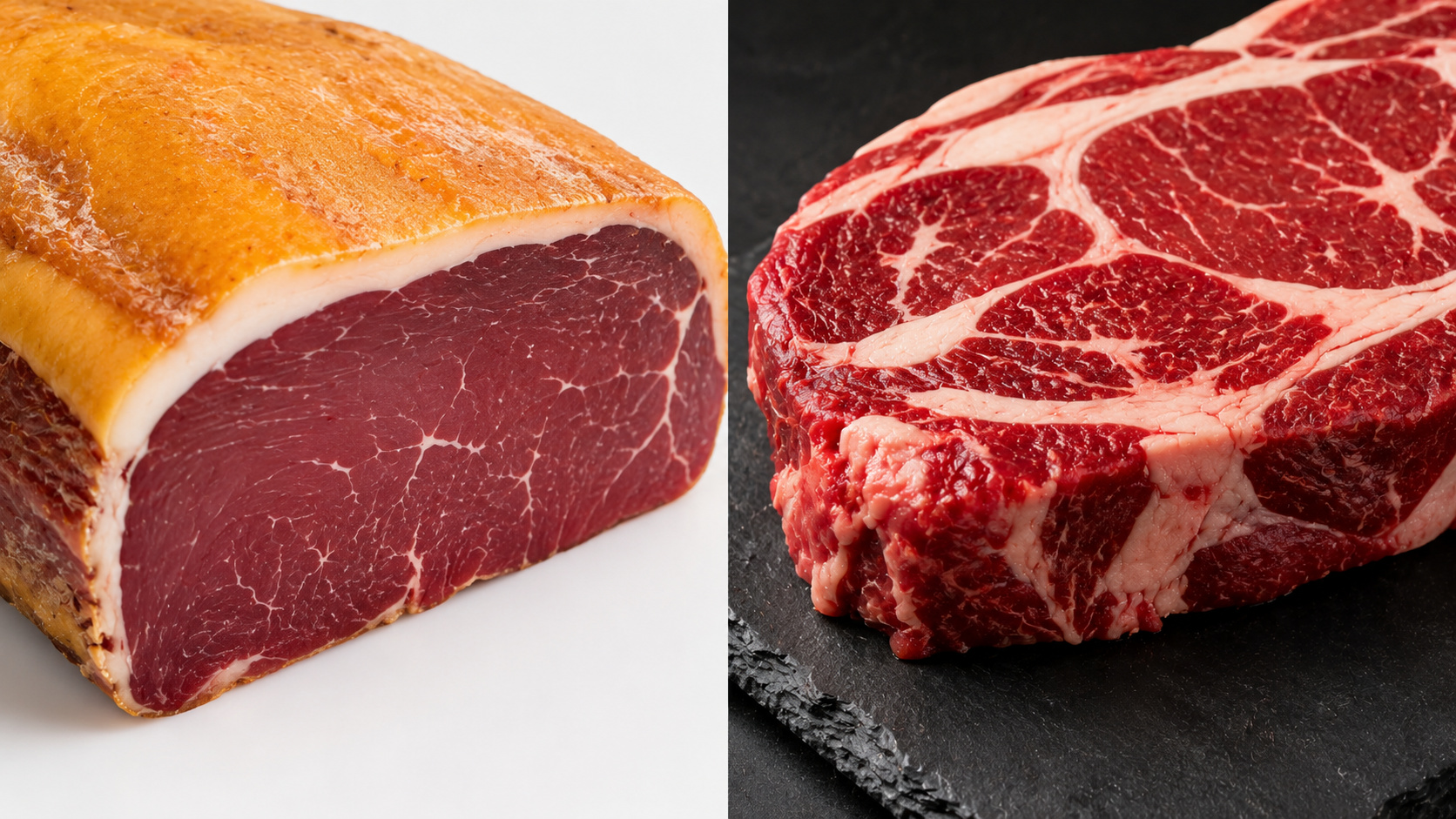

Experts explain what is really behind the color of fat in beef and why this detail, often ignored at the butcher, can help choose the ideal cut for each type of preparation
When choosing a good cut of meat for a barbecue, a stew, or even for the filling of an empanada, most people only pay attention to the color of the meat itself — red, firm, without strange spots. Few, however, notice a detail that can say much more about the quality of the product: the color of the fat. In this sense, it is common to find butcher shops where two practically identical pieces, taken from the same part of the animal, present visibly different fat — one white and the other yellowish.
According to information published by the Argentine portal Diario Uno, this difference usually generates distrust among consumers, who often associate yellow fat with an old or inferior quality product. However, this belief is far from true. The color of the fat does not indicate, by itself, whether a cut is better or worse — it only reveals information about the life history of that animal.
What really determines the color of fat in beef
The main explanation for this difference in tone lies in the animal’s diet throughout its life. Cattle raised mainly on pasture consume large amounts of forage rich in beta-carotenes, natural pigments present in plants — the same compounds, in fact, responsible for the orange color of carrots. Over time, these pigments accumulate in the animal’s fatty tissue and end up tinting the fat with a yellowish hue, which can vary from more intense to more subtle depending on the diet and grazing period.
-
60-Year-Old Kurt Kromm Fired Over $1.95 Cookie After 11 Years at Ford, Proves Payment and Lands Better Job

-
Einstein’s Lasting Advice: “Strive to Be a Person of Value, Not Just Success” Inspires Many Seeking Life’s Meaning

-
Man Spends Weeks Clearing Overgrown Land, Faces Equipment Failures, and His Story on Scott Harrison’s Channel Reaches 94,000 Views

-
Engineer Builds Star Farm Resort on $250,000 Plot Near U.S. National Park, Projected to Reach $6 Million Value by 2030




On the other hand, animals finished in confinement, fed mainly with grains like corn or soy, ingest a much smaller amount of these pigments. As a result, the fat of these cattle tends to be lighter or completely white. Still, this does not represent any problem of preservation or freshness — it is simply a reflection of the type of upbringing that animal received.
Therefore, it is perfectly normal to find two practically identical cuts, taken from the same piece and the same region of the cow, with completely different fat colors. One of the most widespread myths among consumers is precisely the idea that yellow fat indicates old or spoiled meat — a belief that, according to experts consulted by the Argentine report, has no basis whatsoever.
Yellow or white fat: which to choose when buying?
Although there is no significant nutritional difference between the two types, the final taste of the dish can vary greatly. Meat with yellow fat, from grass-fed animals, usually has a more intense and distinctive flavor, as well as a nutritional profile considered richer by some nutritionists. On the other hand, meat with white fat, typical of grain-finished animals in confinement, tends to have a milder flavor and fat that melts more easily during cooking — characteristics that many consumers also value, depending on the type of preparation.
Meanwhile, it is important to remember that fat plays a fundamental role during the cooking of any cut. As the heat increases, it slowly melts and releases aromatic compounds that intensify the flavor of the meat. Additionally, it acts as a kind of natural barrier, helping to retain internal juices and preventing the piece from drying out or becoming tough — that’s why cuts with good fat infiltration between the fibers, known as marbling, usually provide a more tender experience at the table.
Even so, it is worth reinforcing an essential point highlighted by the original report: more than the color of the fat, what really indicates a quality product is the uniform red color of the meat, the firmness and good adherence of the fat to the piece, the absence of unpleasant odors, and proper storage under refrigeration. Excessively dark fat, with strange spots or a strong smell, can indeed be a sign of deterioration — and in this case, it is best to avoid purchasing.
Therefore, both yellow and white fat can result in cuts of excellent quality. The choice between one and the other should take into account, above all, personal taste preference and the type of preparation desired — whether a more intense-flavored grill or a dish with a smoother and more delicate texture.