






 Portuguese
  Spanish


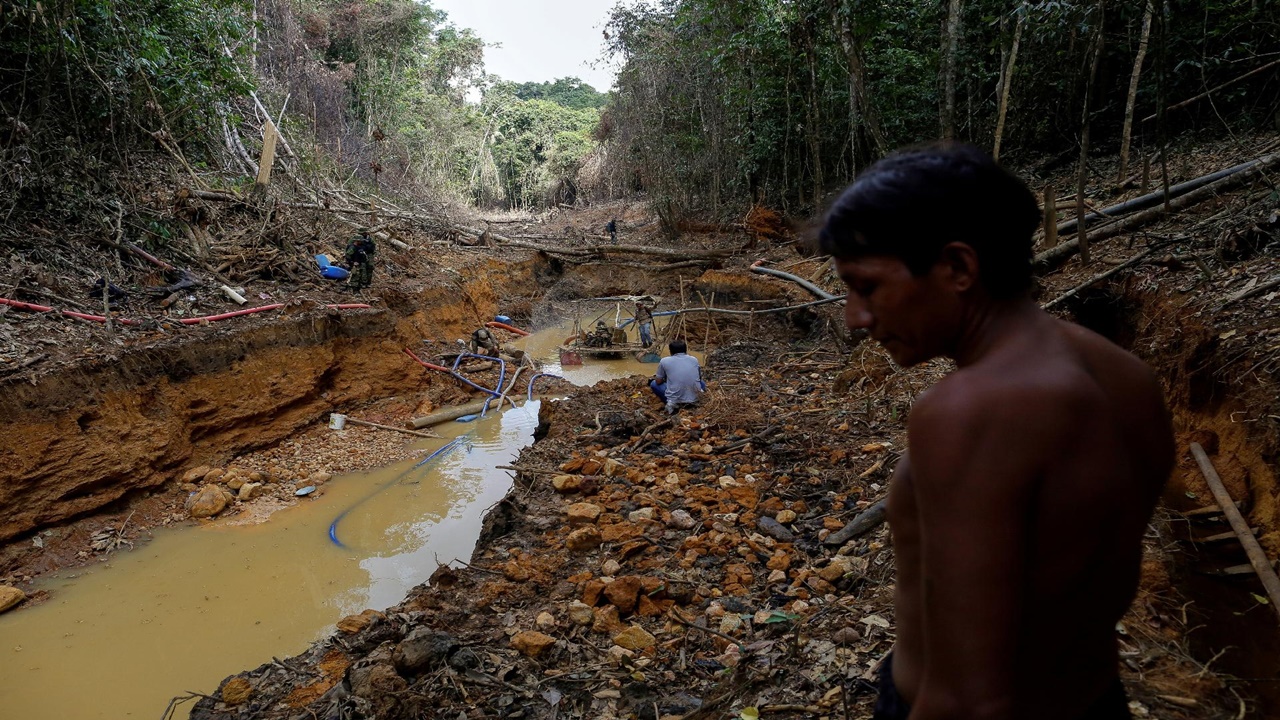

Brazil Is the World’s Largest Importer of Potash, New Discovery in the Amazon and Pará Presents Opportunities to Reduce Country’s High Foreign Dependency
The Geological Service of Brazil, a public company linked to the Ministry of Mines and Energy, identified new occurrences in the Amazon and Pará Basin and increased its assessment of potassium salt deposits, or sylvinite, which is the mineral potassium chloride, from which potassium (K) is extracted, by 70%.
Law Also
- Multinational NOV Is Hiring for Job Openings in Macaé, São João da Barra, and Minas Gerais
- Oil Giant Halliburton Is Recruiting for Job Openings in Macaé and Rio de Janeiro Today, February 4
- Oil Giant Halliburton Is Recruiting for Job Openings in Macaé and Rio de Janeiro Today, February 4
- Siemens Will Manufacture 70 Turbines in Its Factory in Bahia and Many Jobs Will Be Generated in the State
Essential for any type of cultivation, potassium is one of the most important minerals for the fertilizer industry. The mineral is widely used to increase productivity in the field and, along with nitrogen and phosphorus, forms the triad present in NPK formulations.
Brazil currently holds the title of the world’s largest importer of potash, purchasing 96.5% of the potassium chloride it uses for soil fertilization, which, according to data from the Ministry of Economy, represented 10.45 million tons acquired in 2019.
-
Brazil to Issue “Panda Bonds” in China, Aiming to Raise Up to 5 Billion Yuan at Lower Interest Rates Than Dollar Debt
-
NATO Faces Internal Tensions as U.S. Pushes for Increased Defense Spending, Targeting 5% of GDP by 2035, with Warnings for Countries Near 2% Level

-
Brazil to Introduce B16 Diesel with Increased Soybean Oil Content for Trucks by 2026
-
Brazil’s July Bolsa Família Payments May Include Extra $150 and $50 for Families with Children, Pregnant Women, and Updated CadÚnico Registration


According to the Report on the Assessment of Potassium Potential in Brazil – Amazon Basin Area, Center-West Sector, States of Amazonas and Pará, it can currently be affirmed that deposits exist in Nova Olinda do Norte, Autazes, and Itacoatiara, with reserves of around 3.2 billion tons of ore, in addition to occurrences in Silves, São Sebastião do Uatumã, Itapiranga, Faro, Nhamundá, and Juruti.
In the Autazes region, the ore can be found at depths ranging from 650m to 850m, with a concentration of 30.7% KCl. In Nova Olinda, the depth varies around 980m to up to 1200m, with an average concentration of 32.59% KCl.
[quads id=2]
The Agricultural Sector of Brazil Will Benefit from New Discoveries of Potash in the Amazon and Pará
According to Marcio Remédio, director of Geology and Mineral Resources at the Geological Service of Brazil, if these already identified deposits enter production, the impact on the agricultural sector and fertilizer production in Brazil could be immediate. “The expectation is that by reducing fertilizer imports, the input will become cheaper and more accessible, eliminating transportation and logistics costs,” he explained.
The Minister of Mines and Energy, Bento Albuquerque, emphasized the importance of the work that the Geological Service of Brazil has been doing to facilitate inputs that are so necessary for the country’s development. “Brazil is known worldwide as an agro-environmental powerhouse, meeting a significant part of the growing global demand for food. The research aimed at minimizing dependence on imported agro-minerals is a strategic action and a goal of the Mining and Development Program, recently launched.”
Another important point highlighted by the president of the Geological Service of Brazil, Esteves Pedro Colnago, is the issue of national sovereignty. In 2021, the potash market was put on alert due to the political crisis in Belarus, the world’s largest supplier of the commodity, leading to price increases and concerns about the supply of the input. “One of our lines of action is to promote the discovery of new deposits for strategic commodities such as phosphate and potash, through various prospecting projects, especially given the concern to meet the Ministry of Agriculture, Livestock and Food Supply’s projection of an increase of about 27% in our grain production over the next decade,”
Alexandre Vidigal, Secretary of Geology and Mineral Transformation, reminded us of the benefits, beyond agribusiness and Brazil’s economy, that the mineral activity can generate regionally, such as the creation of new jobs, improvement in the income of the local community, and increased revenue in producing municipalities, which now receive the Financial Compensation for the Exploration of Mineral Resources (CFEM).







