






 Portuguese
  Spanish





Brazilian Military Assess Cautiously The Relation With Washington, Fearing That Political Instability Affects Arms Purchases and Strategic Projects. Understand How This Could Impact Brazil In The Long Term
The United States maintains one of the largest arms transfer programs in the world, the Foreign Military Sales (FMS). Created to strengthen allied Armed Forces, the program mobilized over US$ 80 billion in 2023.
Brazil is among the countries that benefit the most, acquiring everything from transport planes to missiles with cutting-edge technology.
The system allows partner governments to purchase new or second-hand equipment at more accessible prices.
-
As Brazil Expands Social Welfare, Survey Reveals 40% Blame Poverty on Laziness, While 58% Cite Lack of Opportunities

-
China Tightens Control on Antimony, Driving Prices from $22,000 to Nearly $40,000 per Ton as U.S. Rushes to Bolster Strategic Reserves

-
BlackRock Freezes $1 Billion in Brazilian Renewable Energy, Impacting 1.5 GW of Planned Projects and Highlighting Investor Concerns Over Infrastructure Bottlenecks Cutting Up to 25% of Solar and Wind Generation
-
Labor Shortage: Despite Record Average Salary, 90% of Brazilian Bar and Restaurant Owners Struggle to Hire Key Roles Like Sushi Chefs and Head Cooks


Additionally, it includes training, logistical support, and technical capacity building. For the Brazilian Armed Forces, which maintain historical ties with Washington, the program is considered crucial.
Equipment and Training
In recent years, Brazil has acquired through FMS armored vehicles, naval systems, components for F-5 fighters, communication technologies, and even electronic warfare tools.
Black Hawk helicopters and automotive components have been obtained through this mechanism.
A large part of the Brazilian naval fleet also uses engines and navigation equipment based on technology from the United States.
In the specific case of the Navy, both the PROSUB (Submarine Development Program) and the PNM (Nuclear Program of the Navy) also require technology from the U.S.
For specialists, FMS allows Brazil to modernize our Armed Forces and access cutting-edge technologies that enhance Brazil’s response and deterrence capability.
Shadow of Politics
According to CNN Brasil, despite the solidified partnership, concern grows regarding the political climate between Brasília and Washington.
Brazilian military authorities are closely monitoring the scenario, fearing that misunderstandings might directly affect the flow of equipment and technology.
The risk is not just theoretical.
U.S. sanctions against Brazil could impact strategic defense industrial base projects, considered vital for the country.
Main Acquisitions Via FMS
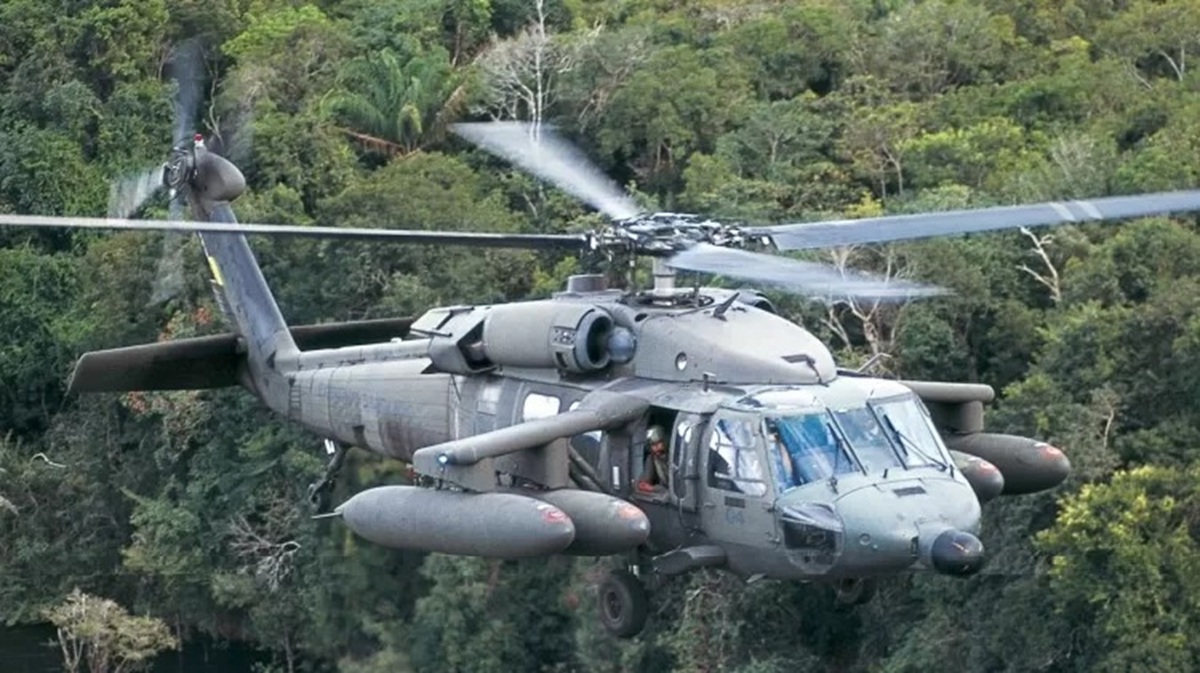
In May 2024, the U.S. State Department authorized the sale of 12 UH-60M Black Hawk helicopters to Brazil.
The package included engines, communication radios, inertial navigation systems, and complete logistical support.
The estimated value of the deal was 950 million dollars, consolidating the Black Hawk as a central piece of Brazilian Army aviation in transport and tactical support operations.
Another important reinforcement came in March 2025. After prior authorization in 2022, the Brazilian government confirmed the purchase of up to 222 FGM-148 Javelin anti-tank missiles, along with 33 portable launchers.
The contract also provides for training, simulators, and integrated logistical support. The system, used in recent fights by NATO forces, is considered one of the most effective in the world against modern armored vehicles.
The Brazilian Navy was also granted new capabilities. In 2020, Washington approved the sale of 22 conversion kits for Mk 54 torpedoes, technology that allows upgrading old Mk 46 models.
The agreement included training, exercises, and maintenance parts, enhancing the anti-submarine warfare capability of the national fleet.
The Unpredictable Factor
The main uncertainty lies in politics. Both President Luiz Inácio Lula da Silva (PT) and former President Donald Trump are seen as figures of unpredictable decisions.
A sudden change in posture could reconfigure the trust relationship that underpins FMS.
For Brazilian military personnel, this risk needs to be closely monitored.
After all, while the program has already strengthened the Armed Forces with modern equipment, its continuity depends on the diplomatic stability between the two countries.
Brazil continues to receive arms and assistance from the U.S., solidifying itself as a strategic partner.
However, in an international scenario marked by tensions, technological dependence is a cause for concern.
History of Foreign Military Sales (FMS)
The Foreign Military Sales (FMS) program is one of the main initiatives created by the United States for exporting military equipment to allied countries.
Its origins are linked to the period of the Cold War, when Washington sought to consolidate political and strategic influence around the world, offering not only arms but also logistical support, training, and maintenance.
The legal basis for the program emerged with the Foreign Assistance Act of 1961, which authorized the U.S. government to provide military aid to nations deemed strategic.
In the following years, the mechanism was structured and expanded, consolidating itself as a model for sales organized directly between the U.S. Department of Defense and foreign governments, without the intermediation of private companies.
This ensures greater political control over contracts and allows equipment to be provided under favorable conditions.
During the 1960s and 1970s, FMS became essential to strengthen NATO partner countries and allies in Asia and the Middle East.
During this period, nations such as Israel, South Korea, Japan, and Saudi Arabia became major buyers, receiving fighter jets, tanks, air defense systems, and warships. The U.S. objective was clear: to contain the expansion of the Soviet Union and standardize equipment among forces that could act together in potential conflicts.
Over time, the program grew in scale and value. In addition to the sale of new equipment, FMS began to include excess stocks from the U.S. Armed Forces, often at reduced prices.
It also incorporated more comprehensive support packages, covering troop training, provision of spare parts, technical assistance, and modernization of systems already in operation.







Nós brasileiros temos que acordar, quando formos votar estarmos atentos para a proposta do nosso candidato para as forças armadas. Essa que está aí não nos serve. Forças armadas que se submete a outra nação, que se presta a atentar contra seu próprio povo, que se satisfas com material de 2ª linha imposto por outro país, como já disse nāo nos serve. Custa muito Caro, o Brasil é muito maior que esse Bando de **** lambe botas de americanos. TEMOS QUE FAZER UMA REFORMA NAS ESCOLAS, ACADEMIAS DE FORMAÇÃO DESSES ****. FAZÊ-LOS A RESPEITAR QUEM OS PAGA COM SEUS IMPOSTOS. RESPEITAR E PROTEGER O BRASIL.
Faz vergonha as forças armadas do Brasil serem submissas ãs dos EUA; elasandam até na programação das rádios do EB e da MB, fazendo com que estas emissoras toquem mais músicas americanas, desprestigiando nossa cultura musical brasileira.
O que me preocupa, muito, é o fato de as FA não terem e entendido que o nosso principal inimigo potencial são os EUA…
Quando irão desmamar? Essa dependência quase subserviente, para dizer o mínimo, não é nada boa.