






 Portuguese
  Spanish


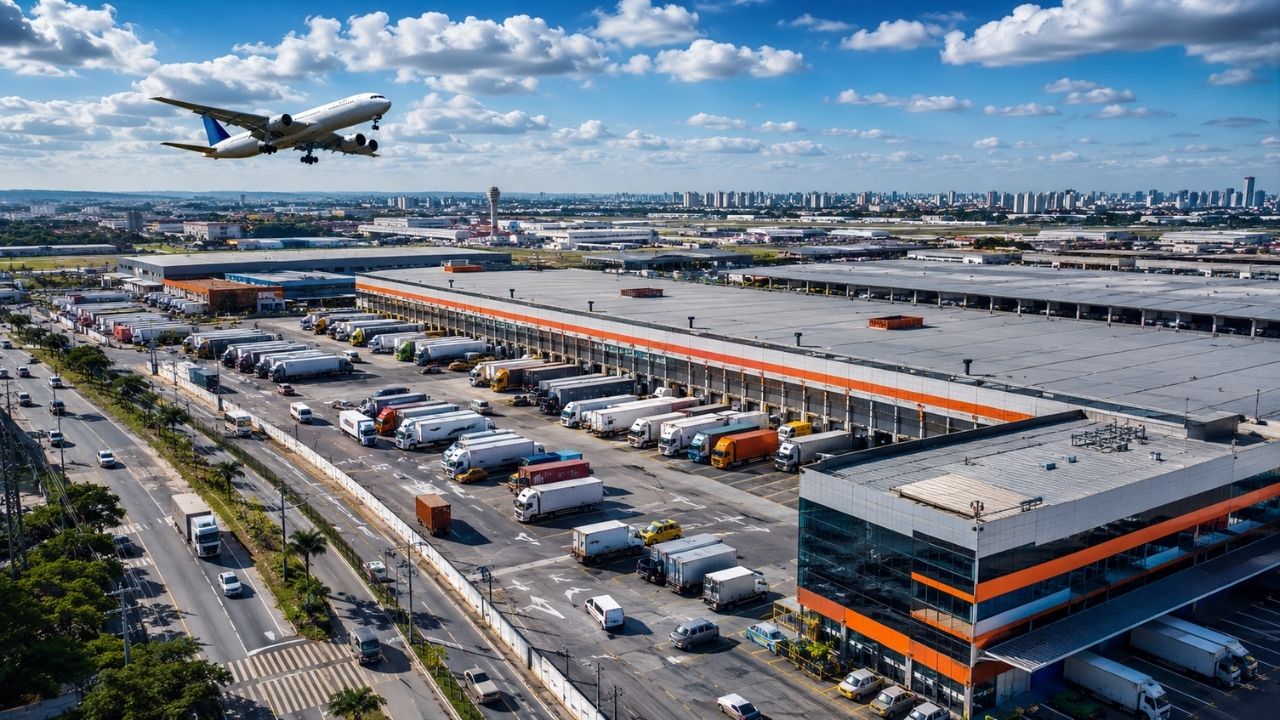

The logistics warehouses made Guarulhos reach R$ 37.11 per square meter near the airport, according to Cushman Wakefield. The city attracts Shopee, Mercado Livre, Amazon, and real estate funds, but heavy traffic, pressure on highways, and industrial gentrification reveal the urban cost of the new logistics rush.
The logistics warehouses have transformed Guarulhos into one of the most sought-after addresses in the Brazilian industrial real estate market, with a square meter price of R$ 37.11 near the airport, according to data cited by Cushman Wakefield. The case was shown in a video published on June 13, 2026, amid the advance of large companies and funds over the city, while traffic already appears as one of the main local bottlenecks.
According to a video published by the Céu da Obra channel on YouTube, the phenomenon involves companies like Shopee, Mercado Livre, Amazon, GLP, real estate funds, and cargo operators seeking space in a city once marked by factories and now covered by high-standard roofs. The advance gained strength with new developments, billion-dollar contracts, and the promise of delivering products increasingly faster, but also exposed urban bottlenecks in traffic and local infrastructure.
Guarulhos became a showcase for the logistics market
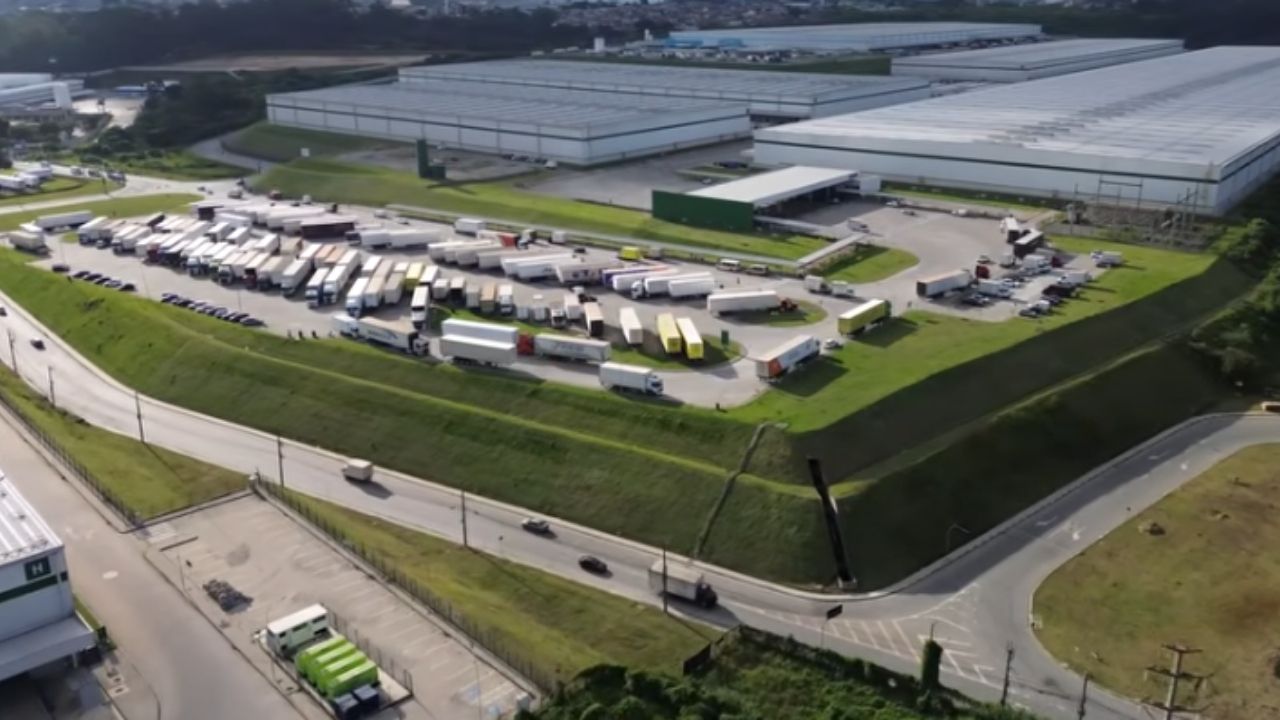
Guarulhos is no longer seen just as an industrial city of Greater São Paulo but has become a strategic piece of the delivery chain in Brazil. What was once the territory of factories, metallurgies, auto parts, and petrochemicals has become concentrated with distribution centers, logistics parks, and high-standard warehouses.
-
Brazilian Startup Turns Coffee Grounds into Plant-Based Leather, Cutting Water Use by Over 50 Times for High-Impact Sustainable Fashion

-
Eco Invest Auction Aims to Unlock $10 Billion in Investments, Focusing on Green Fertilizers, Critical Minerals, Batteries, and AI for Clean Industry in Brazil

-
Half of Brazilians Prefer Lower Taxes with Private Health and Education, While 44% Opt for Higher Taxes for State-Provided Services, Datafolha Survey Reveals

-
Brazil’s Most Expensive Toll Rises to R$ 40.60 on Route from São Paulo to the Coast, Nearly Matching Bus Fare to Santos



The old logic of the factory floor gave way to the warehouse floor. The city became attractive because it combines an airport, highways, proximity to millions of consumers, and land capable of accommodating large structures. This combination earned Guarulhos the nickname “Faria Lima of warehouses.”
Logistic square meter surpassed the São Paulo capital
The number that summarizes this transformation is the value of the square meter. According to the source, the logistic square meter in Guarulhos reached R$ 37.11, a level higher than that of the São Paulo capital itself in this segment.
This value shows how logistic warehouses have come to occupy a special position in the real estate market. Instead of glamour, famous facade, or traditional corporate address, what matters is the ability to quickly move goods, get close to the consumer, and reduce delivery time.
Geography became the city’s greatest asset
Guarulhos is in a position difficult to replicate. On one side, it hosts the largest cargo terminal in Brazil within the largest airport in South America. On the other, it is connected to axes like Dutra, Ayrton Senna, Fernão Dias, and Rodoanel.
Moreover, it is adjacent to the largest consumer market in Latin America. For companies that need to deliver on the same day, few addresses have such strategic strength. The location has ceased to be just a convenience and has become the main field of competition.
Airport sustains the race for space
Guarulhos International Airport is one of the major reasons for the appreciation. According to the source, in 2024, 337,900 tons of cargo were handled, a historical record since the start of the concession.
Smartphones, medicines, electronics, and high-value products pass through this corridor. The closer the warehouse is to this structure, the shorter the time between the arrival of the cargo, sorting, packaging, and dispatch to the final consumer.
Logistic warehouses became delivery machines
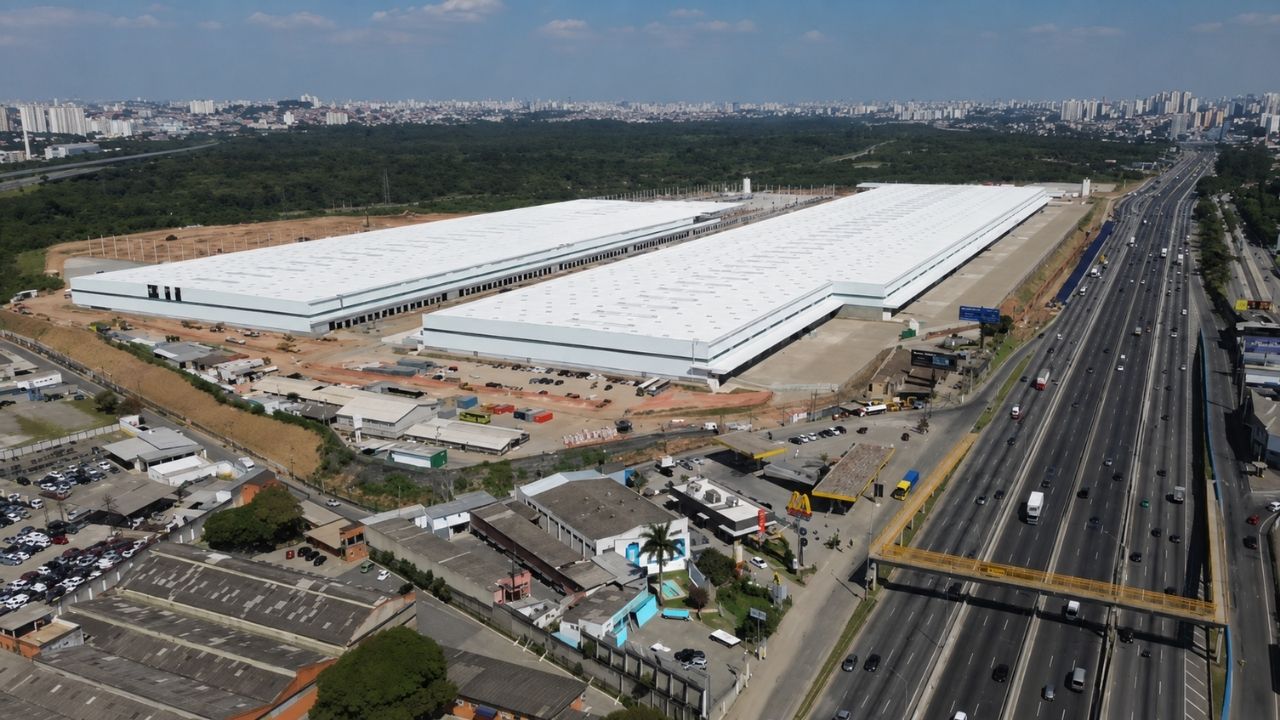
The modern logistic warehouses are not just large storage spaces. The source highlights structures with ceilings up to 12 meters high, precisely leveled floors, docks on both sides, cross docking, sprinklers, AI cameras, and automatic levelers.
In practice, these spaces function as speed machines. The truck arrives at one dock, unloads, and another can leave from the opposite side with the cargo already redistributed. The product doesn’t stay still: it moves through the structure in minutes.
Invisible engineering increases sector costs
From the outside, a warehouse may look like just a huge metal roof. Inside, however, the operation requires sophisticated engineering. The floor needs to support heavy weight and allow forklifts to work at height without risk of instability.
The source cites floors capable of withstanding 6 tons per square meter. It also mentions the use of laser leveling technology to ensure precision. This type of detail explains why renting a premium warehouse cannot be compared to a common storage facility.
Last mile has become a business war
The growth of e-commerce has changed the weight of logistics. Consumers want to shop at night and receive quickly, sometimes the next day or the same day. This pressure has created the so-called last mile war.
In this scenario, Guarulhos gained an advantage because it allows reaching a huge population in a short truck ride. The source states that from the gate of a warehouse in the city, it is possible to reach 12 million people in less than an hour.
Shopee signed a historic contract
One of the strongest examples of the dispute is Shopee. According to the source, in March 2026, the company signed the largest logistics warehouse lease contract in Brazil’s history, with 220,000 m² in the Guarulhos 3 complex, by Mark Logistics, along the Dutra.
The space is equivalent to 27 football fields. The building was still under construction when the contract was signed, which shows the pressure for location. In this market, waiting for the concrete to dry can mean losing the most valuable address.
Mercado Livre also expanded its presence
Mercado Livre appears as another major player in this race. According to the source, the company rented an additional 105,000 m² in Guarulhos in the second quarter of 2025, surpassing 2 million square meters of high-standard warehouses occupied in Brazil.
This move reinforces how logistics warehouses have become an essential part of the promise of fast delivery. Marketplaces do not compete only on price, catalog, or app. They also compete for kilometers, minutes, and access to transport corridors.
Billion-dollar funds compete for the same city
The presence of real estate funds and international groups shows that Guarulhos has become a large-scale financial asset. The source cites investments such as R$ 700 million from HSI and R$ 2.1 billion in new developments announced by GLP Brazil by 2026, with a large concentration in the city.
Logistics parks by Brookfield within the airport perimeter are also mentioned. Aero 1 and Aero 2 total almost 200,000 m², with an investment of R$ 560 million. Logistics has moved from backstage to the center of the capital dispute.
Low vacancy reveals pressure for occupancy
The source reports a vacancy rate of 7.46% in Guarulhos, described as a historical minimum. In specific projects, occupancy reaches 100%.
This data helps explain the prices. When there is little available area and many companies wanting to enter, the square meter rises. The scarcity of good addresses turns each new development into a target of dispute even before the completion of the work.
City delivered area equivalent to dozens of fields
In 2025, Guarulhos delivered 443,700 m² of new high-standard warehouses, according to the source. The comparison presented is equivalent to more than 60 covered football fields in a single year.
The scale is impressive because it shows that the transformation is not isolated. The city is redesigning its territory to accommodate a new economy based on cargo, storage, distribution, and speed. Where there was once industrial liability, there is now high-value logistics infrastructure.
The invisible side appears in traffic
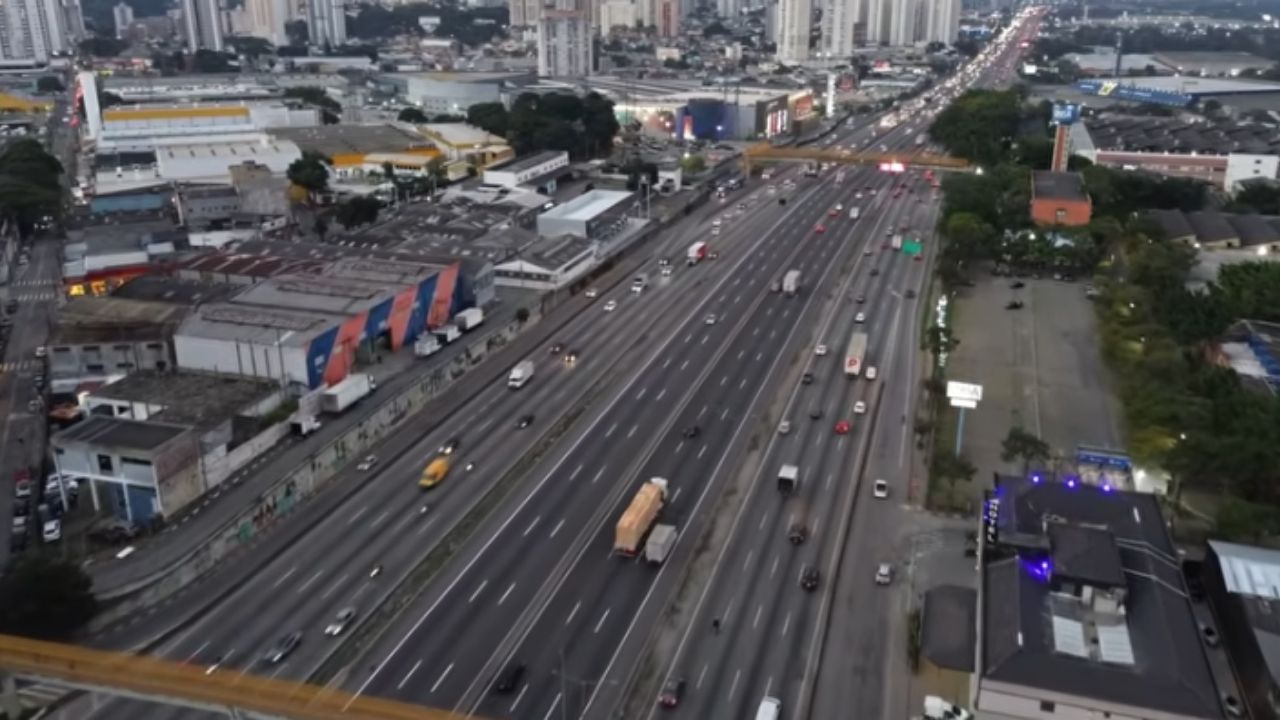
The same map that made Guarulhos irresistible for logistics capital also created an urban problem. The source points to more than 300,000 vehicles per day on the city’s roads, with pressure on accesses such as Dutra, Ayrton Senna, and the Bom Sucesso region.
From the gate inward, many warehouses operate with first-world technology. From the gate outward, the cargo faces the limitations of urban asphalt. This contradiction has become one of the biggest threats to the city’s own logistics success.
Urban bottleneck charges a daily toll
The central question is simple: what good is having the most efficient warehouse if the truck takes hours to leave the municipality? The road bottleneck doesn’t appear in the real estate fund balances, but it affects transport companies, drivers, residents, and delivery deadlines.
In neighborhoods like Bom Sucesso, congestion is not an exception. The source describes the collapse as part of the routine. Logistical wealth arrives in the form of investment, but the urban cost appears in queues, stopped trucks, and pressure on old roads.
Industrial gentrification pressures small businesses
Another cited effect is industrial gentrification. When the square meter of industrial areas rises to levels like R$ 37, R$ 40, or R$ 50, small workshops, small factories, and local traders may lose space.
The capital that enters does not have the same historical relationship with the neighborhood. It looks at yield, contract, vacancy, and appreciation. For smaller businesses, the appreciation that enriches funds can mean displacement to more distant areas.
Rodoanel Norte could change the game
The logistical future of Guarulhos also involves the Rodoanel Norte. According to the source, the first section was inaugurated on December 22, 2025, with 22 km connecting the Via Dutra to Fernão Dias, passing through Guarulhos and Arujá.
The cited investment is R$ 3.4 billion. The second section, with another 20 km, should connect Fernão Dias to the capital’s road system, with delivery expected in the second half of 2026. When the 44 km are complete, the impact on cargo could be significant.
Corridor could connect Santos, Minas, and the Northeast


With the Rodoanel Norte complete, Guarulhos tends to gain an even more strategic function. The source points out that the city could connect the port of Santos to the corridor of Minas Gerais and the Northeast without passing through the center of São Paulo.
Cited analysts estimate growth of more than 40% in the volume of cargo in the first years after full completion. If this is confirmed, the pressure on logistical warehouses and on the price per square meter may continue to increase.
Faria Lima of warehouses still has a physical limit
The nickname “Faria Lima of the warehouses” helps explain the appreciation, but also hides an important difference. The traditional Faria Lima depends on offices, finance, and prestige. Guarulhos depends on highways, trucks, airport, and operational fluidity.
This means that the physical limit matters a lot. If urban infrastructure does not keep up with growth, the same location that is an advantage today can become a bottleneck. The city needs to balance private investment and public circulation capacity.
But the inevitable question remains: can the city handle this growth without stalling? Will the warehouse boom generate urban development or just more traffic, real estate pressure, and bottlenecks for residents and transport companies? Leave your analysis in the comments.


