Portuguese
  Spanish


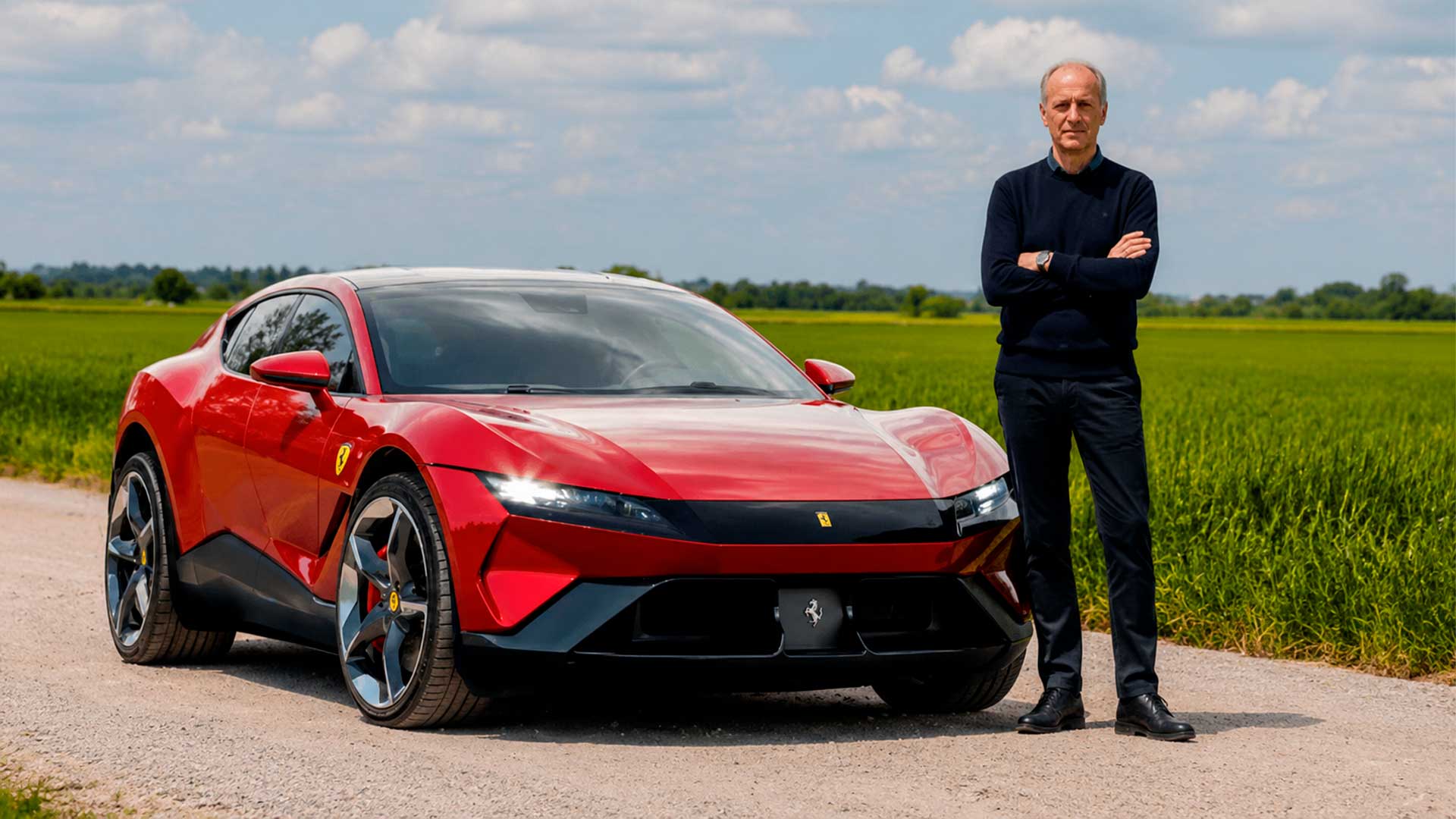


The launch of the Ferrari Luce marked the brand’s historic entry into electric cars, but also provoked a cool market reaction, a drop in shares, and a debate about identity, luxury, and the future of supercars
Ferrari has officially entered the era of electric cars with the Luce, its first 100% battery-powered model. The presentation, made at the end of May 2026, was supposed to symbolize a new chapter for the Italian manufacturer, but ended up being accompanied by a strong negative reaction in the financial market.
According to Reuters, Ferrari shares listed in Milan closed down 8.4% in the trading session following the launch. On the New York Stock Exchange, the company’s shares also fell 5.1% during the day, reflecting investors’ caution regarding the design, positioning, and impact of the new car on the brand’s image.
The drop caused Ferrari to lose more than $4 billion in market value in a few hours, an estimate associated with the decline in shares and the company’s market value before the presentation. It is not an operational loss, but a temporary loss of capitalization on the stock exchange.
-
Sales of Brazil’s Cheapest Electric Car Halted Before First Deliveries: E-Motors Suspends Emova Easy Due to Import Tax Increase and Rising Freight Costs

-
Nissan Discontinues Qashqai SUV Amid Cost-Cutting, Chinese Competition, and Product Line Review

-
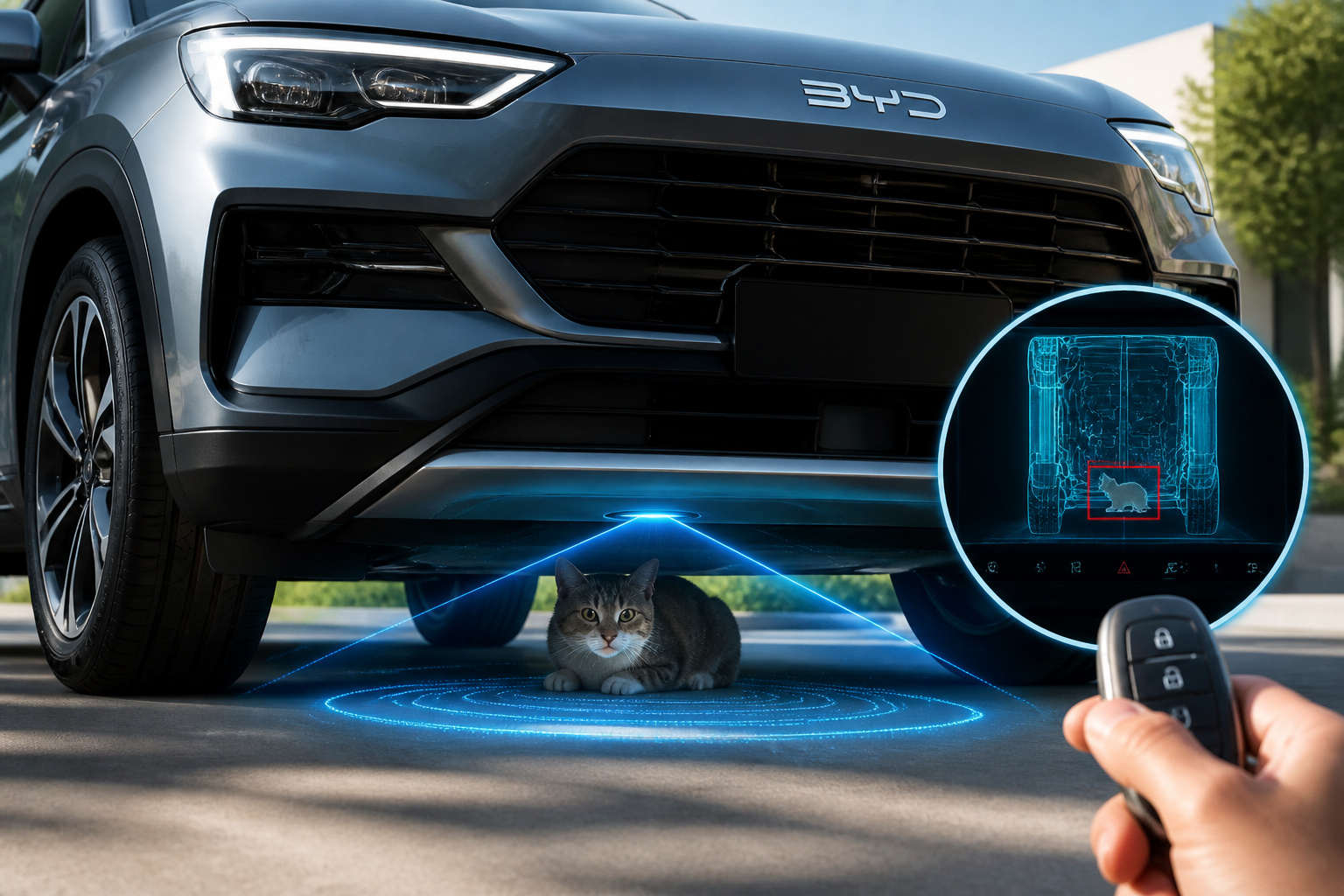
BYD Patents Revolutionary System Using Computer Vision to Detect Animals Under Cars Before Starting, Preventing Tragedies

-
Study Reveals Why Cars Are More Expensive to Produce and Buy in Brazil Compared to Mexico, Highlighting Taxes, Logistics, and Industrial Costs as Key Factors.


The reason for the reaction was not the technology itself. The central point of the discussion was another: to what extent does an electric car, with four doors, five seats, and a minimalist look still represent what the public understands as Ferrari.
Ferrari Luce arrives as the brand’s first electric and breaks with the tradition of combustion engines


The Ferrari Luce marks the debut of the Maranello manufacturer in the fully electric vehicle segment. Until then, the brand had already advanced in hybrid systems, but still preserved combustion engines as a central symbol, especially due to the historical association between performance, mechanical sound, and sportiness.
According to Reuters, the Luce is a four-door, five-seat car, with an initial price of 550 thousand euros, equivalent to about $640 thousand. The proposal places the model in an extreme luxury range, aimed at ultra-high-income clients and markets where premium electric vehicles have greater acceptance.
Ferrari reported that the model represents a new vision of electrification within the brand. The company attempts to bring to the electric world elements that have always sustained its prestige, such as exclusivity, high performance, original design, and driving experience.
Even so, the Luce strays from the more traditional image of Ferrari. Instead of a low, aggressive coupe focused on two occupants, the model appears as a larger, more family-oriented car with a cleaner design. This change explains part of the divided reaction among fans, analysts, and investors.
Design made with Jony Ive became the center of controversy after the presentation
One of the most talked-about points of the Ferrari Luce was the involvement of Jony Ive, former chief design officer at Apple, and the collective LoveFrom. Ive became globally known for his influence on products like the iPhone, iMac, iPad, and Apple Watch, and his entry into the project helped to heighten expectations around the car.
As reported by Reuters, the involvement of Ive and LoveFrom helped position the Luce as an attempt to attract a new generation of wealthy consumers, especially tech entrepreneurs and buyers in markets like China and the United States. Ferrari is trying to engage with an audience more familiar with digital innovation, screens, silence, and minimalist design.
The problem is that this new path did not please everyone. On social media and among industry experts, some criticisms pointed out that the Luce strays too far from Ferrari’s classic visual language. Some comments questioned whether the car preserves the aggressiveness and emotion expected from a model of the Italian brand.
The reaction also reached public figures. According to Reuters, Luca Cordero di Montezemolo, who held leadership positions at Ferrari for more than two decades, harshly criticized the model. Italian Deputy Prime Minister Matteo Salvini also expressed himself on social media, questioning whether the vehicle still carried the spirit of the brand.
Power, battery, and performance show that Ferrari has not given up on performance
Despite the visual controversy, the Ferrari Luce arrives with performance numbers compatible with a high-performance car. According to information released by the specialized press, the model features four electric motors, a 122 kWh battery, and acceleration from 0 to 100 km/h in about 2.5 seconds.
The Guardian reported that the Luce has an estimated range of 530 kilometers and a top speed exceeding 310 km/h. These data indicate that Ferrari tried to balance the proposal of a more spacious electric car with the performance expected from a product of the brand.
Car and Driver also highlighted that the Luce has 1,035 hp, four electric motors, and arrives as the first five-seater Ferrari. The publication noted that the model will be sold as a 2027 model year in some markets and represents a significant break in the company’s history.
Another relevant detail is the attempt to preserve the sensory experience. Ferrari developed a system to amplify mechanical sounds captured from the electric motors and the rear assembly, instead of simply creating a generic artificial noise. The idea is to offer some kind of sound response to the driver, something essential for a brand known for the roar of its engines.
Drop in shares shows that the market fears risk to Ferrari’s identity
The reaction in the stock market does not mean that the Ferrari Luce has failed commercially. The car has not yet reached its first deliveries, scheduled for the fourth quarter of 2026, according to Reuters. The drop in shares mainly shows that investors are uncertain about the electrification strategy and the acceptance of the model.
Ferrari built its brand value based on scarcity, high margin, and desire. Unlike large-volume automakers, the company does not depend on selling millions of cars per year. Its business is sustained by exclusivity, waiting lists, customization, and a customer base with strong purchasing power.
Therefore, any change that seems to dilute the brand’s identity can cause immediate concern. A four-door family electric car may broaden Ferrari’s audience, but it also risks alienating consumers who see the brand as synonymous with extreme sportiness and mechanical tradition.
According to analysts interviewed by Reuters, the market’s reaction reflects doubts about the balance between innovation and heritage. Ferrari’s challenge is to enter the electric future without seeming just like another luxury car manufacturer powered by batteries.
Ferrari’s strategy until 2030 still combines electric, hybrid, and combustion engines
Ferrari does not intend to abandon combustion engines in the short term. In the strategic plan released by the company, the product line expected for 2030 should consist of 40% combustion models, 40% hybrids, and 20% electric.
This design shows that the Luce is not a complete replacement of the traditional Ferrari, but an addition to the portfolio. The company tries to maintain several technological routes at the same time, preserving combustion models for customers who still value the sound, response, and tradition of conventional engines.
The strategy also responds to a transforming luxury market. While part of the automotive industry revises electrification goals due to irregular demand for electric vehicles, premium brands need to find a balance between environmental regulation, innovation expectations, and consumer desires.
In Ferrari’s case, this balance is even more delicate. The brand does not sell just transportation or technology. It sells symbol, exclusivity, and emotion, three attributes that are not always easy to translate into a silent and highly digitized electric car.
Luce could be a decisive test for the future of electric supercars
The Ferrari Luce emerges as one of the most important launches in the brand’s recent history. More than just a new car, it serves as a public test of a traditional manufacturer’s ability to adapt its identity to a new technological era.
If the model wins over customers, the initial market reaction could be seen merely as resistance to change. But if rejection is reflected in weak sales or image damage, Ferrari will have to recalibrate its electric strategy with more caution.
The case also highlights a broader dilemma in the automotive sector. Luxury brands not only need to prove they can manufacture fast electric cars. They need to convince buyers and investors that these cars still carry the same prestige that made these companies desirable.
For now, the Luce has already achieved one thing: it has placed Ferrari at the center of the global conversation about the future of supercars. The question remains whether the public will see this electric vehicle as a bold evolution or as too great a break with the past.