






 Portuguese
  Spanish


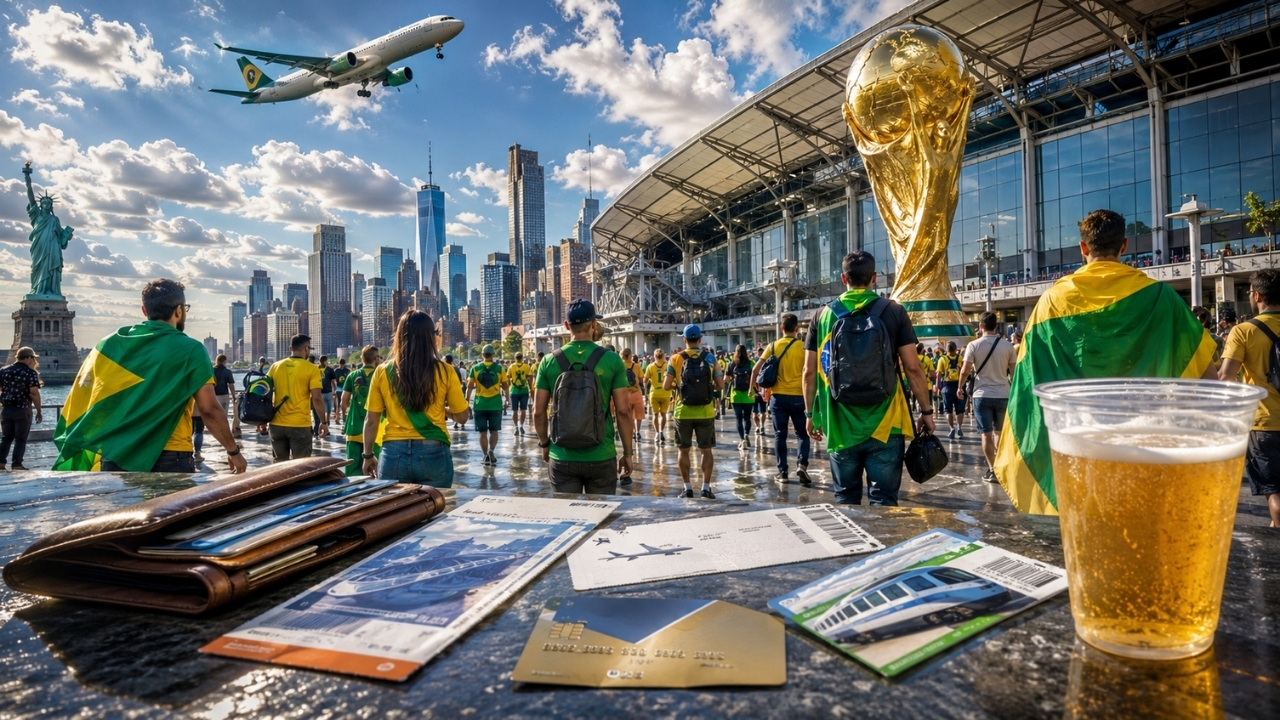

World Cup 2026 brings variable tickets, expensive transportation, and beer at R$ 92, according to a survey by ge published on June 11, 2026. The billion-dollar revenue projected by FIFA and stadium costs show how watching the World Cup has become a financial decision for regular fans in crowded stands.
The World Cup 2026 is still in its early stages, but it has already become a financial alert for fans dreaming of watching the games in the stadiums. With variable ticket prices, expensive special transportation, high food costs, and a billion-dollar revenue projection for FIFA, the experience can weigh heavily beyond the ticket price.
The report by ge, published on June 11, 2026, and signed by Isabela Reis, showed that the World Cup will have 48 teams, be hosted by three countries, and feature 104 games. This edition also marks the debut of a new dynamic pricing model for tickets, bringing ticket pricing closer to the variations already known in airline tickets.
World Cup 2026 will have more teams, more games, and a new pricing logic
The World Cup 2026 will be the first with 48 teams, the first held in three countries, and the first with 104 matches. The expansion of the tournament increases the sporting reach of the event but also expands the commercial structure around the competition.
-
China Tightens Control on Antimony, Driving Prices from $22,000 to Nearly $40,000 per Ton as U.S. Rushes to Bolster Strategic Reserves

-
BlackRock Freezes $1 Billion in Brazilian Renewable Energy, Impacting 1.5 GW of Planned Projects and Highlighting Investor Concerns Over Infrastructure Bottlenecks Cutting Up to 25% of Solar and Wind Generation
-
Labor Shortage: Despite Record Average Salary, 90% of Brazilian Bar and Restaurant Owners Struggle to Hire Key Roles Like Sushi Chefs and Head Cooks

-
Supermarket Deli Counter Attendants in Brazil Could Earn Over $2,100 Monthly by 2026, Plus Benefits Package


What stands out is that the sporting expansion comes with a direct impact on the fan’s wallet. FIFA has adopted the so-called “variable pricing” system, which allows ticket prices to change according to demand and availability for each game.
Variable tickets change the way to buy entry to the stadium
Until previous editions, World Cup tickets had fixed prices by category. In the World Cup 2026, FIFA abandoned this fixed model and started working with prices that can change throughout the sales phases.
According to the organization, adjustments are not automatic but can occur based on demand and availability analysis. In practice, more desired games tend to become more expensive, especially matches with high-profile teams, knockout stages, and the final.
Opening consulted by ge reached values above R$ 48,000
On June 10, 2026, ge consulted the ticket sales website and found high prices for the opening match between Mexico and South Africa. Tickets ranged from US$ 2,652, in the cheapest option, to US$ 9,670.
Converted to reais at the exchange rate used by the report, the values ranged from approximately R$ 13,600 to R$ 48,350. This level makes going to the stadium an expense comparable to major international trips, depending on the itinerary, accommodation, and the fan’s distance.
Final also appears among the most expensive points of the tournament


The final of the 2026 World Cup, which will be held at MetLife Stadium in New Jersey, also appears among the most expensive events on the calendar. The report stated that tickets for the decision were being sold for US$ 7,000.
At the ticket launch, premium tickets for the final reached US$ 11,000, approximately R$ 55,000. The contrast between the popular passion for football and the price of access to the stadium fuels criticism about who can attend the World Cup in person.
Transportation in New Jersey became another pressure point on the budget
The costs are not limited to tickets. In New Jersey, the state government priced train tickets to MetLife Stadium at US$ 150 round trip, about R$ 750. Regional shuttle buses reached US$ 80, approximately R$ 400.
After protests from residents and fans, the prices were reduced to US$ 98 on the train and US$ 20 on the buses. Even so, the episode showed that the 2026 World Cup may also weigh on transportation, especially in stadiums that will host decisive matches.
Governor criticized lack of FIFA subsidy for transportation
The governor of New Jersey, Mikie Sherrill, publicly stated that FIFA did not allocate resources to subsidize transportation at the event, unlike what happened at the Qatar World Cup in 2022, when ticket holders could use public transportation for free.
According to Sherrill, NJ Transit ended up with a $48 million bill to transport fans to the games and bring them back safely. The statement sparked a public dispute over who should foot the logistical bill for a billion-dollar event: the entity, the local government, or the visitor.
Beer at $92 and expensive snacks increase the cost of the experience
The price hike also reached the Fan Fests organized to welcome fans in the United States. The cheapest beer was reported at $18, equivalent to about R$ 92. Larger drinks reach $29, approximately R$ 149.
Simple snacks, like bags of potato chips, are priced at $5, about R$ 25. When added to tickets, transportation, and potential accommodations, these expenses show that the real cost of watching the 2026 World Cup goes far beyond the game ticket.
Fifa projects revenue exceeding $13 billion in the tournament cycle
While fans calculate the costs, Fifa expects to surpass the $13 billion revenue target in the 2026 World Cup cycle, based on the latest financial report cited by the article. The World Cup will also have a record prize for teams.
The champion will receive $51 million, equivalent to R$ 265 million at the conversion used by ge. The runner-up will get $34 million, or R$ 176 million. In total, $871 million, about R$ 4.3 billion, will be distributed in prizes in the edition.
Infantino defended the model and cited investment in football
Fifa President Gianni Infantino defended the revenue logic. In a press conference, he stated that the entity invests thanks to the revenue it generates and linked the tickets to events that happen before the matches or during breaks.
Infantino also argued that the pricing dynamics help fund investments in the sport’s growth and maintain free television broadcasts. However, Fifa’s defense coexists with criticisms that the model may drive ordinary fans away from the stadiums.
Comparison with 2014 shows a break in the access model
In the 2014 World Cup, held in Brazil, tickets were standardized, as in previous editions before the 2026 World Cup. For the opening match between Brazil and Croatia, one of the most contested games, the cheapest ticket was R$ 80 for half-price entry, while the most expensive cost R$ 990.
The Brazilian edition also had category 4, aimed only at Brazilians, with reserved tickets at popular prices. The comparison does not ignore inflation and exchange rates, but shows a change in logic: the 2026 World Cup inaugurates a model where demand can directly influence how much the fan pays.
The alert for the wallet goes beyond the passion for football
The 2026 World Cup maintains the usual sporting appeal, but now brings a more visible financial alert. Variable tickets, expensive transportation, high-value drinks, and billion-dollar revenue put the fan in front of a complex bill.
For those planning to attend a match in person, planning needs to consider much more than the announced ticket price. The final cost may include travel, food, accommodation, exchange rates, and fees, turning the stadium dream into a budget decision.
Do you think it’s fair for the World Cup to have dynamic pricing like airline tickets, or should the tournament keep more affordable tickets for regular fans? Leave your opinion in the comments.


