






 Portuguese
  Spanish


Ford Predicts Loss of Up to US$ 5.5 Billion With Electric Vehicles and Cuts 14% of Workforce in Europe. Betting on the Future Turned Into a Global Headache.
For over a century, Ford has been synonymous with innovation. The Model T revolutionized the industry with the assembly line, the F-150 became a symbol of American strength, and the Mustang solidified the myth of muscle cars. But in 2025, the brand founded by Henry Ford faces one of the toughest crises in its recent history: billion-dollar losses in the electric vehicles segment and the need for drastic cuts in Europe.
What seemed to be a turn towards the future has transformed into a headache that threatens its profitability and global position.
The Weight of Losses With Electric Vehicles
According to official projections from the automaker itself, Ford’s electric division is expected to record a loss of up to US$ 5.5 billion in 2025.
-
Banco do Brasil and Uber Launch Cashback Program Offering Up to 3.5 Loan Installments Back, Drivers Gain Access to New Cars Worth Up to $30,000 Through Move Brasil Initiative

-
Looking for a Car for Dirt Roads? Fiat Uno, Strada, and Volkswagen Gol Offer Durability and Affordability

-
MG Motor to Produce Two Electric Cars in Brazil with $75 Million Investment, Creating 600 Jobs
-
Nissan Kicks S Direct 2018: Affordable Used SUV with Over 13 km/l Fuel Efficiency, 432-Liter Trunk, and CVT Automatic Transmission


The figure is striking not only for its size but also because it comes after years of heavy investments in factories, batteries, and the development of new models.
The problem is that, even with cars like the Mustang Mach-E and the F-150 Lightning, the company has not managed to achieve financial balance.

The high production costs, the price war imposed by Tesla and BYD, and the still limited charging infrastructure in the U.S. and Europe have put pressure on Ford. The result was a sharp drop in margins and the need to reevaluate the entire strategy.
Cuts in Europe: Ford Shrinks
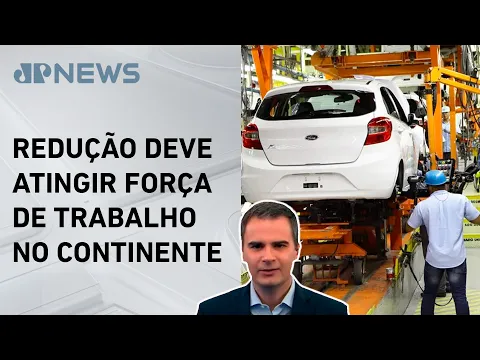
The crisis is not limited to finances. At the end of 2024, Ford announced that it would reduce its workforce in Europe by up to 14%, one of the most aggressive cuts in recent decades on the continent. Thousands of jobs are at risk in factories in Germany, Spain, and the United Kingdom.
Additionally, the brand has already confirmed that traditional models will be discontinued in the European market, as part of an attempt to cut costs and focus on global SUVs and electric vehicles. What was once seen as expansion has now turned into a contraction move.
The Bet That Became a Risk
Ford’s strategy was clear: to invest heavily in electric vehicles to compete with Tesla in the United States and with Chinese brands in the rest of the world. The creation of the Model e division, dedicated solely to EVs, was presented as a bold step towards the company’s transformation.
But reality has been harsher. Tesla aggressively cut prices in 2023 and 2024, forcing Ford to lower margins to avoid losing market share.

In China, the brand’s presence is minimal compared to the avalanche of BYD, SAIC, and Geely, which dominate the affordable electric vehicle segment. And in Europe, where governments are pushing for electrification through strict targets, consumers have shown resistance to the higher prices and limited range of Ford’s models.
The Shock of Reality in the Market
The price war has been decisive for the financial bleeding. The F-150 Lightning, for example, arrived in the American market as a promising bet. However, high battery costs and a slowdown in demand led Ford to reduce production shifts and accumulate inventory.
The Mach-E, a rival to the Tesla Model Y, also faces lower-than-expected sales, with constant discounts to maintain competitiveness.
The result is a brutal contrast: while the internal combustion and commercial vehicle division still generates positive cash, the electric vehicles drain billions.
What Ford Is Doing to React
Given this scenario, Ford has laid out a restructuring plan with three main pillars:
- Operational Cost Cutting – reducing the European workforce and simplifying the product line are part of this strategy.
- Focus on Hybrids – the company has already admitted that it will expand the offering of hybrid models as an intermediate alternative, especially in Latin America and the U.S.
- Review of Electrification Goals – although Ford maintains the discourse of an electric future, the pace of this transition has slowed. The profitability target has been pushed beyond 2026, and part of the portfolio is expected to shift to plug-in hybrids.
The Pressure From Rivals
While Ford tries to stabilize, rivals are relentless. Tesla continues with a high volume of sales and healthier margins, even with price cuts.
BYD, in turn, is consolidating itself as the largest electric vehicle manufacturer in the world, offering cheaper cars with greater range.
In Europe, brands like Volkswagen, Stellantis, and Renault are still struggling, but they have managed to establish competitive EV lineups, putting Ford in an uncomfortable position. Even in the pickup segment, where Ford has always reigned, rivals like Rivian are already competing with well-received electric vehicles.
The Future of the Brand
The question that remains is: will Ford be able to turn the crisis into an opportunity, as it has done at other times in history? The company has already survived wars, oil crises, and even the partial bankruptcy of competitor General Motors in 2009.
However, the electric transition is an unprecedented challenge, as it involves not only product but also infrastructure, industrial policy, and consumer acceptance.
If it can adjust its strategy and balance costs, Ford may emerge stronger, capitalizing on the innovation tradition that has always defined it. But if it continues to bleed billions, the brand may see its global relevance diminish in the face of agile Chinese competitors and Tesla.
What seemed to be Ford’s great bet for the future has turned into a billion-dollar burden. The shift towards electric vehicles, seen as inevitable, has shown that timing and execution are as important as strategic vision. The brand founded by Henry Ford now needs to prove it still knows how to lead an automotive revolution — or risks being remembered as a giant that stumbled on the path of electrification.


