






 Portuguese
  Spanish


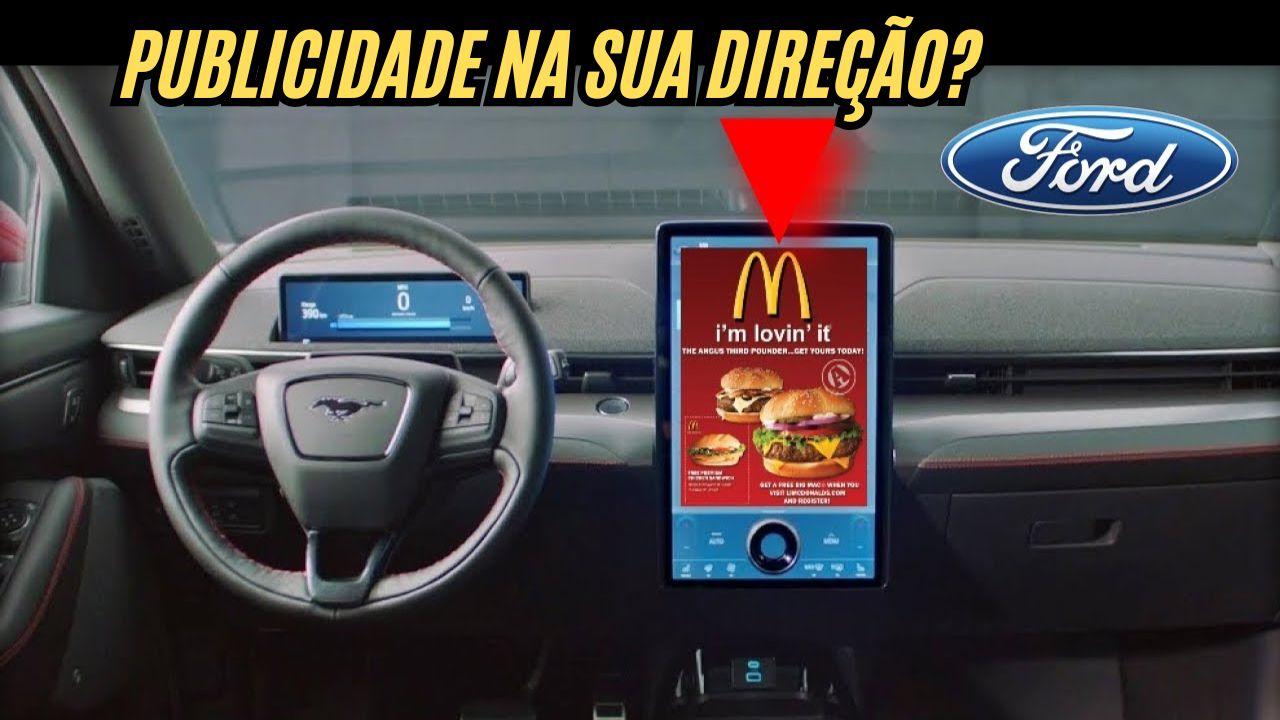

New Ford Patent Reveals Plans to Integrate Advertising in Vehicle Multimedia System. Will Drivers Like It?
Ford may be preparing a new chapter in driver-car interaction. The automaker has registered a patent for an advertising system using the vehicle’s speakers and displays, called the “in-vehicle advertisement presentation system.” The idea is simple (or maybe not): display personalized ads directly on the infotainment system, using information from the route, destination, and even the user’s historical data. Will this trend catch on?
Although Ford has not yet confirmed if or when it intends to implement the novelty, the registration reinforces the automotive sector’s trend of integrating advertising into driver experiences. The patent, submitted in February 2023 and made public in August 2024, promises to go beyond the obvious: combine ads on speakers with visual messages on screens. All of this, of course, adapted to each driver’s profile.
Division of Opinions: Is Advertising on the Steering Wheel the Future?
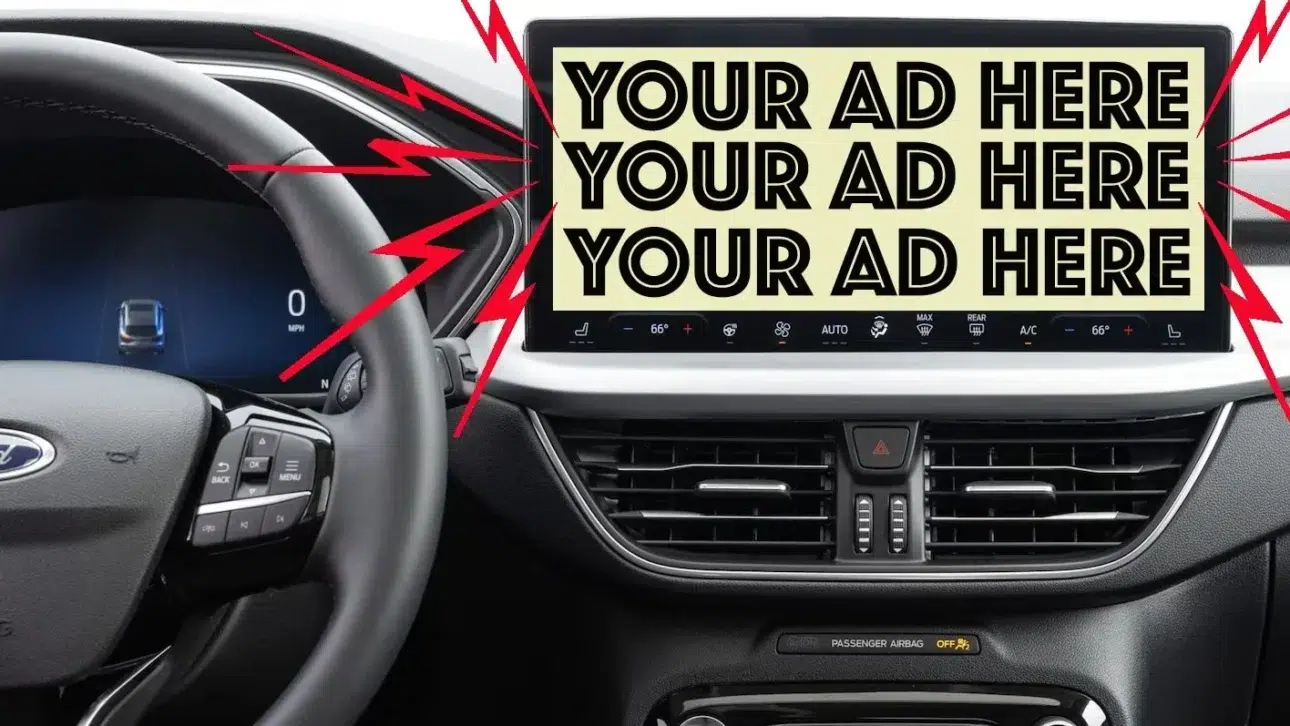
The arrival of ads on speakers has generated buzz. A survey by Westwood One conducted in 2021 showed that half of drivers aged 18 to 49 are interested in targeted ads, especially geographic ones. However, among those over 50, rejection is evident.
-
2027 Toyota Corolla Cross Unveiled: New Design, Enhanced Fuel Efficiency, Reduced Maintenance Costs, Advanced Technology, Connected Services, and Up to 10-Year Warranty

-
Fiat Cronos Precision 2018: Affordable Sedan with Spacious Trunk and Reliable Maintenance
-
Volkswagen to Cut Production by 1 Million Cars by 2030, Reducing Jobs and Platforms, Focusing on More Profitable Models

-
Toyota Launches First 100% Electric Car in Brazil: bZ4X with 343 HP, All-Wheel Drive, 361 km Range, Priced at $419,990 BRL, Limited to 99 Units



Experts like Abu Miah from ABI Research highlight that many consumers may view the idea as intrusive. After all, no one wants to feel that their car has become a selling machine. On the other hand, the growth of streaming services opens new doors for less intrusive ads.
By 2030, consumers are expected to spend over 500 million hours annually on streaming apps inside vehicles – an ideal environment to integrate advertising without excess.
Safety and Privacy: The Challenges of Ford’s Project
Another critical point is safety. Studies have shown that voice commands in multimedia systems can distract drivers for up to 18 seconds, increasing the risk of accidents. Ford assures that any implementation of this system will be carefully designed not to compromise safety, including the possibility of disabling it in unsuitable or legally prohibited situations.
This is not a new story. Ford has previously tested technologies like billboard recognition but decided not to advance them to production. This reinforces the idea that the current patent may simply be a strategic move to protect the brand’s intellectual property.
So, What to Expect?
In the current scenario, the integration of ads in Ford cars’ speakers raises more questions than certainties. Although the idea may be promising in a future dominated by autonomous vehicles, the revenue potential is still uncertain.
Meanwhile, drivers may feel that instead of gaining more privacy on the road, they are being bombarded with advertising, even within their own cars.








