Portuguese
  Spanish




Stellantis officially confirmed that the new hatchback manufactured in Brazil will retain the name Argo, while the current model will occupy the entry-level segment of the line, repeating the strategy adopted by the brand with the Mobi and other more affordable models in the Fiat line.
Fiat has practically made official the decision to keep the name Argo for the next generation of its hatchback manufactured in Brazil, after the Stellantis group included the model alongside a Panda in a presentation made to investors, definitively burying rumors that the novelty could revive the name Uno.
The confirmation breaks a historical practice of the Italian brand of renaming new generations of its models, thus maintaining the continuity of the hatch that has been offered in the Brazilian market since 2017 and has accumulated strong brand recognition among national consumers.
As a result, both the current Argo and the new next-generation model should coexist in the market for some time, with the veteran assuming the role of a sort of Mille for the Fiat line, remaining as a more affordable and outdated option, but still present in dealerships.
-
Discover the 2021 Fiat Cronos 1.3: Affordable Maintenance, Reliable Mechanics, and Fuel Efficiency of Up to 15.6 km/l

-
Cummins Unveils Hydrogen-Powered X15H Engine with Over 800 km Range and 15-Minute Refueling, Challenging Electric Truck Dominance

-
Chevrolet Onix 2026 Priced at R$ 86,790 with Discounts, Underpricing Citroën C3; Features 1.0 Engine, 6 Airbags, 8″ MyLink, Wi-Fi, and OnStar

-
Fiat Mobi Price Nears $18,000 in Brazil: Entry-Level Hatch with 1.0 Firefly Engine, Manual Transmission, and Stability Control Sees $400 Increase.


The new Argo will have a particularly symbolic role for the brand, as it will be the main car for the celebrations of the fiftieth anniversary of Fiat in Brazil, an important date for a brand that built its identity in the country based on popular compact models.

Since the 147 and Uno in the 1970s and 1980s, through the Palio, Punto, and Mobi, Fiat has consolidated its position as one of the best-selling brands in Brazil precisely by betting on small, affordable cars well adapted to the needs and budget of the Brazilian consumer.
Shared platform and design inspired by the European Grande Panda
The new Fiat Argo will, in practice, be a national version of the Grande Panda, a model launched in Europe in mid-2024 with a square look and pixel elements on the body, a style already anticipated in Brazil by the facelifts of the Toro, Cronos, Fastback, and Pulse.
For the Brazilian market, Fiat will remove the stamping with the name Panda on the sides and the rear lid, leaving the car with smooth panels and without any inscription of the European name, a necessary adaptation since the model will be marketed with its own visual identity.
The novelty has even been registered in Brazil without the Panda inscription on the sides, confirming that the adaptations for the national market are advanced and that Fiat is working with a defined schedule for the launch that will mark the brand’s five decades in the country.
The new Argo will be much closer to a small SUV than the current model, which is a traditional hatch with a lower and elongated body, representing a significant break with the car concept that Brazilians have known by this name since 2017.

The registration patents made by Fiat confirm this new profile, with a taller and square body that has already been compared to the style of compact SUVs that have dominated Brazilian consumers’ preferences in recent years.
Dimensions, Smart Car platform, and comparison with the Citroën C3
The new Argo will use the same Smart Car platform as the national Citroën C3, a factor that brings the two models closer in several technical aspects and has already been confirmed by the use of the C3 as a test vehicle during the first development phase of Fiat’s new hatchback.
The dimensions of the two models will be quite similar: the European Grande Panda measures 3.99 meters in length and has a wheelbase of 2.54 meters, while the Brazilian C3 records 3.98 meters in length and the same wheelbase of 2.54 meters between the axles.
The current Argo, for comparison purposes, measures 4.03 meters in length and 2.52 meters in wheelbase, being slightly longer and with a shorter wheelbase, which confirms that the new generation represents a change in concept in the automaker’s strategy for the segment.
Just as it happens between the Brazilian C3 and the European one, the new Argo should also present differences in external colors and internal fabrics compared to the European version, with more conservative choices adapted to the recognized preferences of the Brazilian consumer.

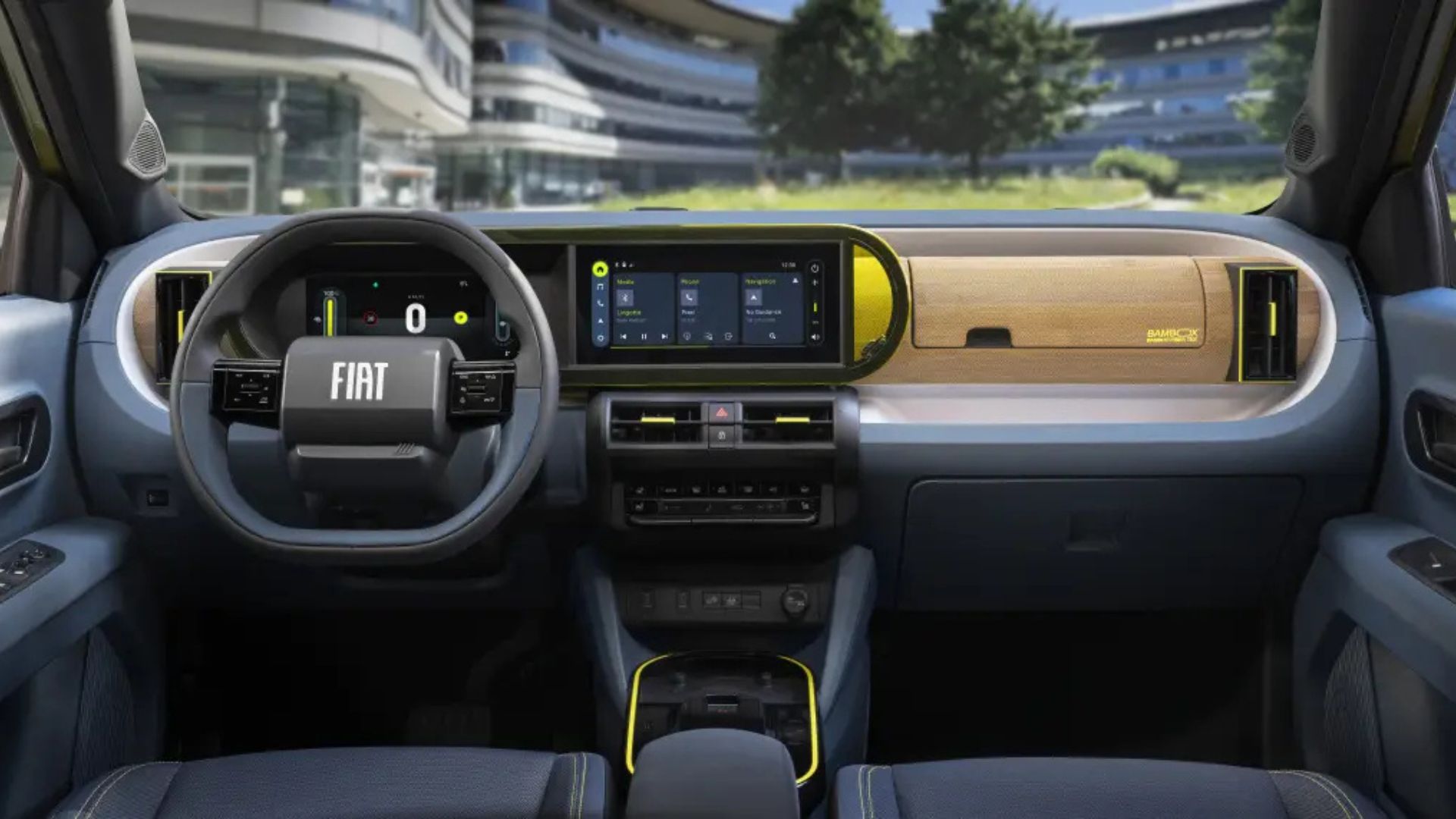
In Europe, Fiat bets on vibrant tones like yellow for the body and interiors with blue details, combinations that will hardly be offered as an option in the Brazilian market, where consumers tend to prefer neutral colors and more discreet finishes.
Prospects for the launch and market positioning
The model is expected to be launched as Fiat Argo 2027, following the calendar celebrating the brand’s fifty years in Brazil, and it is expected to be positioned at a price level above the current Argo, which will continue to be sold as a more affordable option.
The strategy of maintaining two models with the same name in different price ranges has already been successfully used by Fiat in other markets and reflects the trend of automakers to make the most of the brand value accumulated by vehicles that have become popular among consumers.
The arrival of a new Argo based on the Grande Panda also puts Fiat in a competitive position in the hatchback and compact crossover segment, where models like the Volkswagen Polo and the Citroën C3 itself aggressively compete for an important share of the national market.
With the historical weight of the Argo name in Brazil and the support of a globally validated platform in Europe, Fiat bets on a combination of familiarity and modernity to win over consumers looking for a compact car with more space, technology, and visual presence on the streets.