





 Portuguese
  English
  Spanish
  4 min of reading
  1 comment


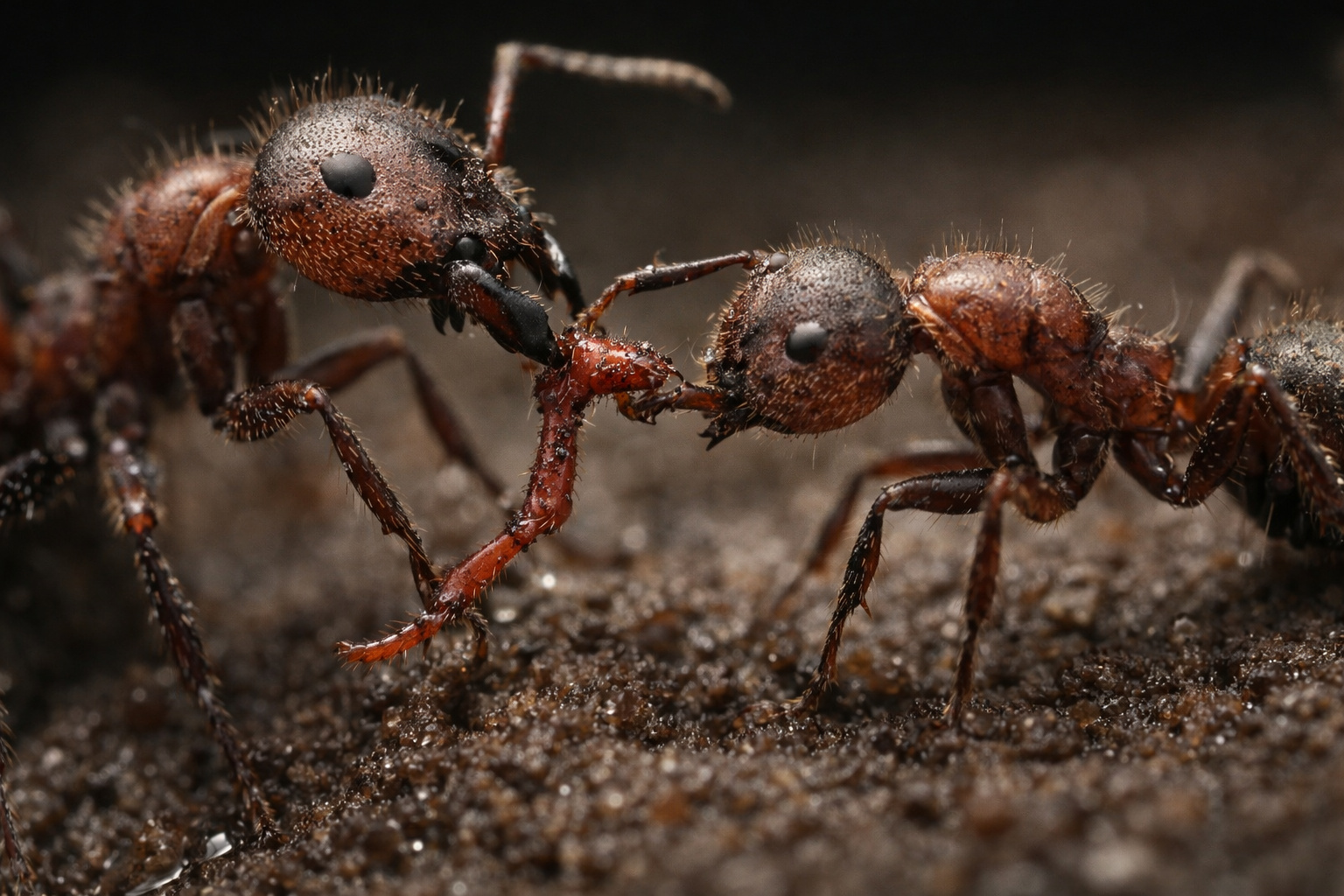


Recent Research Reveals That Ants Perform Selective Amputations on Injured Comrades to Contain Infections, Drastically Increasing Survival and Protecting the Colony.
For a long time, therapeutic amputations were considered an exclusively human practice, associated with modern medicine and conscious clinical decision-making. However, recent scientific studies have shown that some species of ants have developed a surprisingly similar behavior. They can identify severe injuries in companions, assess the risk of infection, and, when necessary, completely remove an injured limb to prevent the infection from spreading throughout the insect’s body and putting the colony at risk.
This behavior has been mainly observed in ants of the genus Camponotus, known as carpenter ants, and has significantly changed the scientific understanding of social care, collective decision-making, and survival strategies in insects.
How Scientists Discovered “Surgical Amputations”
The observations arose from controlled laboratory experiments in which researchers induced specific injuries to the ants’ legs. The reaction of the companions was immediate. First, they performed a thorough cleaning of the wound, removing dirt, microorganisms, and potential infectious agents. Then, depending on the location of the injury, they adopted different strategies.
-
Carnivorous dinosaur in China left footprints at just 1 km/h and surprised researchers in the field with more than 5,000 tracks preserved for over 100 million years.

-
A 400-meter colossus powered by natural gas has just set sail from Shanghai to Europe, carrying over 24,000 containers. It is the world’s largest dual-fuel container ship and can cross the planet without refueling even once.

-
A new study overturns the central idea we learned about planets and suggests that Earth is the exception rather than the rule; most rocky worlds in the galaxy may not have a core or mantle, just a single turbulent fluid extending to the center.
-
Scientists reanimated a 48,500-year-old virus in the laboratory that had been frozen in the Siberian permafrost since before the extinction of the Neanderthals, and it was still capable of infecting living organisms after tens of millennia dormant in the ice.





When the injury reached the upper part of the leg, where infection spreads more rapidly through the hemolymph — the equivalent of the blood in insects — the ants frequently amputated the entire limb. In contrast, for injuries located further down, the treatment was limited to cleaning, with no amputation. This difference showed that the behavior is not random: there is a functional risk assessment involved.
To Amputate or Not to Amputate: A Decision Based on Anatomy
The ant’s leg is divided into segments, and not all segments pose the same risk when injured. Injuries close to the body allow bacteria to quickly reach vital organs. In these cases, early amputation prevents the spread of infection. For more distal injuries, infection progresses more slowly, making amputation unnecessary.
This strategic choice is one of the most impressive aspects of the behavior. Ants not only recognize that a companion is injured, but they also identify when losing a limb increases the chances of survival for the individual and, consequently, for the colony as a whole.
Survival Rates That Impressed Researchers
The results from the experiments were clear. Severely injured ants that did not receive treatment exhibited high mortality rates within a few days due to systemic infections. When companions performed the amputation of the injured limb, the survival rate significantly increased, reaching around 90% in some tests.
Even after losing a leg, these ants remained alive and capable of performing functions within the colony, such as caring for larvae, cleaning, and even simpler external tasks. From an evolutionary perspective, saving a functional individual is much more advantageous than losing it to an infection.
The Role of the Colony in the “Medical Decision”
Unlike humans, the amputated ant does not choose the procedure. The decision is collective and based on the interest of the colony. In highly organized societies like those of ants, the survival of the group is a priority. Each individual represents energy investment and development time, and losing workers reduces the efficiency of the colony.
This behavior reinforces the idea that insect colonies function as superorganisms, where complex decisions emerge from interactions among individuals, without the need for a central brain or conscious planning.
What This Reveals About the Evolution of Social Care
The discovery of amputations in ants expands the understanding of how rudimentary medical care can evolve in social animals. Instead of being an exclusively human intelligence hallmark, practices such as wound cleaning, infection containment, and selective amputations can naturally arise when evolutionary pressure favors extreme cooperation.
Additionally, this behavior shows that insects can respond in highly adaptive ways, combining chemical recognition, anatomical assessment, and coordinated action. This challenges the simplistic view that insects act solely on automatic reflexes.
Why This Behavior Gained So Much Scientific Attention
The interest of researchers lies not only in the amputation itself but in the set of skills involved: diagnosis, treatment choice, and precise execution. Until now, no other non-human animal had been documented performing therapeutic amputations with such a clear goal of containing infections.
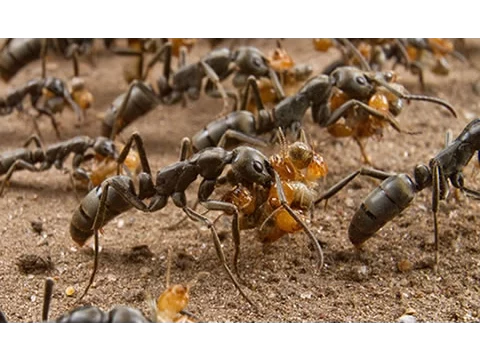
This finding has opened new discussions about the evolutionary origin of medical care, the complexity of insect societies, and even possible inspirations for studies in biology, robotics, and distributed systems, where local decisions generate global benefits.
A Powerful Reminder About Intelligence in Nature
The behavior of these ants demonstrates that nature developed sophisticated solutions long before human medicine. In environments where infection can mean rapid death, early amputation has become an efficient, precise, and functional strategy.
By observing these little surgeons in action, science reinforces an important lesson: intelligence and strategy do not rely on size, big brains, or technology, but on the ability to respond to environmental challenges efficiently and collectively.





Simplesmente encantada com a sabedoria das formigas!