






 Portuguese
  Spanish


Discovery in Renaico, in the region of La Araucanía, confirms that ancient relatives of the capybara inhabited the Chilean territory during the Pliocene.
A paleontological discovery drew attention in Chile by revealing that ancient relatives of the capybara lived in the country about 4.5 million years ago. The finding is surprising because, currently, Chile is the only country in Latin America where the capybara does not occur naturally.
According to a study published in the Journal of South American Earth Sciences, the fossils were found in the municipality of Renaico, in the region of La Araucanía, during excavations related to the construction of a wind farm.
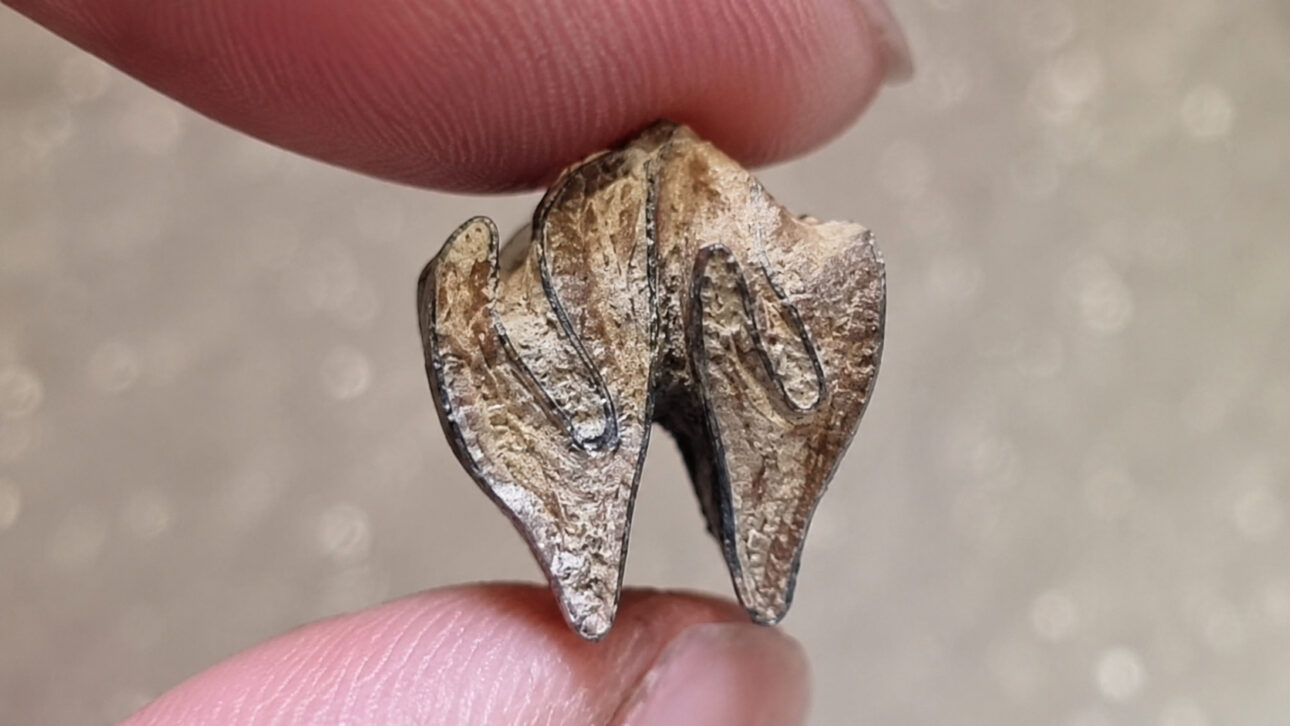
The research confirmed the presence of fossilized remains associated with the extinct genus Phugatherium, an ancient rodent related to capybaras. With this, the record of this group was expanded to the west side of the Andes Mountain Range.
-
A fossil kept for years in a small museum in Montreal concealed 450-million-year-old soft tissue, a discovery that has only happened once before in history.

-
Three teenagers transform cut cardboard into Japanese origami-style packaging that promises to retire styrofoam and bubble wrap, win a $12,500 prize, and target giants like Amazon, FedEx, and Home Depot after a robot motor arrived broken.

-
The large jar blender has a rival: Oster Ultra Power bets on 1,000 W, six stainless steel blades, and two portable cups with leak-proof lids.

-
Tesla injected an additional $250 million into the German factory, doubled the battery cell target, and opened its own production line for startups.




In addition to reinforcing the scientific importance of the discovery, the finding also helps to reconstruct what the Chilean region’s landscape was like millions of years ago, when wetlands and open environments marked the territory.
Learn about the discovery of capybara fossils in Chile
The capybara, scientifically known as Hydrochoerus hydrochaeris, is considered the largest and heaviest living rodent on the planet. Today, the animal inhabits a large part of South America, always associated with wet regions, rivers, lagoons, and tropical areas.
However, despite this wide distribution on the continent, the species does not naturally live in Chile. Therefore, the discovery of fossils linked to ancient relatives of the capybara gained prominence among researchers.
The material was found in Renaico, in the region of La Araucanía, in the south-central part of the country. The area is part of the so-called Chilean Central Depression, an important strip for understanding the formation of the local landscape.
During the excavation work, carried out by the paleontological consultancy Therium, the team identified fossilized remains that drew attention due to their anatomical shape.
Among the materials found are a molar, incisors, fragments of a femur, and part of the pelvis. These elements were fundamental to associating the find with the genus Phugatherium.
According to Karina Buldrini, the main author of the study, the shape of the tooth indicated the presence of a large rodent. In an interview with the Chilean broadcaster T13, she explained that current capybaras are the largest living rodents, but other giant rodents existed in the past.
Giant capybaras were much larger than the current ones
The discovery also rekindled interest in ancient large South American rodents. Unlike current capybaras, these prehistoric animals could reach much larger dimensions.
In an article published in 2025 in The Conversation, Professor Christiane Denys, from the National Museum of Natural History in France, explained that these so-called “giant capybaras” could measure up to two meters in length.
Furthermore, they could weigh about 300 kilograms, a size similar to that of a tapir. This size shows how the ancient relatives of the capybara occupied a different ecological niche from the animal known today.
For researchers, the fossils represent the first anatomical evidence of the presence of capybaras in Chile. The study also indicates that this is the first Neogene record of continental mammals in the Chilean Central Depression.
This information is relevant because it expands knowledge about the distribution of large prehistoric rodents in South America. At the same time, it helps to understand how these animals crossed significant geographical barriers, such as the Andes Mountains.

How fossils help to understand the ancient landscape of La Araucanía
Besides confirming the presence of ancient relatives of the capybara in Chile, the fossils also offer clues about the region’s environment millions of years ago.
As the current capybara is a herbivorous and semi-aquatic animal, its presence is usually associated with wet areas. Therefore, the finding in Renaico indicates that the location may have had very different environmental conditions from today.
The researchers also identified remains of a litoptern, another extinct herbivore. This combination reinforces the idea that the region hosted a diverse fauna adapted to different types of habitats.
According to the study’s authors, Renaico likely had a heterogeneous landscape, meaning the territory combined flooded areas with open environments.
Thus, the ancient scenario was very different from the current landscape, marked by agricultural areas and the presence of wind farms. The discovery, therefore, transforms an infrastructure project into a window into the remote past of South America.
With the fossils of Phugatherium, Chile becomes part of the historical map of the large rodents related to capybaras. The discovery shows that, although the animal no longer lives in the country, its ancient relatives once occupied Chilean territory millions of years ago.


