Portuguese
  Spanish


The Fischer appliance factory in Brusque will invest R$ 20 million in modernization after reaching R$ 670 million in revenue in 2025; known for cooktops, the company produces more than 200,000 items monthly and aims for R$ 1 billion in revenue by 2028, enhancing efficiency and portfolio in Santa Catarina.
The Fischer Appliances factory in Brusque, Santa Catarina, has entered a new phase of modernization with an announced investment of R$ 20 million in 2026. The Santa Catarina company, which celebrates six decades of operation, intends to update industrial processes, expand its portfolio, and sustain a revenue target of R$ 1 billion by 2028.
According to Exame, this move comes after the company recorded revenue of R$ 670 million in 2025 and achieved a monthly production of over 200,000 items. With around 800 employees, three manufacturing units, and a strong presence in the cooktops and electric ovens segments, Fischer is trying to advance in a market contested by large multinationals.
Factory in Brusque receives investment to sustain a new growth cycle
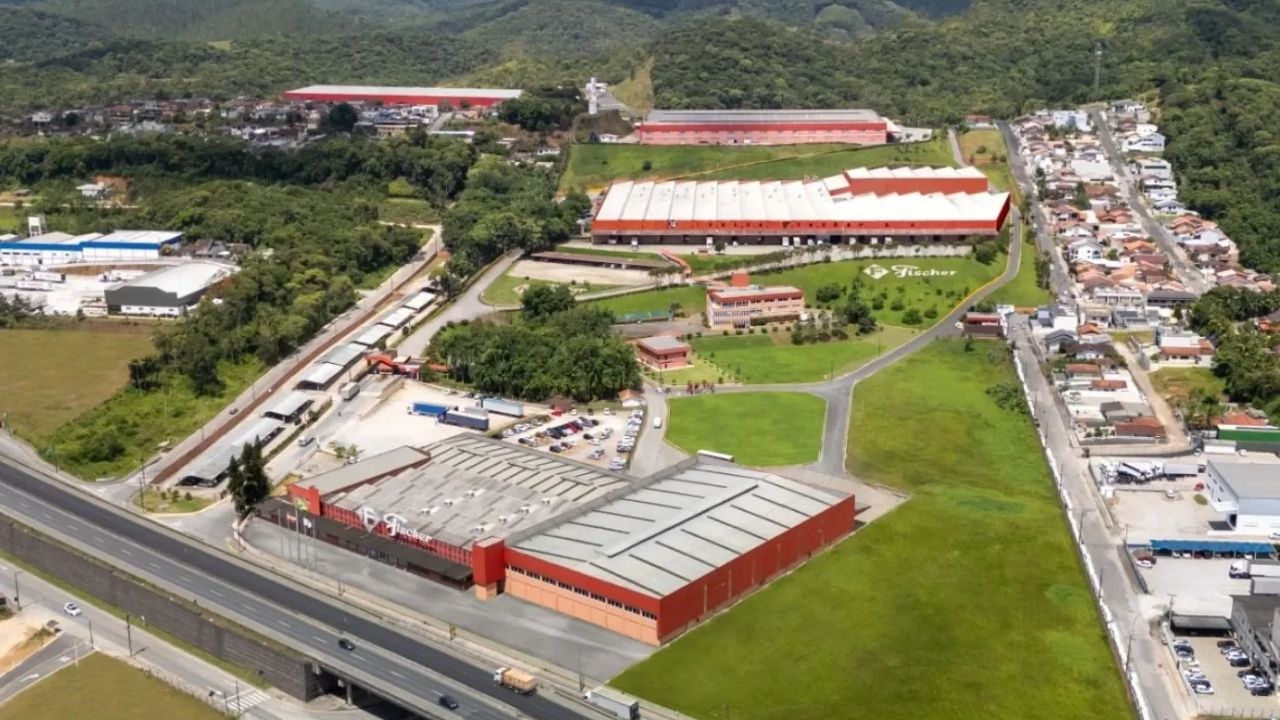
Fischer concentrates almost all of its industrial structure in Brusque, installed in a manufacturing park of approximately 140,000 square meters. The operation brings together lines of appliances, construction products, and modular solutions, combining businesses created at different times in the company’s history.
-
Brazil’s Federal Revenue Auction: iPhone 13 for $95, PlayStation 4 for $80, and Volkswagen Jetta for $2,600 Among 232 Lots Available

-
Tech Giant Oracle Lays Off 21,000 Employees and Invests $70 Billion in Artificial Intelligence

-
Chilean Giant Acquires St. Marche, Expanding from Discount to Premium Supermarkets in São Paulo’s High-End Retail Market
-
After 60 Years of Selling Cheap Milk, Brazilian Family Invests in $4,000 Equipment to Transform Farm’s Milk into Premium Sweets, Producing 2 Tons Daily and Aiming for $6.4 Million


The investment of R$ 20 million should be primarily directed towards the modernization of the factory, the review of equipment and production processes, and the development of new products. The strategy aims to increase efficiency without relying solely on physical expansion or accelerated growth in the number of workers.
The company intends to transform industrial productivity into a path to reach a new revenue level. According to the disclosed figures, Fischer has doubled in size over the past eight years without significantly expanding its workforce, supported by automation and operational improvements.
Currently, some lines operate with manufacturing cycles of less than a minute per product. This data helps to gauge the importance of production speed in a market where scale, variety, and cost directly influence the competition for space in stores and consumers’ kitchens.
Business was born in a bicycle workshop in the interior of Santa Catarina
Fischer’s journey began far from the built-in appliances that today identify the brand. In 1961, Ingo Fischer, then 17 years old, opened a small bicycle workshop in Brusque. During the day, he performed repairs; at night, alongside his brother Nivert, he worked on repairing refrigerators, ovens, and other household equipment.
The company was formalized in 1966, with the participation of other family members over the years. Before consolidating the current factory of appliances, the business produced equipment aimed at the fishing industry and slaughterhouses, including stainless steel structures and machines used in food processing.
The transformation from workshop to industry did not happen all at once: it was built through successive changes in market and product. After the initial industrial activity, Fischer began manufacturing serialized items, including countertop electric ovens, wheelbarrows, and concrete mixers for construction.
This ability to circulate between different segments became a characteristic of the company. Even though it is known today for kitchen appliances, the company preserved lines related to construction and, more recently, advanced in modular construction systems.
Cooktop helped change Fischer’s position in the Brazilian market
The decisive entry into the home appliance segment occurred when Fischer began investing in products related to planned kitchens. In the 2000s, the company launched cooktops manufactured in Brazil at a time when this type of equipment was still associated with imported and high-priced products.
The bet placed the Santa Catarina factory in a category that gained space with the transformation of residential projects. As planned kitchens and built-in appliances became more common in Brazilian properties, cooktops and ovens began to play a more significant role in purchasing decisions.
The cooktop has become one of the symbols of Fischer’s transition from a regional manufacturer to a nationally recognized brand in specific niches. Today, the company is among the main participants in the cooktops and electric ovens categories, according to the information presented about its performance.
In addition to the cooktop, the portfolio related to planned kitchens includes built-in ovens, microwaves, range hoods, air purifiers, and other equipment. The company also invests in multifunctional products, aiming to meet consumers who seek to optimize space and expand uses within the home.
More than 200 thousand products leave the industrial lines every month
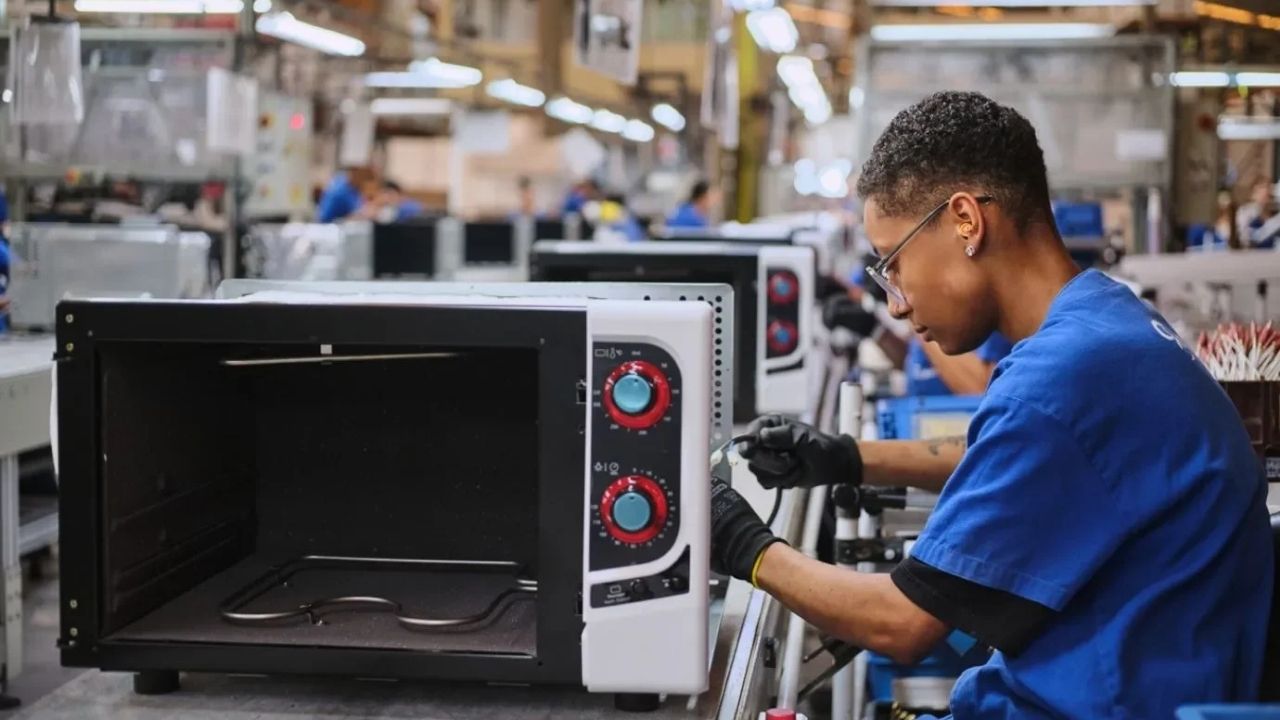
The current production scale of Fischer exceeds 200 thousand products per month. Approximately 85% of the portfolio is manufactured in Brazil, a percentage that reinforces the importance of the Santa Catarina industrial structure for the company’s operation and its ability to supply the national market.
With more than 185 types of products only in the home appliances division, the company needs to reconcile volume, variety, and regularity of delivery. This challenge increases as new equipment is incorporated into the catalog and consumers seek solutions increasingly integrated into homes.
The modernization of the factory aims to increase capacity without losing efficiency in an operation that already works on a large scale. The review of machines and processes can allow launches, finish changes, and new functionalities without compromising the manufacturing pace.
The strategy also responds to competition. In segments dominated by large international groups, national companies need to combine competitive cost, brand recognition, and speed to adapt products to consumption changes.
Revenue of R$ 670 million drives the goal of reaching the first billion
In 2025, Fischer achieved a revenue of R$ 670 million, a result that serves as a basis for the goal of reaching R$ 1 billion in revenue by 2028. The company reports that it has been growing between 8% and 9% per year and intends to sustain this progress through industrial efficiency, innovation, and portfolio expansion.
The projection represents a business goal, and its fulfillment will depend on factors such as consumption, competition, industrial costs, retail performance, and the execution of announced investments. Even so, the new investment shows that the company is preparing the structure to try to reach this level.
Reaching the first billion will require more than manufacturing in high volume: it will be necessary to sell products capable of keeping up with changes in Brazilian homes. The planned kitchen, multifunctional appliances, and built-in equipment appear as strategic areas for Fischer.
The factory will also play a central role in this objective. The greater the capacity to modernize lines, reduce waste, and produce different categories efficiently, the greater the possibility of competing with larger-scale manufacturers tends to be.
Diversification takes the company beyond kitchen appliances
Although cooktops and ovens are among Fischer’s most recognized products, the company currently operates in three major areas. The main one is appliances, responsible for most of its portfolio and directly linked to the transformation of the planned kitchen in the Brazilian market.
The second area includes equipment for civil construction, such as wheelbarrows and concrete mixers. The third involves modular construction systems developed with steel panels and thermal-acoustic insulation, aimed at buildings such as residences, schools, and health units.
Diversification reduces dependence on a single segment and creates growth alternatives for the company. At the same time, managing different operations requires continuous investment in engineering, production, development, and distribution.
In this scenario, the modernization of the factory not only serves the kitchen line. The announced investment seeks to strengthen a company that intends to grow in different markets, taking advantage of the industrial experience built since the small workshop opened in Brusque.
Santa Catarina industry tries to unite tradition, technology, and new consumption habits

Fischer reaches 60 years in front of a market quite different from the one it started in. The family business that began with bicycle and appliance repairs now competes for consumers interested in planned kitchens, multifunctional products, industrialized construction, and solutions aimed at more modern residences.
The challenge is to maintain relevance in the face of multinationals with a large commercial presence and investment capacity. For this, the company bets on a combination of national production, technological modernization, and accumulated experience in categories where it has built significant participation.
The history of Fischer shows how a regional factory can endure for decades by adapting products and processes to changes within Brazilian homes. The new phase, however, will be measured by results: revenue growth, production efficiency, and the ability to approach R$ 1 billion in revenue by 2028.
With an investment of R$ 20 million, the company begins another cycle of industrial transformation. The investment could determine whether the Santa Catarina brand, known for bringing cooktops to more consumers, can advance again without losing competitiveness in an increasingly demanding market.
From workshop to billion-dollar factory: next chapter depends on execution
Fischer’s trajectory includes impressive numbers: more than 200,000 products manufactured monthly, about 800 workers, R$ 670 million in annual revenue, and a goal of R$ 1 billion in revenue by 2028. The journey began in a simple workshop and now involves the modernization of a large Santa Catarina factory.
The investment alone does not guarantee that the goal will be achieved, but it reveals the direction chosen by the company: to produce more efficiently, expand solutions, and compete in categories connected to the transformation of Brazilian homes.
In your opinion, can a national manufacturer that grew with cooktops and ovens face multinationals and reach R$ 1 billion by betting on modernization and products for planned kitchens? Leave your comment and join the discussion.