Portuguese
  Spanish


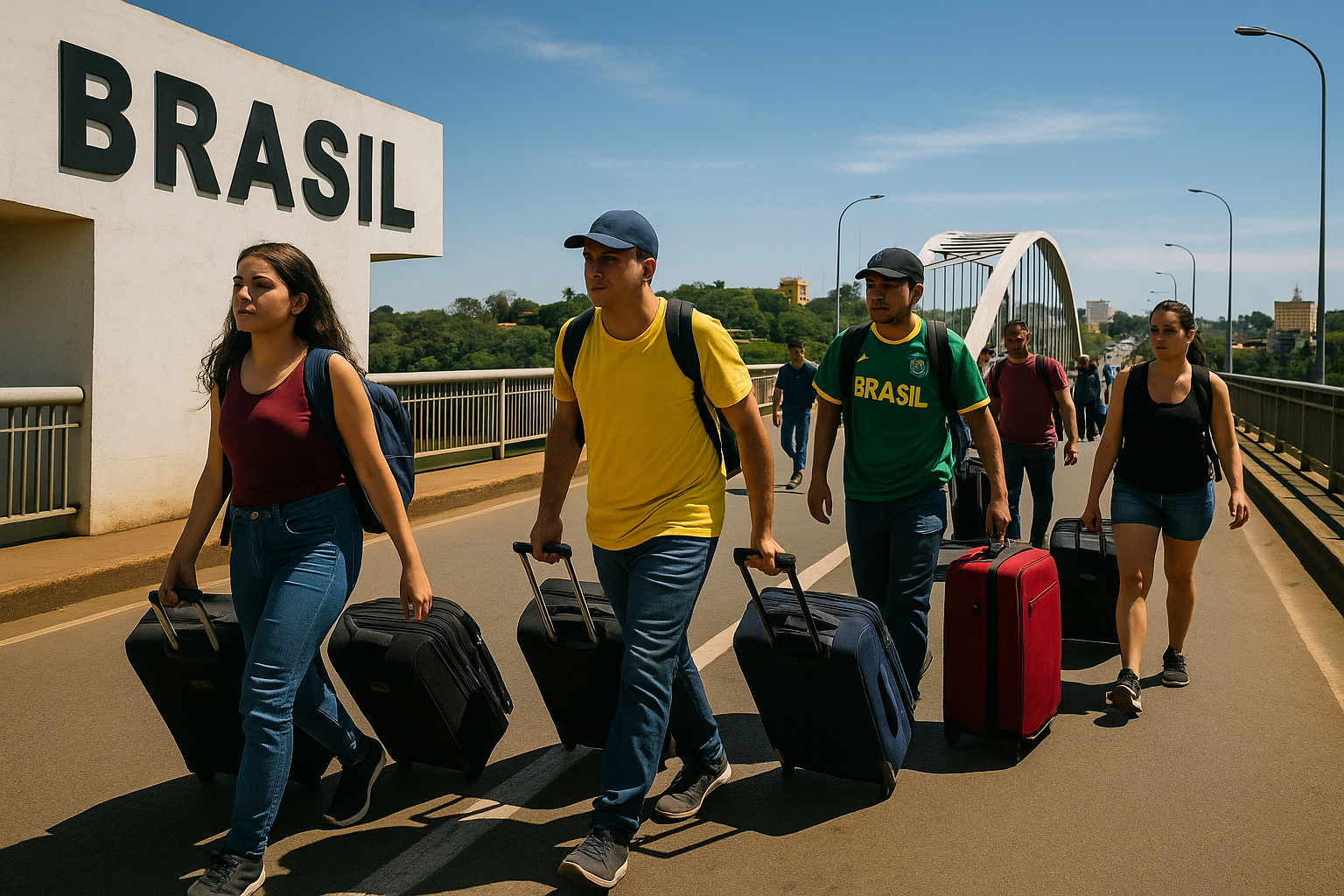

How a country once treated with mockery became the favorite destination for Brazilians seeking lower taxes, cheap energy, affordable housing, and opportunities they no longer find in Brazil
For decades, calling something “Paraguayan” was synonymous with mockery in Brazil, a stigma fueled by jokes, stereotypes, and misconceptions about the neighboring country. However, while Brazilians laughed, Paraguay quietly followed another path: it reduced taxes, modernized laws, and created an economic environment capable of attracting companies, investors, and today, hundreds of thousands of Brazilians.
A detailed report published by Elementar explains why Paraguay has become the main destination for migrants from Brazil in South America.
At the same time that the popular imagination remained associated with smuggling, the country strengthened one of the most competitive tax systems in the region. The result was swift: over 263,000 Brazilians now live in Paraguayan territory, creating a migratory flow that grows year after year, driven by lower costs and entrepreneurial opportunities.
From historical roots to tax incentives: how the Paraguayan economy rebounded and became a haven for those fleeing Brazilian taxes
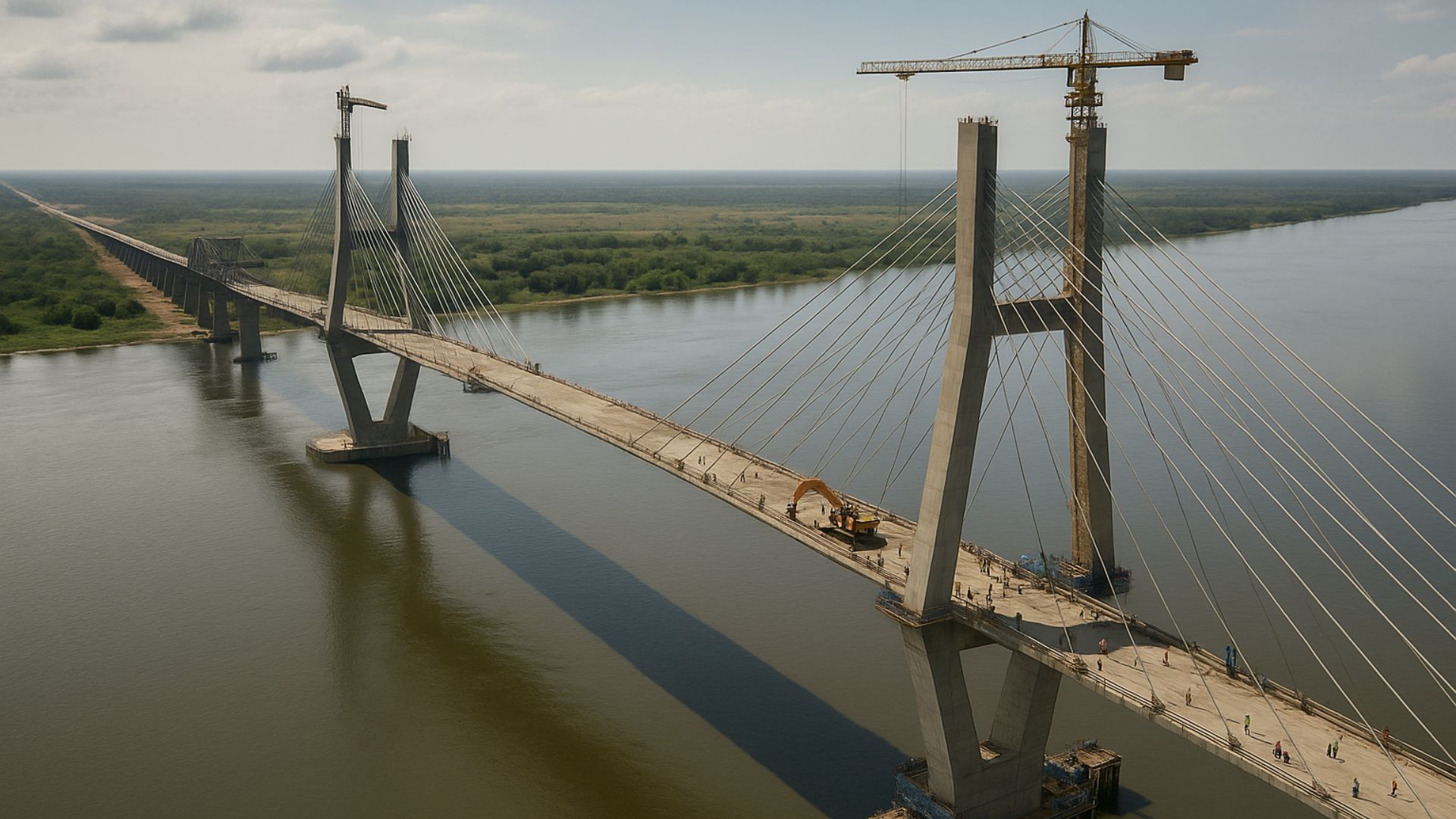
This movement did not start now. Its foundations were laid during the government of Alfredo Stroessner (1954–1989), a period marked by strong state control and closeness to Brazil. The construction of the Friendship Bridge and the Itaipu Treaty, financed in partnership with the Brazilian government, were key pieces of this integration. From the 1960s onwards, thousands of Brazilians crossed the border in search of cheaper land and new agricultural opportunities, giving rise to the so-called brasiguaios.
-
Brazil to Issue “Panda Bonds” in China, Aiming to Raise Up to 5 Billion Yuan at Lower Interest Rates Than Dollar Debt
-
NATO Faces Internal Tensions as U.S. Pushes for Increased Defense Spending, Targeting 5% of GDP by 2035, with Warnings for Countries Near 2% Level

-
Brazil to Introduce B16 Diesel with Increased Soybean Oil Content for Trucks by 2026
-
Brazil’s July Bolsa Família Payments May Include Extra $150 and $50 for Families with Children, Pregnant Women, and Updated CadÚnico Registration


During the 70s and 80s, entire families sold properties in Brazil to acquire much larger areas in Paraguay, introducing soy and corn on a large scale. It was this agricultural base that, decades later, consolidated Paraguay as one of the world’s major grain exporters.
However, the decisive change occurred in the 2000s, with economic modernization. The Maquila Law (Law 1064/97), which gained strength in the following decade, drastically reduced the tax burden on exporting companies. According to BBC news, the Deputy Minister of Industry, Francisco Ruiz Díaz, explains that 70% of Paraguayan exports to Brazil come from the maquila, a model that allows Brazilian industries to send inputs, produce locally, and re-export while paying much lower taxes.
And this was not the only factor. Paraguay also offers ultra-cheap energy thanks to Itaipu. While in Brazil the average industrial cost reaches 123 USD/MWh, in Paraguay it drops to just 39 USD/MWh — the equivalent of supplying three Paraguayan factories for the price of one Brazilian. Result: Ciudad del Este, once synonymous with informal trade, now concentrates over 98,000 Brazilians, becoming a hub for business and education.


Students, entrepreneurs, and entire families: who are the Brazilians crossing the border and why the cost of living matters so much
In recent years, the profile of immigrants has changed profoundly. Out goes the traditional farmer and in comes the medical student. Currently, almost 30,000 Brazilians are enrolled in Paraguayan universities. Felipe Monteiro, a student from Amapá, reports that in his class of 80 students in Ciudad del Este, only two are Paraguayans — the rest come from Brazil. And the reason is evident: while in Belém a medical tuition can reach R$ 8,000, in Paraguay he started paying R$ 1,200 and now pays R$ 1,900, a huge saving for any family.
Moreover, the cost of living is one of the most attractive in the continent. According to data from the Expatistan portal, living in Paraguay can be up to 28% cheaper than in Brazil in certain indicators. Although specific items, such as lunch in upscale areas, can cost 35% more, the Big Mac Index indicates that the sandwich is 28% cheaper in Paraguay.

In the real estate market, the difference remains striking: a one-bedroom apartment in a prime area costs on average R$ 1,931.75 in Paraguayan territory, compared to R$ 3,019.48 in Brazil — a saving of nearly 36%. Meanwhile, energy and gas bills for an 85 m² property can be 74% cheaper.
The great asset, however, is the tax system. The “10-10-10” structure establishes 10% for personal income tax, 10% for companies, and 10% for VAT. There are no taxes on inheritances, donations, or foreign income. Under the maquila regime, exporting companies pay only 1% of gross revenue, while in Brazil, entrepreneurs can face up to 27.5% in personal income tax and 34% for companies. For those who undertake business, this difference decides their future.
In addition to economic incentives, the residency process is also a competitive advantage. To obtain Temporary Residency, it takes only 1.5 to 4 months. After 1 year and 9 months, it is already possible to apply for Permanent Residency. Citizenship takes longer: it requires 3 years as a permanent resident, but it is still faster than in countries like the USA, Canada, or European nations.
Even with advances, Paraguay faces profound challenges: 27% of the population lives in poverty, and the country ranks 136th in the global corruption perception index — worse than Brazil, which appears at 104th. Still, the search for quality of life, lower taxes, and opportunities has caused the migratory movement to grow beyond expectations.
Paraguay’s transformation leaves a question in the air: for decades, the country was the target of humor and prejudice. Now, with so many Brazilians crossing the border in search of economic freedom and a better future, it remains to be seen who became the true joke of history.