Portuguese
  Spanish


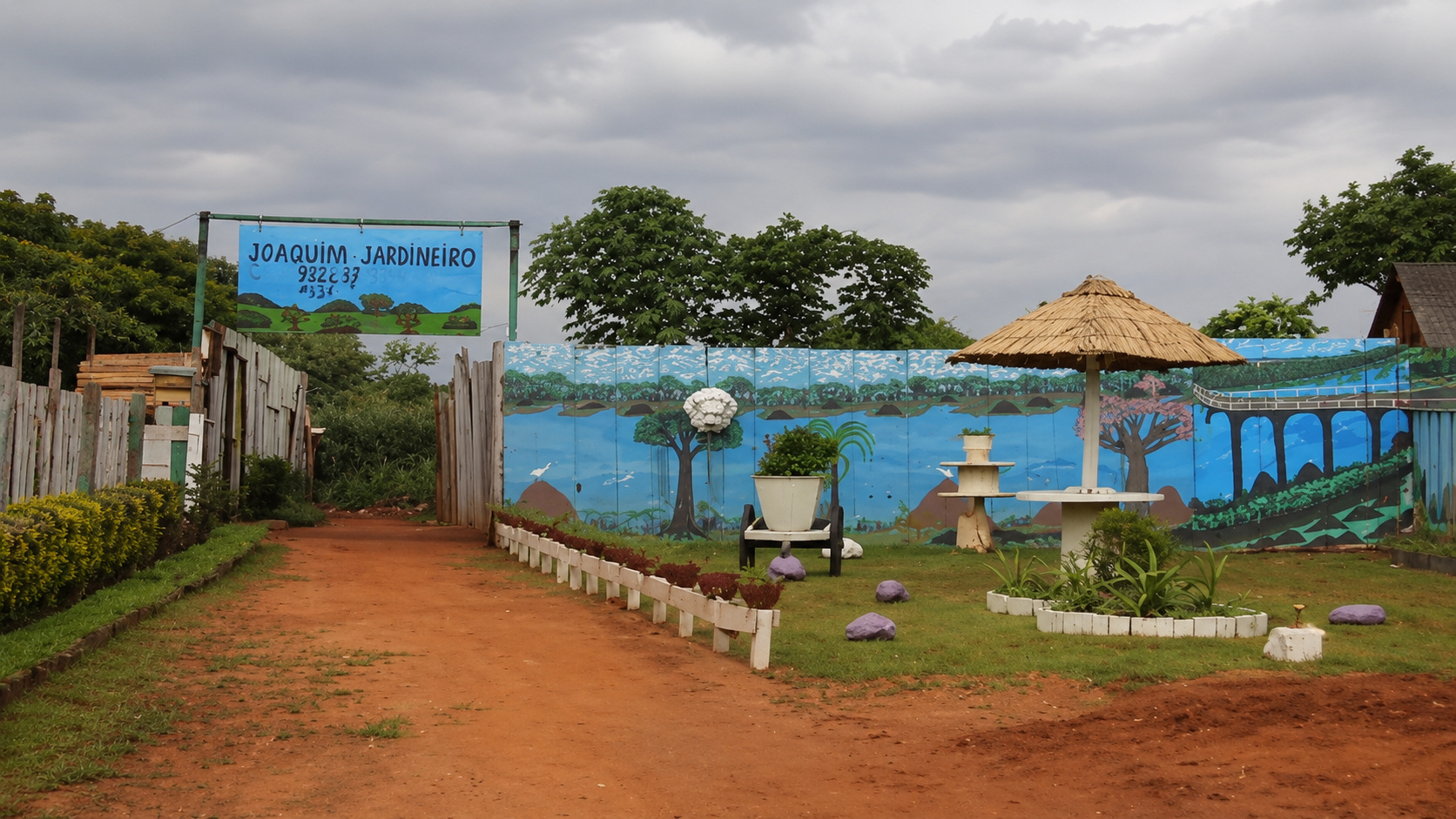

House in Jardim Noroeste attracts attention for material reuse, manual painting, and creativity used by Joaquim Gardener
A simple, creative transformation full of manual work caught attention in Jardim Noroeste, in Campo Grande. Joaquim Soares da Silva, known as Joaquim Gardener, modified his own shack using wood found in the trash, reused paints, and discarded objects. The house, located on Acuri Street, gained a colorful facade, porch, garden, and handcrafted details created by the resident himself. This process shows how simple materials, when combined with effort and creativity, can completely change the appearance of a popular dwelling.
Manual renovation reveals house transformation
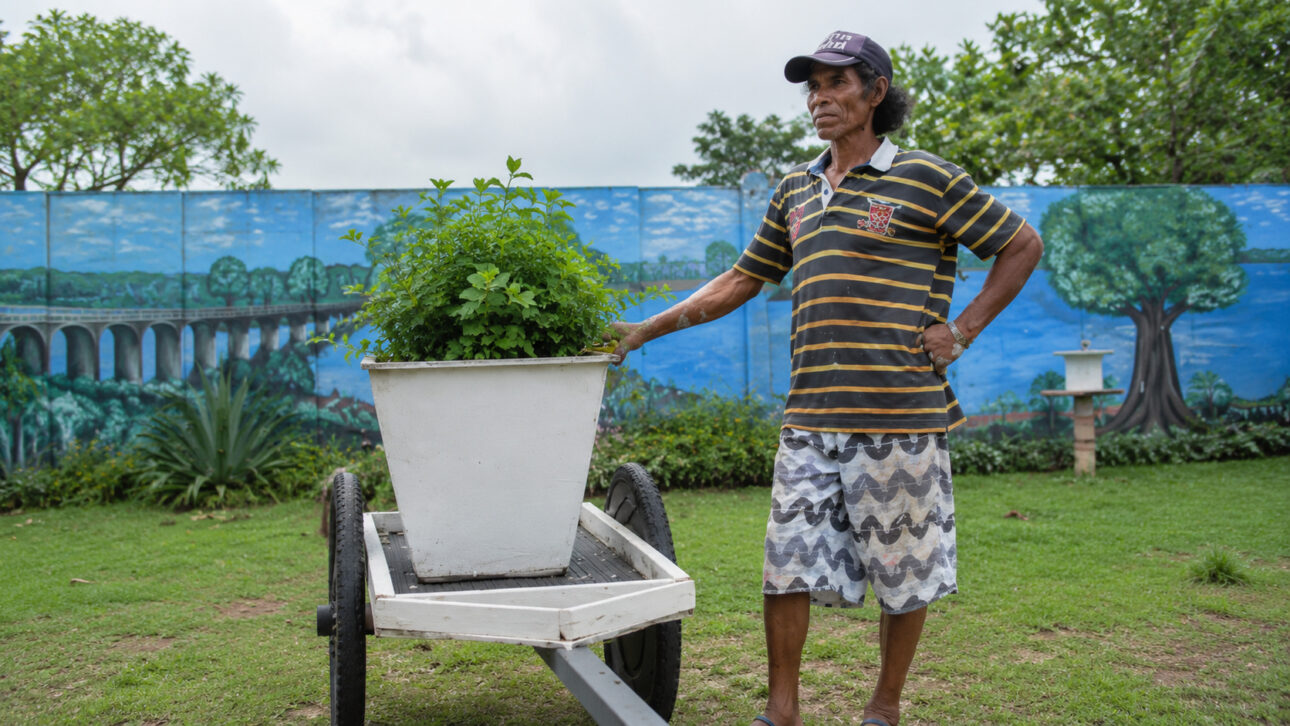
The change began after Joaquim started occupying the shack for more than a year. From there, he started a renovation done almost entirely with his own hands, in a work that took eight months and required constant physical effort. Much of the wood used in the construction was collected in a nearby disposal area, carried in a wheelbarrow, and gradually used in the house’s structure. Some of the paints were purchased, but many items came from the trash, giving the property an organized, colorful, and very personal appearance.
House gained flooring, kitchen, and new spaces
During the renovation, Joaquim leveled the land, made the flooring, and reorganized the kitchen. Then, he measured the house by his own steps and calculated that the property was about 10 meters by 8 meters. The dwelling came to have a living room, kitchen, bedroom, and bathroom, as well as a space he called a “guest bathroom.” In practice, the room functioned as a suite, with a large bedroom followed by a bathroom. This detail reinforces how the renovation went beyond a simple visual improvement and helped create more defined spaces within the house.
-
13-Year-Old Raises Funds to Build Well, Transforming Lives in Cambodian Community Lacking Clean Water

-
Man with Metal Detector Finds Medieval Silver Seal in England, Uncovers 2,000-Year-Old Roman Gem with ‘Richard’s Secret’

-
Thailand Converts 8 Tons of PET Bottles into 3,500 School Backpacks, Showcasing Circular Economy with Over 40 Factories Involved

-
Mysterious Bats Spotted in Paris’s Père Lachaise Cemetery, Drawing Tourists to the “Vampire Cemetery”



Porch became a social area
The entrance of the house also received special attention. Right on the porch, Joaquim placed plants, chairs, a parasol, and space to welcome visitors. Among the species mentioned in the report are peace lily, impatiens, golden dew, parrot’s beak, and geraniums, in addition to other flowers that completed the garden. This set created a simple yet visually striking living area. Since Joaquim works with gardening, his own house also started to function as a showcase, as many clients sought him out after seeing where he lived.
Painted facade became a hallmark of the residence
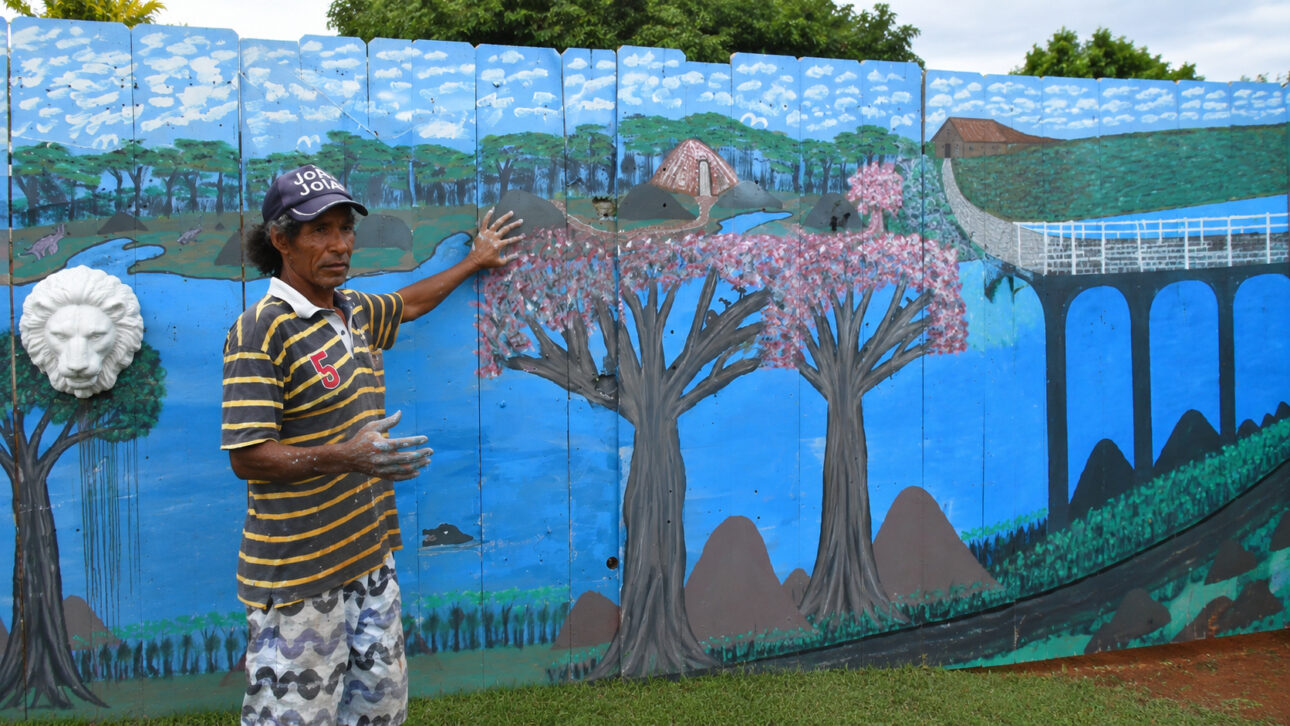
The facade was one of the highlights of the transformation. While the house took eight months to be ready, the visual landscaping work was still ongoing for two months. Joaquim started the process with white paint, applied a second coat, and then created the drawings in the third stage. The painting included a road, bridge, river, stones, grass, sky, and purple trumpet tree. The bridge, according to him, was inspired by an image stored in his memory during a trip to São Paulo, which gave the facade an entire hand-drawn scene.
Discarded objects gained a new function
Other repurposed objects also became part of the house’s decoration. A lion’s head, apparently taken from a fountain, was used in the outdoor area, while a wheel was transformed into a reference to an ox cart. These elements helped create a handcrafted aesthetic, made with simple and discarded pieces. In this way, the shack stopped looking like just an improvised construction and began to convey the resident’s personality, who found new functions for items that would have been left aside.
Learning came from observation
Joaquim said he learned gardening on his own, mainly through observation and practice. Painting, in turn, was learned from a work colleague. This journey helps explain the style of the house, marked by attempts, patience, and manual skill. Nothing was presented as a sophisticated technical work, but each detail reveals care and intention. Joaquim stated he liked beautiful things and declared he was happy living there.
Story unites home, work, and memory
Inside the house, a guitar appeared as one of the important objects. Joaquim was born in Dourados and had already formed a musical duo with his brother, known as Zé, who has since passed away. This detail adds a personal layer to the story, as the house was not just a collection of wood, paint, and plants. It also held memories, references, and parts of the resident’s journey. Therefore, the transformation had value beyond aesthetics.

Future plans kept the house evolving
Even after the main renovation, Joaquim still planned new changes. Among the plans were enclosing part of the area with a screen, planting a coconut tree, and expanding the lawn. The facade, therefore, remained a work in progress. This story shows how creativity, reuse, and manual work transformed a simple dwelling into a space full of identity.
What catches your attention the most: the reuse of discarded materials or the creativity used by Joaquim to change the appearance of his own house?