Portuguese
  Spanish


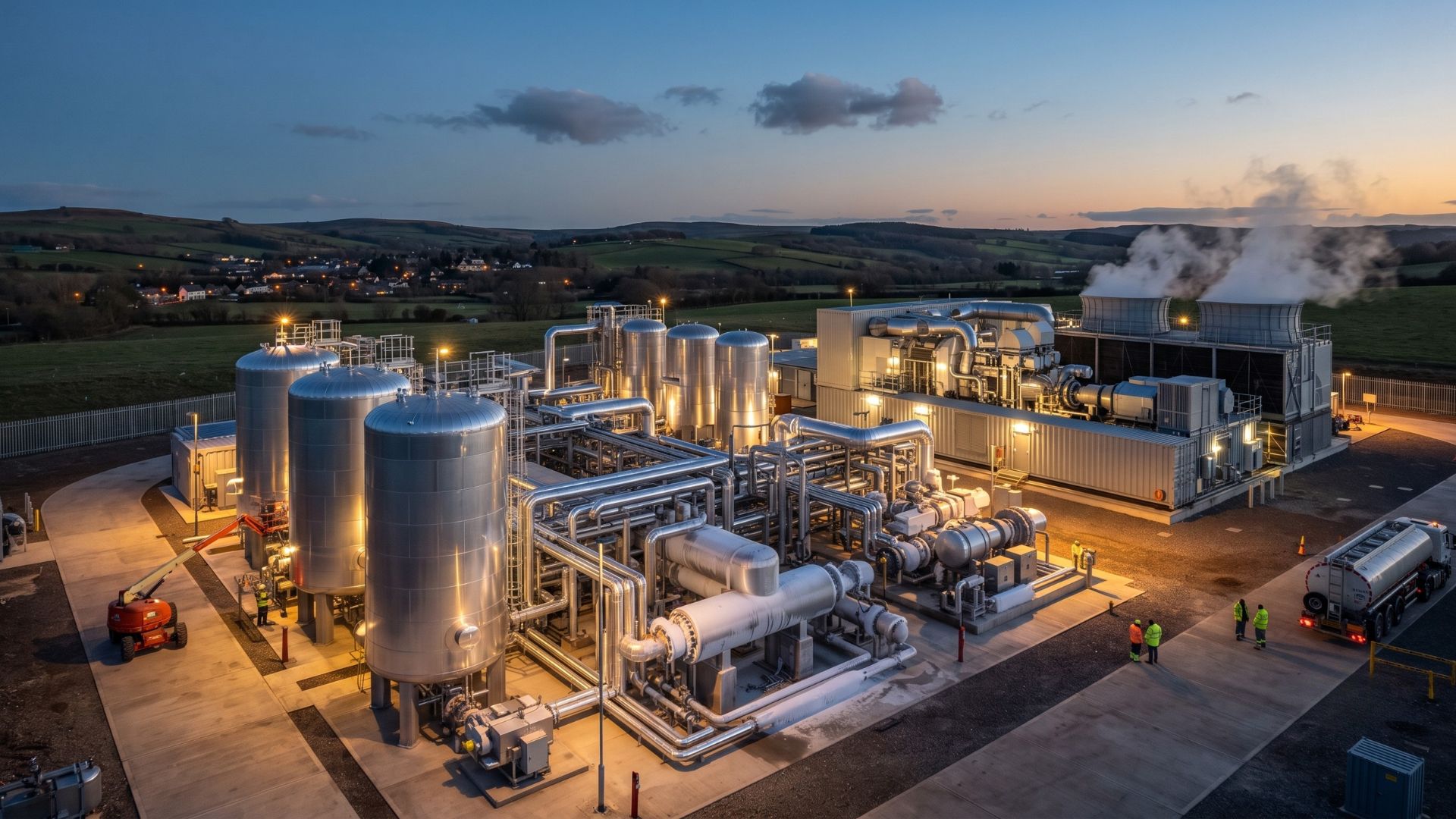

Liquid air battery, energy storage, Manchester and Highview Power enter the center of the race to store clean energy for hours or weeks.
Near Manchester, England, the British company Highview Power is building an energy storage plant that swaps critical metals and chemical batteries for a common, abundant, and virtually infinite resource: atmospheric air. The Carrington plant is designed to use LAES technology, an acronym for liquid air energy storage, and has become the company’s main commercial bet to transform renewable energy surpluses into dispatchable electricity when the grid needs it most.
The project was presented by Highview as the largest commercial liquid air plant in the world in its category. When complete, the facility is expected to deliver 300 MWh of storage and 50 MW of power for six hours, with a capacity that the company claims is sufficient to serve approximately 480,000 homes, in addition to providing stability services to the local power grid.
Energy storage has become the central bottleneck of the renewable transition
The problem this technology aims to solve is straightforward. Solar energy and wind energy do not produce electricity at the same rate as consumption occurs, and the absence of large-scale storage forces the system to waste part of the clean generation or resort to fossil plants when wind and sun fail.
-
Brazilian Engineer Who Grew Up Without Electricity Develops Software, Expands AltoQi to 67,000 Clients, Aiming for $21 Million by Digitizing Brazil’s Construction Industry

-
Spain Launches World’s Largest Floating Dry Dock: 56-Meter Giant Produces Massive Concrete Structures in A Coruña Using Technology Proven in Brazil

-
AI-powered toys that talk, recognize faces, and collect data face scrutiny from Brazilian government over children’s privacy concerns

-
4,000-Year-Old Child’s Skull Unveils Ancient Burial in 7,500-Year-Old Norwegian Rock Shelter, Impressing Archaeologists




Highview itself claims that LAES can store energy for periods ranging from six hours to several weeks, filling a gap that short-duration batteries cannot always economically cover.


In 2023, the costs of curtailment in Great Britain, when wind farms are paid to reduce generation and avoid grid overload, reached £800 million, according to The Chemical Engineer, highlighting the magnitude of the problem the technology aims to tackle.
In this scenario, the logic is simple and powerful. Instead of wasting excess renewable electricity, the plant captures it, converts it into liquid air, and stores it until the grid demands firm, stable, and clean power again.
How Liquid Air Becomes a Battery to Return Electricity to the Grid
The system operates based on a cryogenic process. Ambient air is cleaned, dried, compressed, and cooled until it turns into liquid, which is then stored in insulated tanks for later use as an energy reserve.
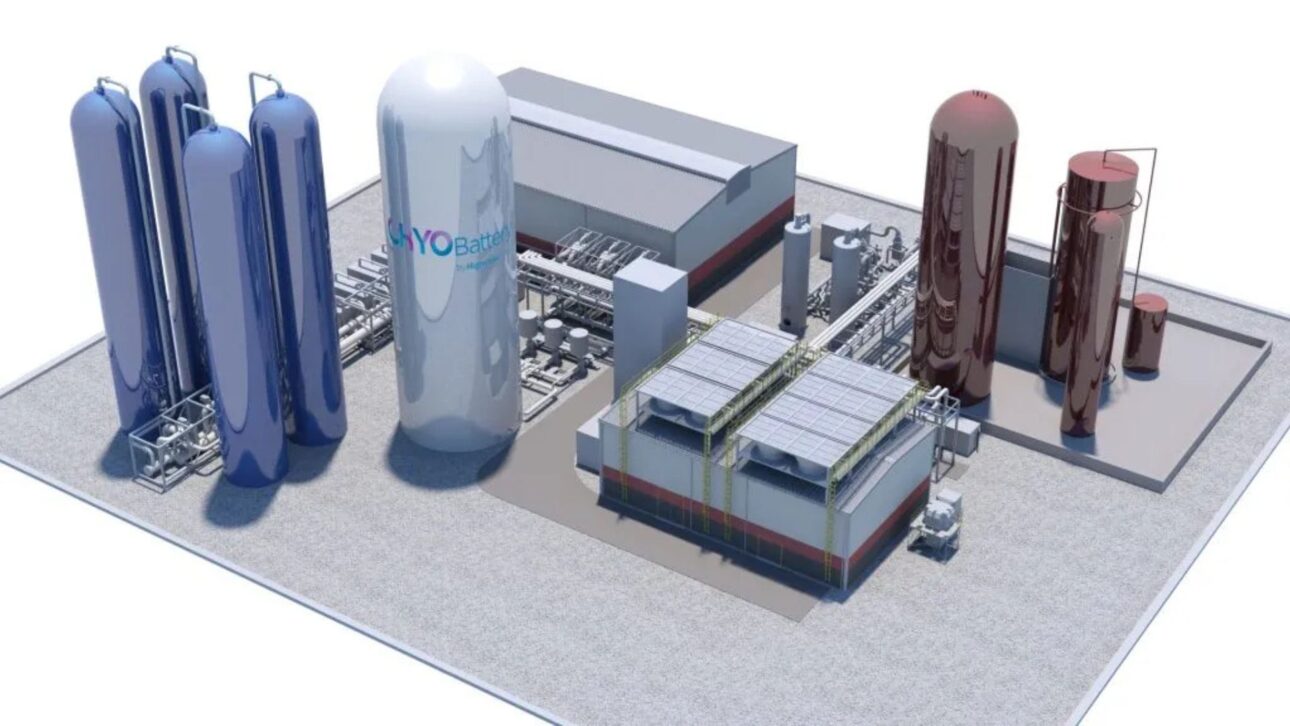
The Chemical Engineer highlights that the technical basis of the system is the Claude process, used for decades in gas liquefaction.
Highview’s adaptation was to transform this industrial process into electrical storage infrastructure on a grid scale.
When the grid needs energy, the liquid air is pumped, reheated, and expanded again until it becomes gas under high pressure. This flow moves turbines and generates electricity, without the need to burn fuel during the system’s discharge.
Technology Dispenses with Lithium, Lasts Decades, and Can Be Installed Without Depending on Mountains or Dams
One of the main differentiators of LAES is the raw material. Instead of relying on lithium, nickel, cobalt or other critical mineral chains, the system uses air itself, which enhances the technology’s appeal at a time of increasing pressure on strategic supplies for the energy transition.

Highview also claims that its system can operate without significant degradation for 40 to 50 years, an important feature in a market where chemical batteries lose capacity over time.
The company also maintains that the technology is modular, relocatable, and capable of being deployed in different regions, without the typical geographical dependency of solutions like reversible hydroelectric plants.
Another advantage is the possibility of combining energy storage with grid stability services, such as voltage support, inertia, and operational resilience. This makes the Carrington plant go beyond the function of a “giant battery” and also positions it as a broader piece of electrical infrastructure.
Carrington Project attracted £300 million and gathered heavyweight investors
The construction of Carrington was driven by a £300 million round announced on June 13, 2024. The funding was led by the then UK Infrastructure Bank and Centrica, with participation from the British government and investors such as Rio Tinto, Goldman Sachs Power Trading, KIRKBI, and Mosaic Capital.
The 2024 Highview statement said that the construction would begin immediately and that the facility would be operational in early 2026, impacting more than 700 jobs in construction and supply chain.
The company’s most recent FAQ states that phase 1 of the Carrington platform will be operational from 2026, while the official groundbreaking ceremony was held on November 21, 2025, attended by the Mayor of Greater Manchester, Andy Burnham.
This history shows that the technology has moved from the realm of technical curiosity to the stage of heavy commercial deployment. The presence of institutional capital, utility, government, and major private investors has given the project a weight that few emerging storage solutions can gather so early.
Carrington did not emerge from scratch and was preceded by a demonstrator in Bury
The Carrington plant is not a leap in the dark. Highview had already operated a 5 MW/15 MWh demonstrator in Bury, also in the Manchester area, which went into operation in 2018 as the first grid-scale demonstration of liquid air technology.
This gradual advancement gives more consistency to the current project. Instead of emerging from a purely conceptual bet, Carrington relies on a technical trajectory built over years, with successive steps of validation and scaling up.

The company now presents Carrington as its first large-scale commercial plant and as the basis for future expansion in the UK and other markets. This helps explain why the project has come to be regarded as a global reference in the long-duration energy storage segment.
Advantages and limits of liquid air enter the center of the energy debate
The main strength of technology lies in its combination of long duration, abundant raw materials, extensive lifespan, and ability to provide not only energy but also operational support to the grid. In electrical systems with a growing share of intermittent renewables, this set of attributes has gained strategic value.
But the technology is not without challenges. The Chemical Engineer highlighted that long-duration solutions like LAES tend to have lower full cycle efficiency compared to lithium and flow batteries, which means greater losses in energy storage and recovery.
Even so, the same analysis points out that systems like Highview’s offset part of this disadvantage with less degradation, greater longevity, and the ability to discharge all stored energy.
If Carrington confirms on a commercial scale what the company promises, liquid air may cease to seem like an exotic idea and become one of the most relevant pieces of the renewable era’s electrical infrastructure.