Portuguese
  Spanish


Special Product Used in Vehicle Testing Reaches High Value, Has Controlled Formulation, and Is Essential for Ensuring Standardization in Consumption and Emission Results in Brazil.
The reference gasoline, known as E22 or A22, reaches impressive values: it can cost up to R$ 150 per liter, according to data updated until June 2025.
Different from the fuel sold at gas stations, this gasoline is used in vehicle homologation procedures in Brazil and has highly controlled characteristics, essential for ensuring accuracy in automotive and environmental tests.
What Is Reference Gasoline and Why Does It Cost So Much?
The composition of reference gasoline is one of the central points that justify its high value.
-
Drivers are falling for these scams without realizing: operation reveals closed gas stations, adulterated fuel, and hidden losses when refueling.

-
New Fiat EV, priced at R$ 77,000, will bring a reinterpretation of the 147 and a consumption equivalent to 70 km/l.

-
Petrobras surprises the market by cutting diesel by R$ 0.35 per liter, and the decision may ease the tax impact for drivers and transport companies.
-
Gasoline at R$ 4.99 makes drivers wait more than an hour at Havan gas stations in Santa Catarina, during a “zero tax” promotion with a limit of 15 liters per car and 25,000 liters available across five units of the network.





According to information from the portal UOL, the product contains exactly 22% anhydrous ethanol – responsible for the denomination E22 – and presents 93 octanes (RON, Research Octane Number).
Despite these numbers, the visual aspect, smell, and color remain the same as regular gasoline.
However, the main difference lies in the absence of variations: density, sulfur content, and other physicochemical parameters are strictly maintained, without the tolerance margins that exist in the fuel sold at gas stations.
While regular gasoline sold to the end consumer currently contains 27% anhydrous ethanol, and will increase to 30% starting August 2025 according to the National Council for Energy Policy (CNPE), reference gasoline remains at 22%, preserving an essential standardization for tests.
This standard is not limited to gasoline: the ethanol used in the tests is also produced with strict specifications, ensuring that consumption and emission results are not distorted by external factors.
What Is Reference Gasoline Used For?
The primary function of reference gasoline, therefore, is not to fuel vehicles on the streets, but to serve as a basis for the homologation of engines.
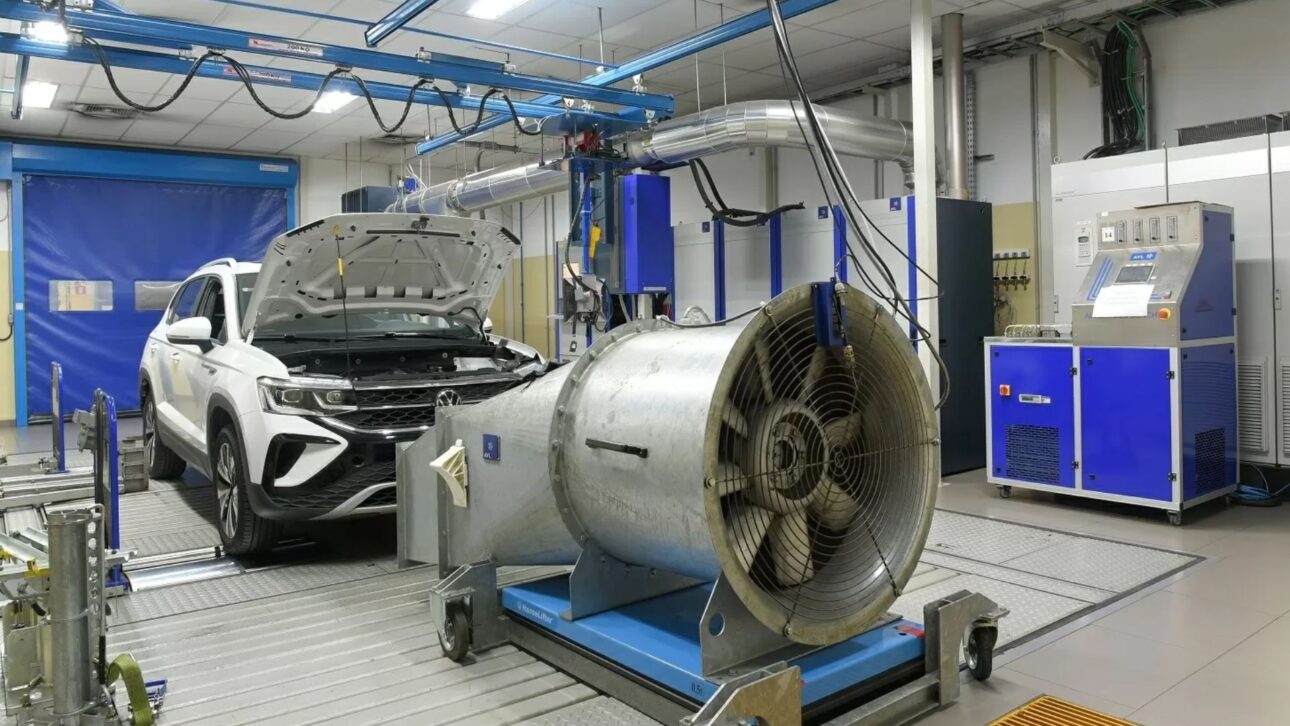
Automakers, laboratories, and regulatory bodies use this fuel in laboratory tests that measure performance, fuel consumption, and pollutant emissions of vehicles sold in Brazil.
According to the National Institute of Metrology, Quality and Technology (Inmetro), this uniformity allows vehicles of the same category to be evaluated under identical conditions, eliminating any distortions caused by variations in fuel.
In practice, by using reference gasoline, automotive engineers can more accurately determine whether a new model meets all the emission and energy efficiency limits established by the Brazilian Vehicle Labeling Program (PBEV).
Thus, the efficiency and fuel economy tables, periodically published by Inmetro, reflect consistent and comparable results between different models and brands, helping consumers access reliable information when choosing a vehicle.
Why Is the Price Per Liter So High?
The high costs of reference gasoline per liter are mainly due to strict quality control and the manufacturing process on a limited scale.
Unlike fuels produced in large volumes for the market, reference gasoline is made to order, in small batches, with monitored inputs at every stage.
This involves detailed laboratory tests, tracking of each component, and the absence of any type of additive or contaminant.
In addition, the distribution of this fuel is limited, serving only automakers, accredited laboratories, and regulatory bodies.
Use Beyond Homologation and International Standard
The application of reference gasoline is not limited to the homologation of new vehicles.
It is vital in engine development research, durability testing, analysis of new technologies, and international certification processes.
By adopting global criteria for measuring octane and emissions, the use of this standard fuel aligns Brazil with the demands of international markets and strengthens the credibility of evaluations conducted in the country.
Differences from Gasoline Sold at Gas Stations
It is important to highlight that the commercial gasoline available at the pumps follows its own standards established by the National Agency of Petroleum, Natural Gas, and Biofuels (ANP).
The percentages of anhydrous ethanol added vary according to energy and environmental policies, being updated periodically to balance the use of renewable sources and the operational safety of engines.
On the other hand, the control of reference gasoline is even more stringent, ensuring that any changes in test results are indeed consequences of technical modifications in the vehicles and not due to the fuel used.