Portuguese
  Spanish


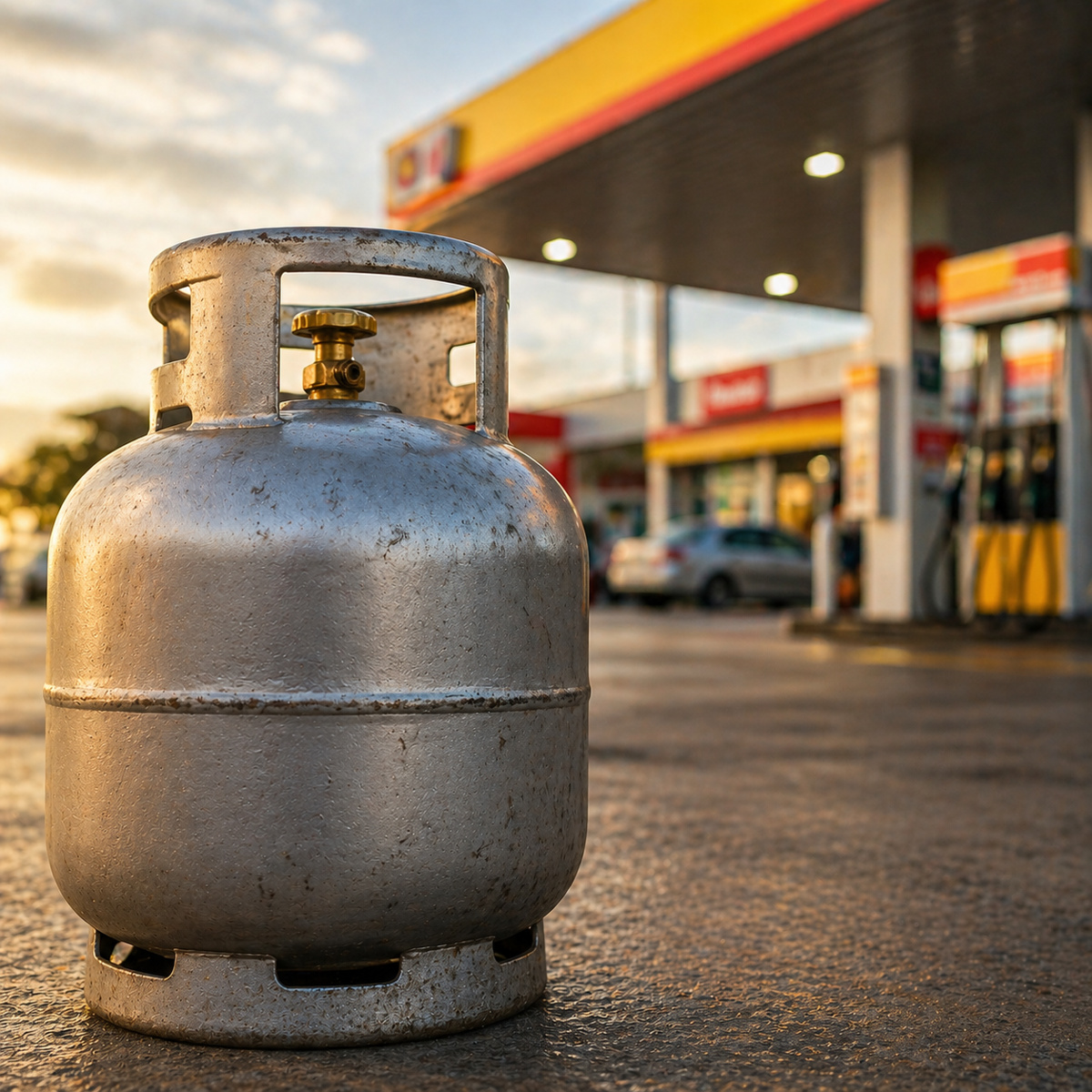

Drop in gasoline, ethanol, and diesel prices brings relief, but the rise in cooking gas is a concern and impacts family finances, according to ANP data.
The National Agency of Petroleum, Natural Gas and Biofuels has provided a recent snapshot that helps to understand what is happening in the pockets of Brazilians. Between April 19 and 25, there was a drop in the price of gasoline, ethanol, and diesel at gas stations across the country. At the same time, cooking gas went in the opposite direction and registered an increase.
According to information from UOL on April 27, in practice, the scenario is contradictory. While drivers feel a slight relief when refueling, the cost inside the home is rising. This completely changes the impact on the family economy, especially for those already dealing with a tight budget.
The numbers show that this movement is not random. It is linked to government decisions and also to the international scenario, mainly the appreciation of oil after tensions in the Middle East.
-
As Brazil Expands Social Welfare, Survey Reveals 40% Blame Poverty on Laziness, While 58% Cite Lack of Opportunities

-
China Tightens Control on Antimony, Driving Prices from $22,000 to Nearly $40,000 per Ton as U.S. Rushes to Bolster Strategic Reserves

-
BlackRock Freezes $1 Billion in Brazilian Renewable Energy, Impacting 1.5 GW of Planned Projects and Highlighting Investor Concerns Over Infrastructure Bottlenecks Cutting Up to 25% of Solar and Wind Generation
-
Labor Shortage: Despite Record Average Salary, 90% of Brazilian Bar and Restaurant Owners Struggle to Hire Key Roles Like Sushi Chefs and Head Cooks


Drop in gasoline, ethanol, and diesel prices brings momentary relief to consumers
The most recent data indicate a slight decline in the main fuels. The price of gasoline fell by 0.44%, reaching a national average of R$ 6.72 per liter. Ethanol saw a drop of 0.63%, with an average price of R$ 4.66. Diesel fell by 1.37%, now costing R$ 7.21.
This movement can be quickly noticed in daily life. Those who depend on a car or transportation feel the difference almost immediately. However, it is important to note that these reductions are still small when compared to previously accumulated increases.
Even with the recent drop, fuels still remain at high levels when analyzed over longer periods. In other words, the relief exists, but it is still limited.


Regional difference in gasoline prices reveals unequal impact on the economy
An important point highlighted by the ANP is the price variation between states and capitals. The price of gasoline is not uniform across the country, and this directly influences the regional economy.
Here are some examples recorded during the period:
- Roraima: R$ 7.79
- Acre: R$ 7.58
- Amazonas: R$ 7.32
- Minas Gerais: R$ 6.38
- Distrito Federal: R$ 6.46
- Paraíba: R$ 6.50
Among the capitals, Boa Vista had the highest price (R$ 7.79), while Belo Horizonte had the lowest (R$ 6.26). In São Paulo, a liter cost R$ 6.69.
This difference shows how the impact on the consumer’s pocket can vary greatly. In more expensive regions, any increase weighs even more heavily on the domestic economy.
Still-expensive diesel continues to pressure logistics costs in Brazil
Diesel had one of the most significant drops in the period, but that doesn’t mean it’s cheap. On the contrary. Compared to the period before the international crisis, the fuel is still 21.23% more expensive.
Prices also vary greatly between states:
- Acre: R$ 8.05
- Bahia: R$ 7.86
- Roraima: R$ 7.72
- Paraíba: R$ 6.88
- Espírito Santo: R$ 6.89
- Minas Gerais: R$ 6.99
Salvador appears with the highest price among capitals (R$ 7.94), while João Pessoa records the lowest (R$ 6.69). In São Paulo, the average price was R$ 7.27.
This scenario has a chain effect. As diesel is essential for cargo transportation, it directly influences the price of food, products, and services, affecting the entire economy.
Ethanol price drops at stations, but competitiveness still depends on the price of gasoline
Ethanol showed a moderate drop, with a national average of R$ 4.66. Even so, it remains 1.2% more expensive than before the increase caused by the international crisis.
The regional variation also draws attention:
- Amapá: R$ 5.89
- Rondônia: R$ 5.72
- Pernambuco: R$ 5.65
- São Paulo: R$ 4.43
- Mato Grosso do Sul: R$ 4.43
- Mato Grosso: R$ 4.56
Macapá leads with the highest price (R$ 5.89), while Campo Grande has the lowest (R$ 4.32). In the capital of São Paulo, the fuel was sold at R$ 4.54.
In practice, the choice between ethanol and the price of gasoline depends on the cost-benefit ratio. This directly influences consumer behavior and the impact on the day-to-day economy.
Cooking gas rises and cancels out part of the savings of Brazilian families
If on one hand fuels fell, cooking gas continued to rise. The national average price reached R$ 114.61, an increase of 0.19% in the analyzed period.
When compared to the period before the crisis, the increase is even more significant: 4.11%.
The states with the highest prices include:
- Roraima: R$ 142.28
- Tocantins: R$ 133.71
- Mato Grosso: R$ 127.12
The lowest prices were recorded in:
- Rio de Janeiro: R$ 102.68
- Espírito Santo: R$ 103.74
- Pernambuco: R$ 105.14
Among capitals, Boa Vista leads with R$ 142.28, while Rio de Janeiro has the lowest price, at R$ 97.91. In São Paulo, the average price was R$ 119.29.
The impact of cooking gas is direct. Unlike fuels, it cannot be easily substituted. Therefore, it weighs much more on household finances.
Government measures try to contain the rise in diesel, ethanol, and cooking gas
Faced with this scenario, the federal government adopted a series of measures to try to control prices. Among the main actions are subsidies and tax reductions.
The initiatives include:
- Subsidy of R$ 1.20 per liter for imported diesel
- Subsidy of R$ 0.80 per liter for domestic diesel
- Support of R$ 850 per ton for cooking gas imports
- Elimination of PIS and Cofins on diesel and biodiesel
In addition, there was a broader package that included a R$ 9 billion credit for the airline industry and a tax exemption on jet fuel.
These measures helped to partially reduce prices, especially for diesel. However, the effect was not enough to completely contain the rise in cooking gas.
International influence maintains pressure on gasoline prices and the economy
The global scenario continues to be a determining factor. The war in Iran raised the price of oil to over US$ 100, putting pressure on energy costs worldwide.
This movement directly impacts the price of gasoline, diesel, and, indirectly, ethanol and cooking gas.
As Brazil still depends on imports, especially in times of high demand, these external variations end up being reflected in the domestic market.
This means that the Brazilian economy remains vulnerable to factors that are beyond the country’s control.
What this scenario reveals about the Brazilian’s wallet
When looking at the data as a whole, it becomes clear that the situation is more complex than it seems. The drop in fuel prices brings a sense of relief, but it is not enough to offset the increase in other essential items.
The consumer notices this quickly in their day-to-day life. They save when refueling, but spend more when buying a gas canister.
This type of imbalance shows how the domestic economy depends on several factors at the same time, and not just on a single indicator.
A scenario of partial relief that still requires constant attention
The data released by the ANP show a moment of transition. The drop in the price of gasoline, ethanol, and diesel indicates an attempt at stabilization after periods of high prices.
On the other hand, the increase in the price of cooking gas reinforces that the cost of living is still under pressure.
For the consumer, the impact is direct: any gain can be quickly offset by new expenses. This requires planning and constant attention to prices.
The trend, at least in the short term, is for this instability to continue. As long as international factors continue to influence the market, the economy will remain subject to fluctuations that directly affect the pockets of Brazilian families.
With information from Economia UOL.