Portuguese
  Spanish


Nafta Gasoline Growth Drives Competition in the Sector, Alters the Dynamic Among Large Distributors, and Expands Debate on Fiscal and Regulatory Impacts in Brazil.
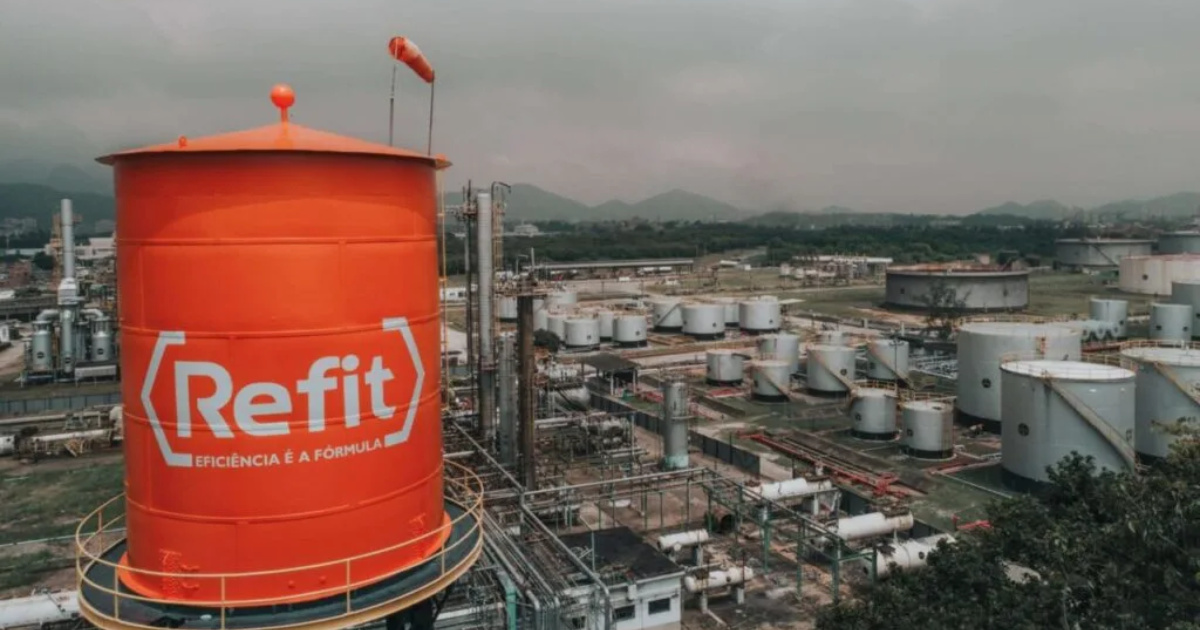
The accelerated expansion of gasoline formulated from imported nafta, primarily produced by Refit (Refinaria de Manguinhos), has caused significant changes in the Brazilian fuel market, especially in the Southeast and Rio de Janeiro.
Since mid-2024, the presence of this alternative fuel has grown significantly, driven by tax benefits related to the import of non-petrochemical nafta.
This new scenario has presented challenges to Petrobras’s leadership and generated reactions from major national distributors.
-
12-Year-Old Trips in Taiwan Museum, Punches Hole in Rare 350-Year-Old Italian Painting Valued at $1 Million

-
8-Year-Old Girl from San Antonio Launches Candle Brand, Sells Over 1,000 Candles in 5 Months to Save for First Car

-
Rising Food Inflation Strains Family Budgets and Challenges Food Security in Brazil

-
Discover Treze Tílias: How a Former European Minister Brought a Touch of Austria to Southern Brazil




Fuel Market in Transformation
The operation of Refit stands out for its strategic use of imported nafta, benefited by tax incentives when landing in states such as Amapá and Alagoas.
After entering through the Port of Rio de Janeiro, the raw material is transformed into gasoline at the refinery’s facilities, complying with rules from the National Agency of Petroleum, Natural Gas and Biofuels (ANP).
This production alternative has allowed Refit to increase its share in the markets of Rio and São Paulo, consolidating a new competitive hub.
According to official data from the ANP, Refit’s gasoline supplied 28.3% of the market in Rio de Janeiro in the first half of 2025, through the distributors Flagler and 76 Oil, both connected to the group.
In June, the joint participation of these distributors reached 30.4%, surpassing individually Vibra (24%), Raízen (21.2%), and Ipiranga (14.8%), which traditionally market gasoline from Petrobras.
Since April, Flagler has led the Fluminense market, increasing its share against competitors.
In the state of São Paulo, market sources indicate that Refit’s gasoline has already reached a 15% market share, resulting from operations among local distributors.
This growth reflects a strategy that combines competitive pricing, tax benefits, and regular supply, which has favored resellers’ preference for this type of fuel.
Imported Nafta: The Basis of Formulated Fuel
The ANP confirmed that Refit produces gasoline from imported nafta, emphasizing that the activity complies with current regulations.
However, the agency does not disclose specific volumes, as it considers the information restricted, but highlights that the same raw material can be used both in refining and in formulating the final product.
According to the ANP’s dynamic panel, Refit’s total production of gasoline A (before the mandatory addition of anhydrous ethanol) increased by 57.7% in the 12 months ending in June 2025, compared to the previous period.
In contrast, Reduc’s production, Petrobras’s refinery responsible for supplying Rio de Janeiro and other states, recorded a 5.1% decline in the same period.
The current scenario has been intensified by the exit of Copape, until then the only specialized formulator in the country, whose operations were suspended by the ANP in July 2024 due to operational and fiscal irregularities.
Since then, Refit has been operating almost alone in the formulation of fuels, although other refineries, such as SSOil (São Paulo) and Ream (Grupo Atem), have also been gaining market, albeit at a slower pace.
Competitiveness and Fiscal Benefits Drive Nafta Gasoline
The formulation process, which involves combining different hydrocarbons to meet conventional gasoline specifications, has become advantageous due to the lower cost of imported nafta.
According to industry executives, the price of nafta is about R$ 2.13 per liter in the international market, a value lower than the average price of gasoline A produced in Brazil, which stood at R$ 3.68 in the week ending July 20, 2025, according to the ANP.
Fiscal benefits and the deferral of ICMS in the so-called “entry gate states” make the product even more attractive for gas stations, creating conditions for lower prices compared to gasoline from Petrobras or other importers.
The consolidation of this operation should continue at least until the end of 2026.
The ANP recently suspended formulation as an exclusive activity, but maintained the possibility of refineries engaging in fuel formulation as an ancillary activity, alongside conventional refining, in accordance with Resolution 852/2021.
The exit of Copape and this decision by the agency have practically reserved the market for a few participants, including Refit itself.
Sector Reactions and Impacts on Competition
The impact of this new scenario is acknowledged by industry representatives.
“Refit inherited the market from Copape and is placing this product mainly in Rio and São Paulo at competitive prices,” stated a director of a large distributor.
Price consultants who monitor the sector confirm that Petrobras, facing market losses, has intensified its auctioning of fuel sales to distributors, a practice once more common for diesel that now includes gasoline.
This strategy, according to sources, allows the state enterprise to offer cargoes at differentiated prices, below the table, in addition to increasing future quotas for distributors.
In response, Petrobras stated that selling by auction is “a commercial practice provided in contracts established with distributors, aimed at complementing the regular supply of products in a competitive, transparent, and equitable manner.”
The Brazilian Association of Fuel Importers (Abicom), through its president Sérgio Araújo, reported that none of the member companies import nafta but views the market movement as natural given the current legislation.
According to him, “the formulation of gasoline by refineries has legal provision and it was already expected that companies would occupy this market in the absence of a competitor and if there is an opportunity for good margins.”
Production Volumes and Nafta Import
The exact volumes of gasoline production from Refit derived from oil refining or from formulation using nafta are not publicly disclosed.
The refinery also did not respond to requests for clarification.
Data from the ANP shows that the total production of Refinaria de Manguinhos reached a historical record in June 2025, with 328 thousand cubic meters of derivatives, of which 160 thousand cubic meters were gasoline A, representing an 80% increase over June 2024.
Information from the Ministry of Development, Industry, Commerce, and Services (MDIC) indicates that more than half of the non-petrochemical nafta imported by Brazil comes from Russia, while almost one-third originates from the Gulf of Mexico, entering mainly through the ports of Rio de Janeiro, Paranaguá, Santos, and Manaus.
In addition to Refit, other companies such as SSOil, Ream (Grupo Atem), Dax Oil, and Latim Oil also utilize imported nafta, but on a smaller scale.
Regulation and History of the Fuel Sector
The Legal Fuel Institute (ICL), which unites large distributors and Petrobras, emphasizes that while formulation is not illegal, there is a history of irregularities in the sector, such as importing gasoline disguised as nafta and tax fraud.
In light of the ongoing transformation, specialists and industry agents closely monitor the developments, paying attention to the impact of nafta gasoline on consumer prices, competition between companies, and regulatory challenges.
With the rise of this new fuel in the Brazilian market, the question remains: how might nafta gasoline transform, in a lasting way, the fuel landscape in the country and the pocket of the final consumer?