






 Portuguese
  Spanish
  4 min of reading
  0 comments


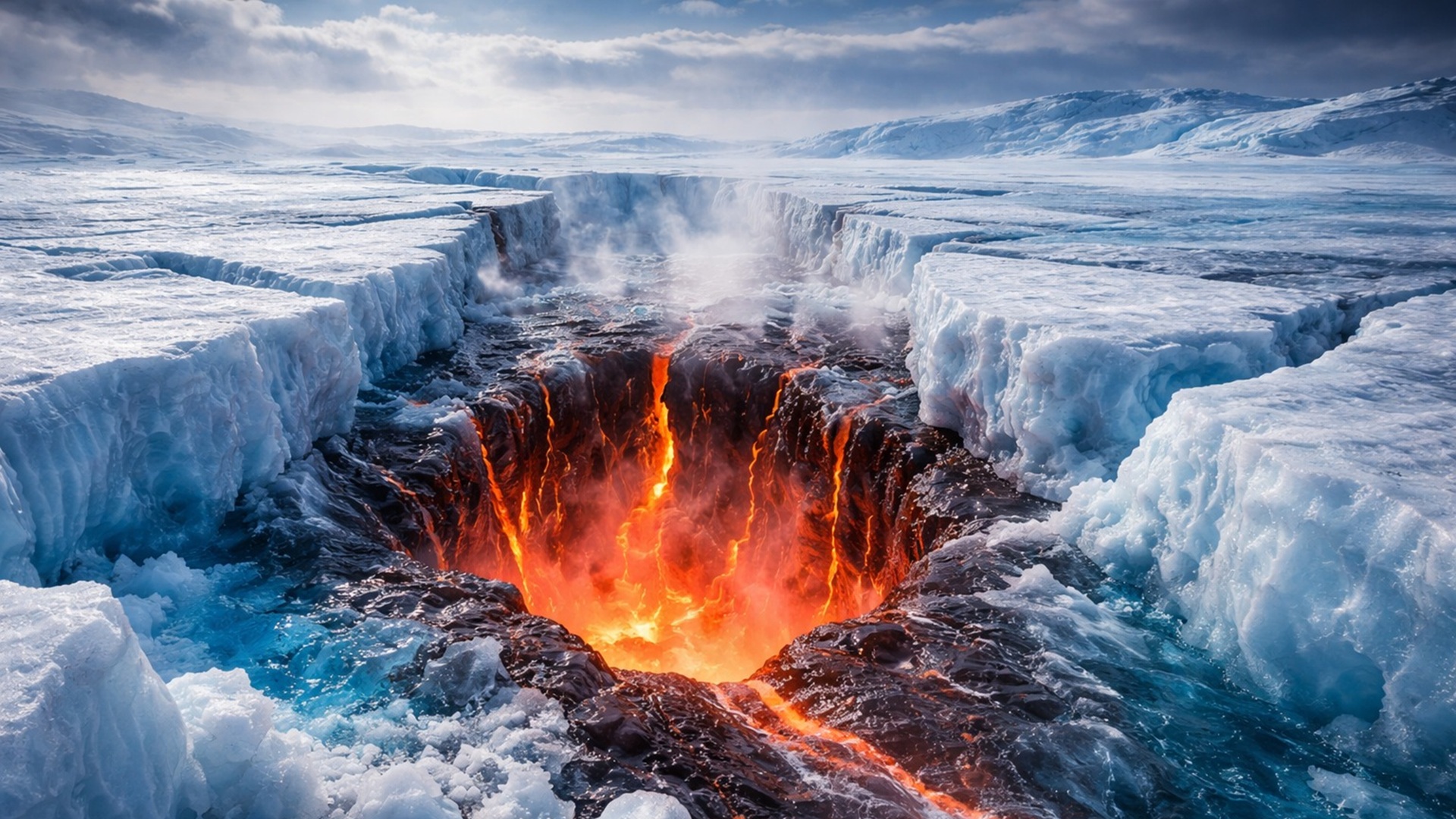
Modeling With a 2.5-Kilometer Plate Indicates That Greenland’s Ice May Experience Thermal Convection Caused by Earth’s Internal Heat, Forming Plumes That Distort Layers Detected by Radar and Alter Our Understanding of Its Deep Dynamics
Scientists claim that Greenland’s ice may be moving like melted rock, after computational models indicated thermal convection beneath a 2.5-kilometer thick plate, a phenomenon associated with Earth’s internal heat and described in the journal The Cryosphere.
Greenland’s Ice May Experience Thermal Convection Under Basal Warming
The ice of Greenland, which covers 80% of the island, is one of the largest reservoirs of frozen water on the planet and is expected to play an important role in sea level rise as it melts into the ocean.
Radar images obtained from the depths of the layer revealed plume-like structures that distort layers formed over eras. These wavy formations were described in a 2014 paper as large elevations unrelated to the topography of the bedrock.
-
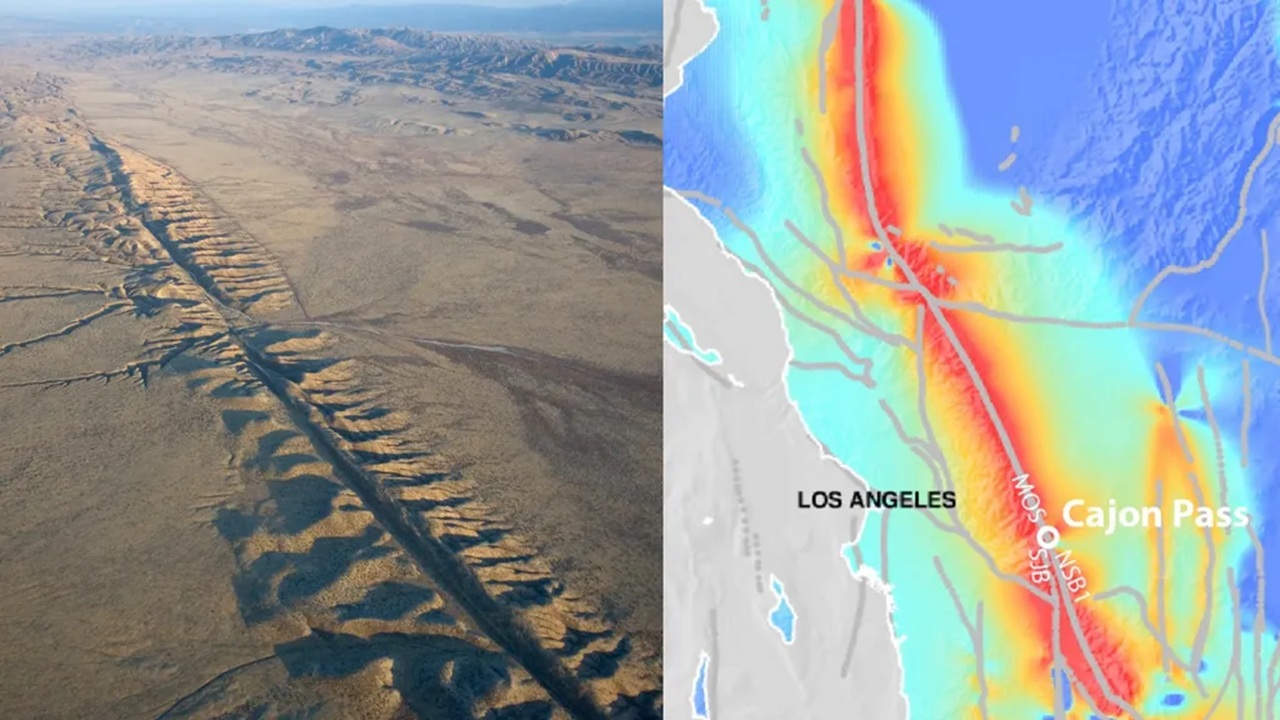
Giant earthquake returns to haunt California after study points out San Andreas and San Jacinto faults at highest stress level in 1,000 years, with risk involving Los Angeles and other populated areas.

-
Scientists have mapped for the first time the largest biological network on the planet, formed by underground fungi with an extension of 110 quadrillion km that transport 4 billion tons of CO₂ to the soil per year.

-
Where does the light go when you turn off the lamp? The answer involves invisible particles called photons, which disappear in fractions of a second inside the room but can travel billions of years through space to reach our eyes.

-
Light particle that shouldn’t be split surprises physicists


More than a decade after the discovery, researchers point out that the plumes correspond to thermal convection, an upward heat transport process generally associated with melted rock beneath the Earth’s crust.
According to glaciologist Robert Law from the University of Bergen, ice is at least a million times softer than Earth’s mantle, but the physics allow thermal convection to occur within the layer.
Computational Modeling Simulated 2.5-Kilometer Ice Plate
To test the hypothesis, Law and colleagues constructed a simplified digital slice of Greenland’s ice. The central question was whether heating at the base could generate structures compatible with those detected by radar.
The group used a geodynamic modeling package employed in the simulation of convection in the Earth’s mantle to model a plate 2.5 kilometers thick, equivalent to 1.6 miles.
The researchers adjusted variables such as snowfall rate, thickness, softness, and surface ice velocity. Under suitable conditions, the model produced elevations similar to plumes, with upward columns bending the upper layers.
The shapes generated were surprisingly similar to the radar images recorded in northern Greenland, where Greenland’s ice exhibited the initially described structures.
Formation of Plumes Depends on Warmer, Softer Ice at the Base
In the model, the plumes only formed when the ice near the base was warmer and significantly softer than standard assumptions allow.
This suggests that if thermal convection is responsible for the structures, the actual ice at the base of the layer in the north may be softer than previously thought.
The heat necessary to generate the upward currents was consistent with the continuous flow from within the Earth, resulting from radioactive decay in the crust and residual heat from the planet’s formation.
Although tiny, this effect can accumulate over time under a massive insulating layer, warming and softening the ice above.
Climatologist Andreas Born, also from the University of Bergen, compared the process to a boiling pot of pasta, highlighting the surprise of the discovery.
Penetrating Radar Revealed Distorted Internal Layers
Understanding Greenland’s ice relies on the use of penetrating radars. The radio waves pass through the ice and reflect distinctively when encountering internal layers formed by compressed snow.
Each layer has its own characteristics, including variations in acidity levels, dust, ash, and chemical composition. These differences allow for the identification of internal distortions.
The wavy structures observed were unrelated to the underlying bedrock topography, creating a puzzle that scientists have been trying to solve since 2014.
Previous studies suggested mechanisms such as freezing of meltwater at the base or migration of slippery spots. The thermal convection hypothesis had not been tested until recent modeling.
Implications and Need for Further Research
The researchers state that Greenland’s ice remains solid, flowing only over timescales of thousands of years. The phenomenon does not imply that the ice is slushy or that it will melt faster.
Further research is needed to understand the effects of thermal convection on the evolution of the layer and its future implications.
Law stated that Greenland has a special nature and that its ice sheet is over a thousand years old, being the only one on the planet with a permanent culture and population along its margins.
According to him, understanding the hidden processes within Greenland’s ice is essential for preparing for changes that will impact the global coastline. The research was published in the journal The Cryosphere.








-

-

-

-

-

-

35 people reacted to this.