Portuguese
  Spanish


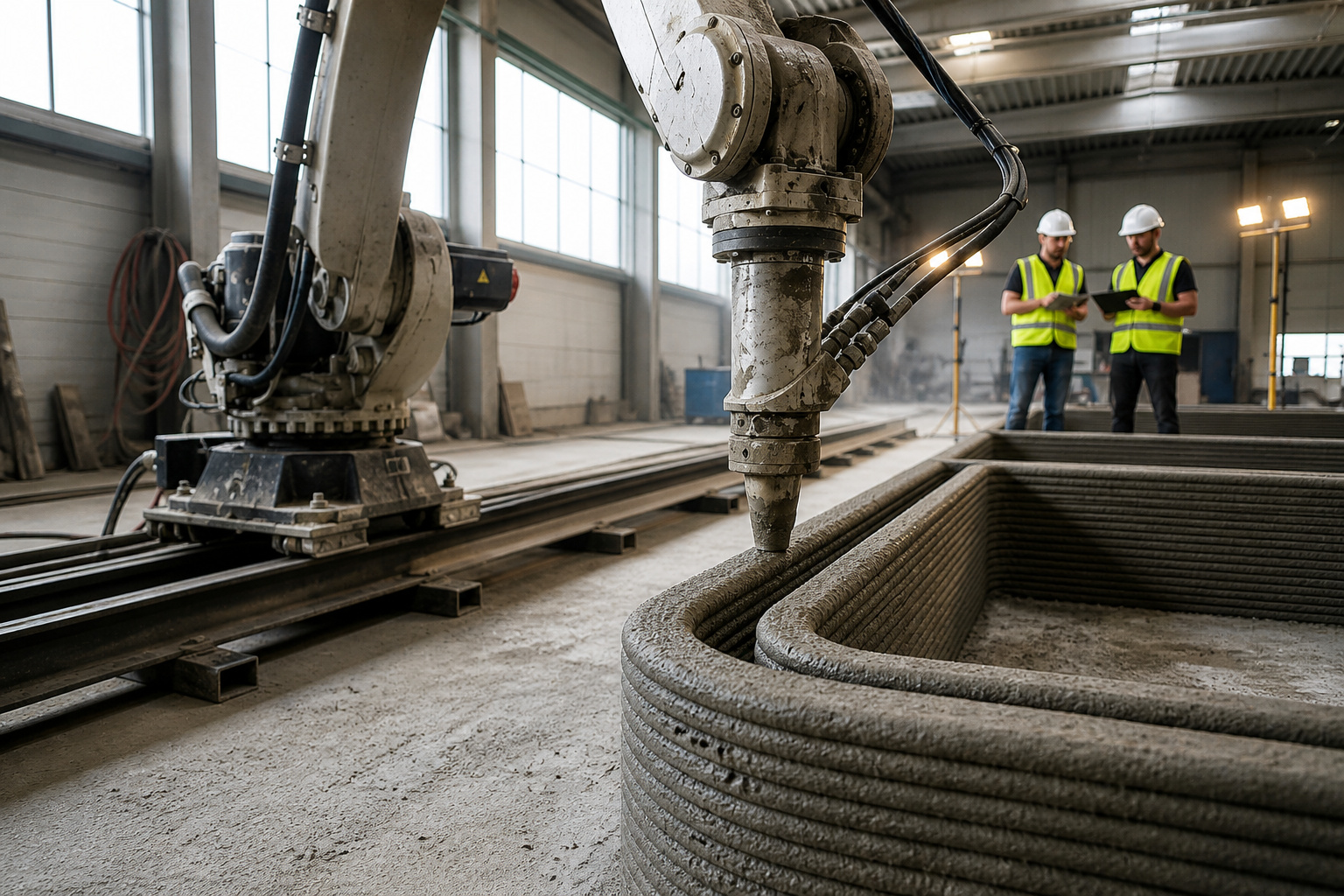


3D printing technology transforms the sector, accelerates construction, and reorganizes construction methods with efficiency and sustainability
The civil construction industry is undergoing a structural change driven by automation and digitalization of processes. The traditional construction site, based on manual masonry, is beginning to be replaced by robotic systems that perform tasks with greater precision and speed. In this context, giant 3D printers can already erect complete structures in less than 24 hours, changing the pace of construction and creating a new standard of productivity. This advance, which gained momentum from 2022, began to be validated in real projects by 2025, consolidating the technology as a viable alternative in the sector.
How 3D Printers Work in Civil Construction
The printer operates as a large-scale additive manufacturing system, using robotic arms or tracks that move in three axes. The equipment deposits successive layers of special concrete, developed to maintain fluidity during application and strength after deposition. This balance allows each layer to support the next without compromising the structure’s stability. The process eliminates the use of formwork and scaffolding, simplifying steps and reducing manual interventions throughout the construction.
The digital design is converted directly into a physical structure, which reduces execution failures and improves dimensional control. Millimetric precision reduces waste and avoids rework, while continuous operation allows the system to function even at night. As a result, external walls and internal partitions can be completed in less than a full 24-hour cycle, as observed in recent applications.
-
72-Year-Old Man Spends Six Years Building a Rotating House for His Wife, Completing a Full Turn in 22 Seconds

-
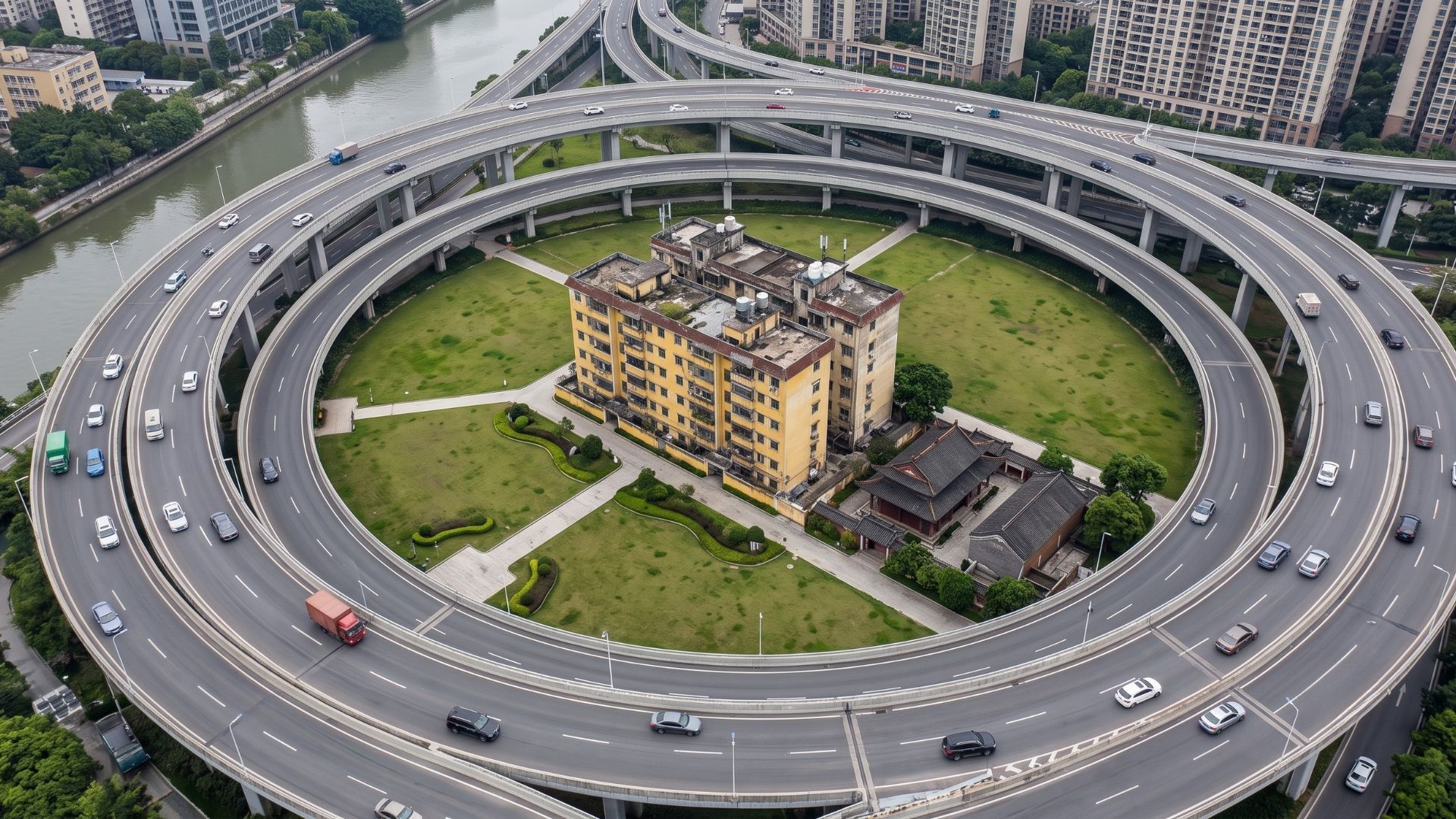
Chinese Residential Building Surrounded by Circular Overpass After Residents Reject Compensation

-
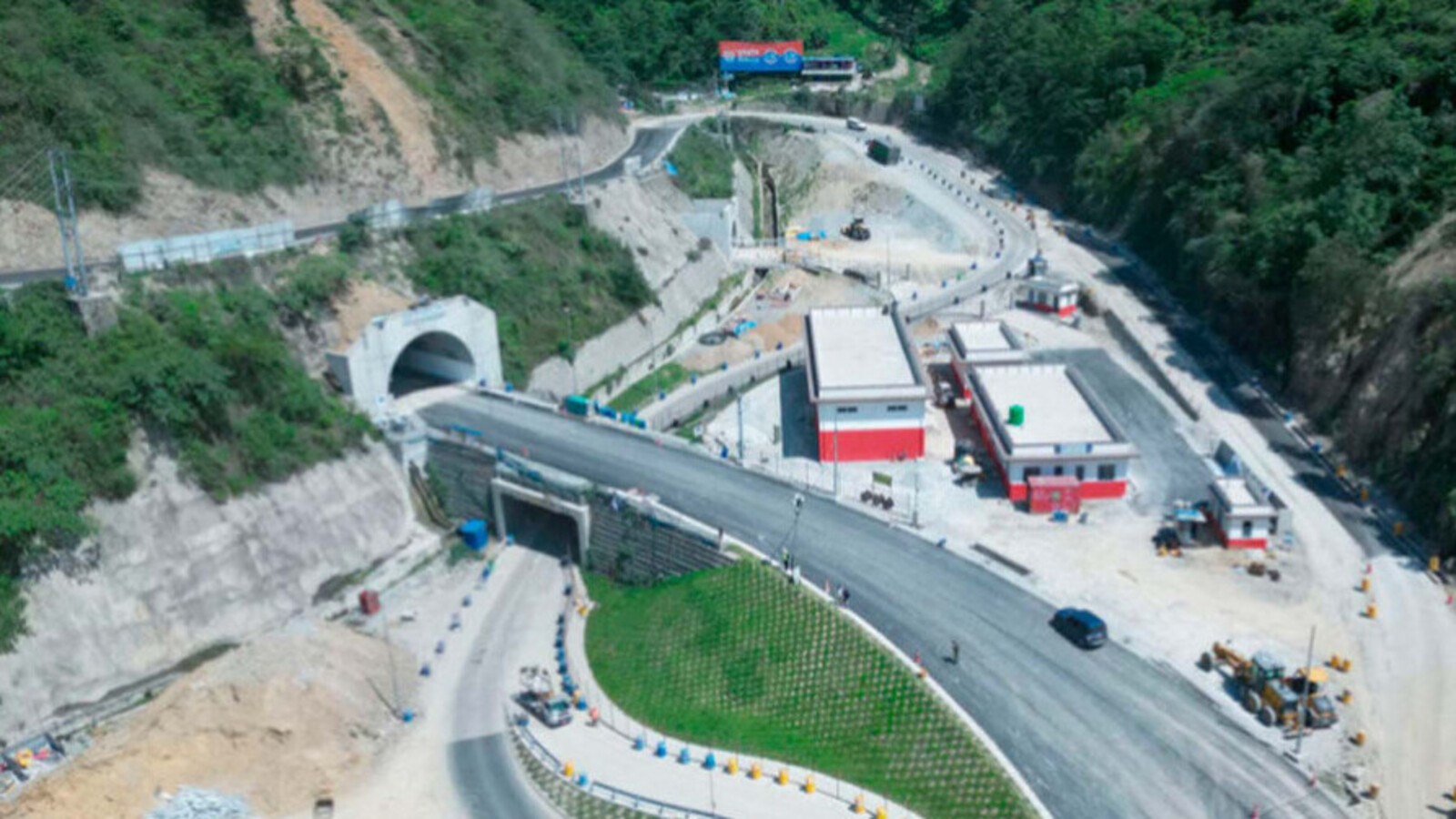
After 79 Months and $145 Million Investment, Nepal Set to Open First 2.7 km Road Tunnel to Ease Traffic in Kathmandu Valley

-
In China, 23 Families Spent Over 4 Years Carving a 1.2 km Road Through a Cliff to Overcome Isolation and Transform a Remote Village


Cost Reduction and Efficiency Gains
The adoption of 3D printing in civil construction enables cost reductions of up to 40%, mainly due to less reliance on intensive labor. This factor significantly alters the financial planning of projects and increases the method’s competitiveness. Data analyzed by Science Direct in 2023 indicates that material waste drops to about 2%, while conventional constructions generate approximately 15% of waste.
This difference reinforces the efficiency of the automated model, which combines resource savings with faster execution. The system becomes viable for both high-end developments and social housing projects. The reduction in time and material directly contributes to more sustainable construction and better utilization of available inputs.


Comparative Indicators Between Construction Methods
The comparison between traditional masonry and 3D printing shows significant gains in productivity. The structure of a 60m² house, which normally takes 15 to 21 days to be completed using conventional methods, can be executed in less than 24 hours with the use of robotics. Material waste also shows a significant reduction, dropping from about 15% to approximately 2%.
Another relevant point is the precision of measurements, which no longer depends on manual execution and is now digitally controlled. The elimination of formwork and intermediate steps simplifies the process and reduces the possibility of errors. These indicators demonstrate that the technology offers greater predictability and control in project management.
Advancement of Technology in Brazil
Brazil has already begun adopting this technology with pioneering projects in São Paulo and Rio Grande do Norte. The first 3D printed house in Latin America was built in rural São Paulo, serving as a laboratory for technical validation of national standards. These initiatives began to gain traction between 2022 and 2025, boosting the sector’s development in the country.
The application of the technology aims to reduce logistical costs, especially in regions where the transport of traditional materials is more complex. Implementation involves specific steps, such as the development of materials adapted to the tropical climate, project approval via digital modeling, and the installation of leveled bases for equipment operation. These factors ensure the system’s viability in different scenarios.
Safety and Resistance of Printed Constructions
3D printed structures exhibit high mechanical resistance due to the continuous density of the material. Unlike conventional masonry, the process forms more homogeneous walls, which increases durability. The layered design also allows for the creation of internal spaces that improve thermal and acoustic insulation, raising the comfort level of environments.
Laboratory tests conducted until 2024 confirm the reliability of these constructions. Evaluations include analysis of adhesion between layers, simulation of structural loads, and verification of resistance to adverse weather conditions. Fire safety and seismic resistance tests are also performed, ensuring compliance with required technical standards.
Impact on human labor in civil construction
The introduction of 3D printing does not eliminate the need for professionals but alters the profile of roles in the sector. The main structure is now executed by automated systems, while stages such as finishing, electrical installations, and component assembly remain the responsibility of specialized technicians. This model promotes an integration between technology and human knowledge.
The sector is moving towards a hybrid format, where repetitive tasks are automated and activities requiring manual precision remain essential. This change redefines the role of labor and increases the demand for technical qualification. Civil construction, in this scenario, begins to combine operational efficiency with professional specialization.
Given this transformation, is civil construction prepared to adopt a faster, more precise, and sustainable model on a large scale?