






 Portuguese
  Spanish
 7 min of reading
  0 comments


In Rio de Janeiro, community residents were incorporated into the formal sanitation base after more than R$ 5.5 billion in works. The expansion brings water and sewage, proof of residence, and regular service to historically neglected areas, connecting urban infrastructure, citizenship, and social inclusion in the dense Brazilian outskirts of Rio.
The community residents of Rio de Janeiro have become central to a new stage of sanitation, with works that bring water and sewage, regular service, and proof of residence to areas historically neglected by urban infrastructure. The progress was highlighted by Exame in June 2026.
The community residents of Rio de Janeiro have become central to a new stage of sanitation, with works that bring water and sewage, regular service, and proof of residence to areas historically neglected by urban infrastructure. The progress was highlighted by Exame in June 2026.
Sanitation reaches historically neglected areas
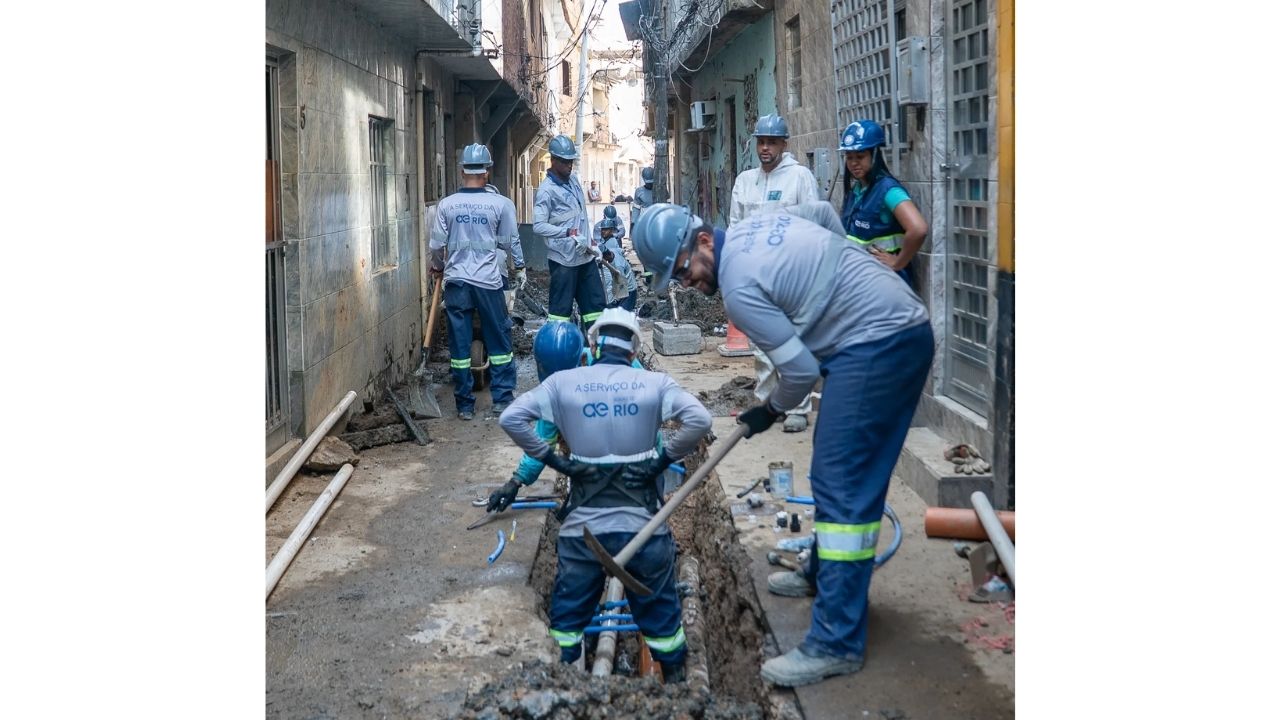
For decades, many communities in Rio lived with irregular supply, sewage discharged without proper treatment, and difficulty accessing formal services. The absence of urban infrastructure affected health, income, housing, and even the residents’ relationship with banks, companies, and public agencies.
-
Via Mar promises to relieve BR-101 in Santa Catarina, but it will be the state’s first toll state highway and faces soft soil and rice fields that threaten the timeline.

-
To halt the advance of the Sahara, the 8,000 km Great Green Wall in the Sahel relies on reforestation to combat desertification, but by 2026 it remains far behind the goal of 100 million hectares.
-
Long before sustainable construction became a trend, China built earthen fortresses with multiple floors, a central courtyard, and the capacity to house up to 800 people living in a community.

-
While in the rest of the world building a hospital takes years from design to inauguration, China erected the Huoshenshan Hospital from scratch in just 10 days, with 1,000 beds, foundation, structure, electrical installations, plumbing, and oxygen system ready to receive patients, mobilizing 7,000 workers.


With the expansion of networks, basic sanitation began to enter places where public power and formal services arrived late or incompletely. The change involves more than just pipes and stations: it alters how these regions appear in the official city.
Investment exceeds R$ 5.5 billion
According to the source, since the beginning of the Águas do Rio concession, more than R$ 5.5 billion have been invested in the modernization and expansion of systems. The improvements already directly benefit about 3.5 million people.
This volume helps to gauge the scale of the challenge. Bringing treated water and sewage collection to dense, complex, and historically neglected regions requires heavy construction, continuous planning, and local presence.
Almost 1 million joined the formal base
One of the most relevant points is the incorporation of approximately 1 million people living in communities into the formal customer base. This means that families previously outside the regular register now have a direct relationship with the service.
For community residents, formalization can mean more than just a water bill. It also creates an address record, service history, and the possibility to prove where the family lives.
Proof of residence changes practical life
The proof of residence seems like a simple document, but it can open important doors. It is often required for credit, service registration, enrollment, contracts, banking access, and other steps in formal life.
Therefore, sanitation gains a social dimension. When community residents receive a regular bill in their name, they no longer depend on improvised solutions to prove they exist at that address.
Water and sewage become instruments of citizenship
The expansion of sanitation in Rio shows how basic services can function as instruments of inclusion. Piped water, sewage collection, and regular registration help reduce the gap between the formal city and the real city.
This change is especially relevant in popular areas. For many community residents, joining the formal base also means being recognized by an essential service that previously arrived precariously.
Works also boost local employment
The source reports that since the beginning of the operation, about 10,800 jobs have been created, with approximately half of the positions filled by residents of the communities served.
This data amplifies the impact of the work. In addition to providing infrastructure, the project boosts local income and transforms some residents into workers of the urban expansion itself.
Complexo da Maré concentrates strategic work
One of the most emblematic projects is in the Maré Complex, a group of 16 communities that houses about 200,000 residents. The region has begun to receive one of the largest investments in sanitation infrastructure in its history.
The project includes the construction of a 4.5-kilometer-long sewage collector trunk. This type of intervention is strategic because it allows for expanded collection and reduces the irregular discharge of waste into nearby channels, rivers, and systems.
Maré shows the scale of the urban challenge
Maré is not just a set of popular neighborhoods; it is a dense, complex region historically marked by a lack of services. Bringing sanitation there requires more than digging ditches and installing pipelines.
It is necessary to combine engineering, local dialogue, operational planning, and continuity. In established communities, infrastructure needs to enter already occupied territories, with narrow streets, high circulation, and accumulated demands.
Guanabara Bay also enters the debate
The forecast for investments until 2033 includes R$ 2.7 billion allocated to interventions around Guanabara Bay. The area is one of the most well-known symbols of the relationship between sewage, urbanization, and environmental degradation in Rio.
Improving sewage collection and treatment in nearby regions can reduce the pressure on rivers, channels, and coastal waters. When sanitation advances in communities, the effect can also appear outside them, in the broader urban environment.
Goal until 2033 requires continuity
By 2033, the forecast is for R$ 19 billion in investments to universalize sewage collection and treatment services in the concessionaire’s area of operation. The timeline aligns with the goals of the Sanitation Legal Framework.
This horizon shows that the process is still ongoing. Recent advances are significant, but universalization depends on continuous works, maintenance, financial capacity, and public monitoring.
Sanitation reduces invisible inequality
The lack of basic sanitation often remains hidden because much of the infrastructure is underground. But its effects appear in health, bad odors, contamination, urban devaluation, and difficulty accessing rights.
When the service arrives, it changes the routine of families. For community residents, a water and sewage network can mean less improvisation, more sanitary security, and greater integration with the city.
Formalization does not solve everything alone
Despite the advances, entering the formal customer base does not eliminate all historical problems. Communities still face challenges related to income, land regularization, urban quality, security, and access to other public services.
Therefore, sanitation should be seen as part of a larger agenda. It is essential, but it needs to go hand in hand with housing, mobility, education, health, and territorial development policies.
Aegea expands national presence
The article from Exame also highlights Aegea’s national performance, which in 2025 invested more than R$ 7 billion in water and sewage expansion, started new operations, and consolidated its presence in 15 states.
This context helps to understand Rio within a larger strategy. The experience in large concessions shows how sanitation has become a strategic sector for infrastructure, public health, and economic development in Brazil.
Barcarena became an example outside Rio
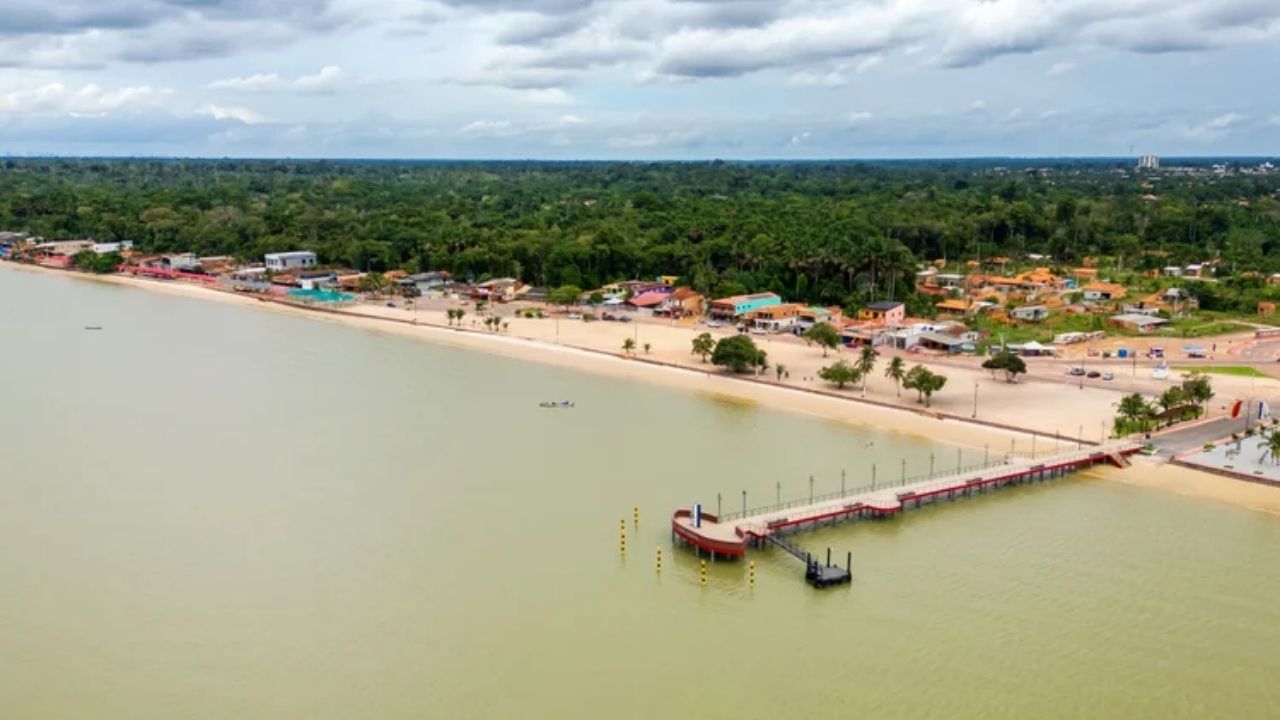
Another case mentioned by the source is Barcarena, in Pará, which became the first city in the state to meet the goals of the Sanitation Legal Framework, almost ten years ahead of the scheduled deadline.
The example shows that universalization depends on local execution. Each city has its own challenge, but the result appears when investment, construction, and management can transform goals into real service.
Campo Grande also anticipated coverage
Campo Grande, in Mato Grosso do Sul, appears as another example of progress. The city has 99% water supply coverage and 94% sewage network coverage, according to the data cited in the source.
These numbers help to compare realities. While some cities are already approaching universalization, large centers like Rio still need to correct historical liabilities in popular areas.
Community residents leave cadastral invisibility
The incorporation of residents into the formal base has a strong symbolic effect. It shows that the presence of these families is no longer treated as an exception or absolute informality.
In everyday life, this can change relationships with companies, banks, and services. Residents of communities start to have a regular document linked to the address, something basic for those living in the formal city, but not always accessible in urban peripheries.
Infrastructure is also recognition
When a community receives a network, service, reading, maintenance, and registration, it starts to be treated as part of the urban system. This material recognition is an important step to reduce inequalities.
Infrastructure is not neutral. Where there is water, sewage, regular billing, and maintenance, there is also a sign that the territory should be served, monitored, and included in city planning.
Sanitation becomes an economic and social agenda
The impact of sanitation is not limited to public health. It influences productivity, urban appreciation, job creation, environmental security, and access to financial services.
In Rio, the formalization of almost 1 million people shows this expanded effect. Sanitation starts to operate as a bridge between physical infrastructure and economic inclusion.
Water network can also become citizenship
The residents of communities in Rio de Janeiro are at the center of a transformation that goes beyond the works. With more than R$ 5.5 billion in investments, water and sewage expansion, local jobs, and the entry of almost 1 million people into the formal base, sanitation begins to correct a historical debt of urban infrastructure.
The challenge now is to ensure continuity, service quality, and progress towards the 2033 goals. Do you think sanitation, regular billing, and proof of residence can be one of the most concrete forms of social inclusion in communities? Share your opinion.


Be the first to react!