






 Portuguese
  Spanish
  4 min of reading
  0 comments


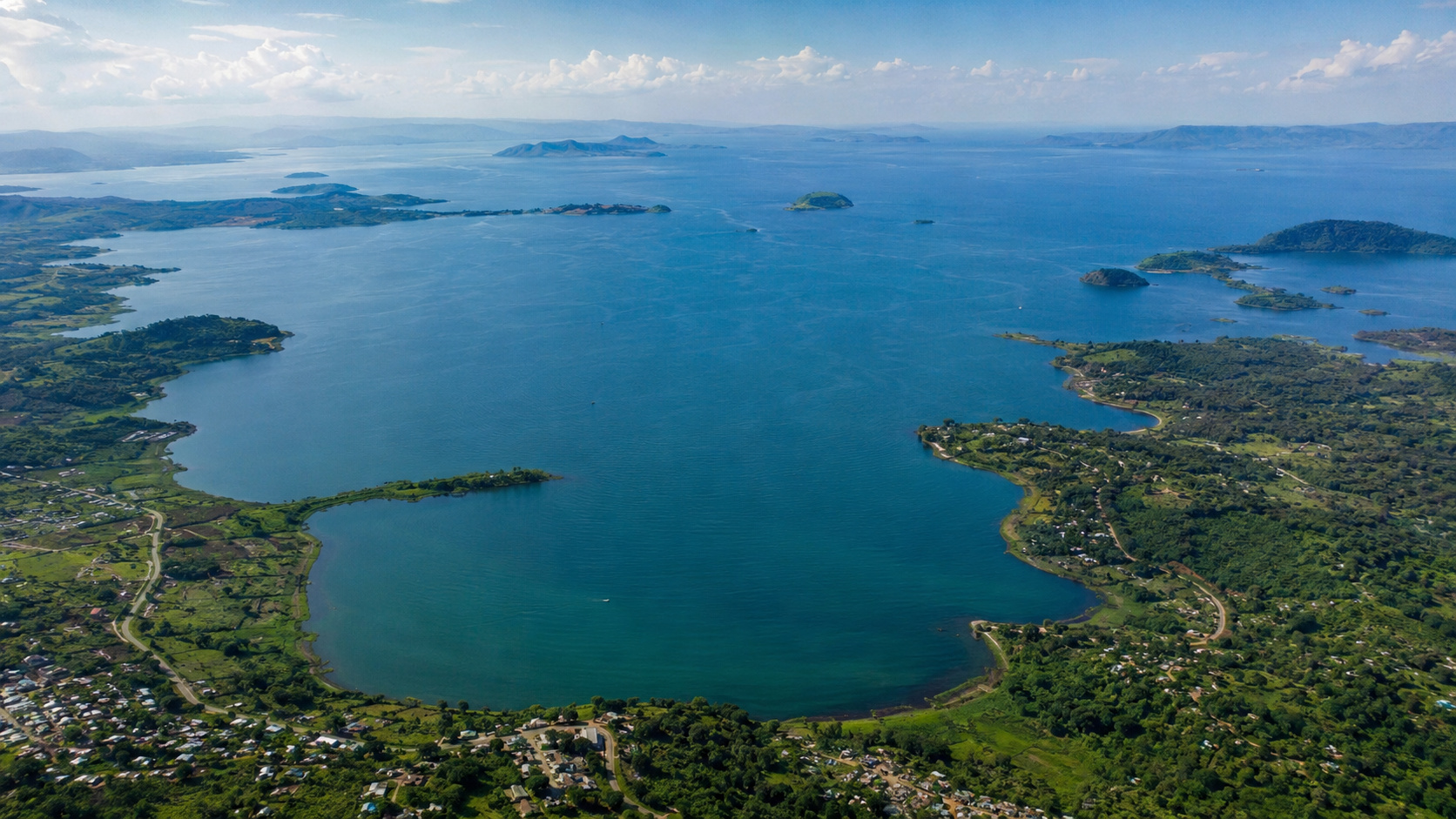
Lake Victoria generates intense storms during the night and helps explain why Africa concentrates some of the largest lightning hotspots on the planet.
The planet has regions where storms seem to follow an almost predictable script. In few areas does this happen as impressively as around Lake Victoria in East Africa. With a surface area of approximately 68,800 km², according to the Encyclopaedia Britannica, the lake is the largest tropical lake on Earth and has become one of the most studied environments by meteorologists due to the frequency and intensity of the storms that form over its waters.
NASA satellite images show that while many regions experience storms mainly during the afternoon, Lake Victoria exhibits different behavior. At night, large convective systems develop over the lake’s surface, producing frequent electrical discharges and transforming the region into one of the most active environments on the planet when it comes to extreme atmospheric activity.
The largest tropical lake in the world creates perfect conditions for gigantic storms
The secret lies in the combination of warm water, geographical position, and terrain. According to NASA Earth Observatory, Lake Victoria is known for its intense nighttime storms, directly influenced by the size of the lake, its location near the Equator, and the mountains surrounding part of the region.
-
It looks just like a metallic card, but this titanium gadget hides more than 70 tools for routine, fishing, technology, and emergencies.

-
Alert about supplement used by millions for joint pain: observational study associates glucosamine with a 25% higher risk of progression from mild cognitive impairment to dementia and reignites concern.

-
Free digital CNH: more than 372,000 drivers have already saved R$ 51.3 million in São Paulo; state has the cheapest CNH in Brazil
-
End of the worker in mining: Vale foresees 100% automated mines, bets on AI as an ‘irreversible path’, invests $700 million in R&D, and plans to add 150 more autonomous equipment to the fleet.




During the day, the land heats up faster than the water. At night, this process reverses and creates atmospheric circulation patterns capable of concentrating moisture over the lake.

When moist air converges over the heated surface of the lake, clouds with significant vertical development begin to form. In many cases, these structures evolve into severe storms capable of producing thousands of electrical discharges throughout the night.
Africa concentrates some of the largest lightning hotspots on the planet
Lake Victoria is not an isolated case. According to a study published in the Bulletin of the American Meteorological Society and released by NASA, Africa hosts the largest concentration of lightning hotspots on Earth. The research identified that six of the top ten global hotspots for electrical activity are located in Africa, many of them near Lake Victoria and the lakes of the East African Rift Valley.


Researchers observed that the combination of extensive lakes, mountainous terrain, and tropical climate creates ideal conditions for the repetitive development of intense storms.
This configuration causes some African areas to rival famous atmospheric phenomena, such as the Catatumbo Lightning in Venezuela.
Satellites revealed that storms advance over the lake during the early morning
Technological advances have allowed the phenomenon to be observed in detail. According to the NASA Earth Observatory, sensors from the Global Precipitation Measurement (GPM) mission recorded storms moving over Lake Victoria during the early morning, showing a dynamic very different from that found in most continental regions.

The images reveal lines of storms advancing over the lake’s surface while neighboring areas exhibit completely different meteorological behavior.
This repetitive pattern has transformed the region into a natural laboratory for climate and atmospheric studies.
The phenomenon directly influences millions of people living around the lake
Lake Victoria is shared by Uganda, Tanzania, and Kenya and supports one of the largest lake populations in the world.
According to research on lightning-related safety in the region, thousands of fishermen and riverside communities live daily with the risk associated with nighttime storms. Many boats go out to fish precisely during the times when convective systems tend to reach greater intensity.
For this reason, in addition to representing an impressive geographical curiosity, the phenomenon also has a significant economic and social impact on millions of inhabitants of East Africa.
Climate changes may intensify future storms
Researchers are also investigating how global warming could alter this system. NASA concluded that precipitation extremes over Lake Victoria could increase significantly in the future. According to the authors, the increase in atmospheric moisture availability tends to favor even more intense storms in the region.
This means that one of the most active environments on the planet for lightning discharges could become even more energetic in the coming decades. Lake Victoria demonstrates how geography can directly shape the behavior of the atmosphere.
Its position near the Equator, the vast surface of warm water, and the terrain of East Africa create a rare combination that favors intense storms almost every night.
The result is one of the most impressive meteorological scenarios on Earth, continuously observed by satellites and studied by scientists trying to understand how water, terrain, and climate can transform a lake into a true natural storm factory.







Be the first to react!