Portuguese
  Spanish


3D printed house with earth was built in Japan with natural materials, solar energy, and components that can return to the soil after use.
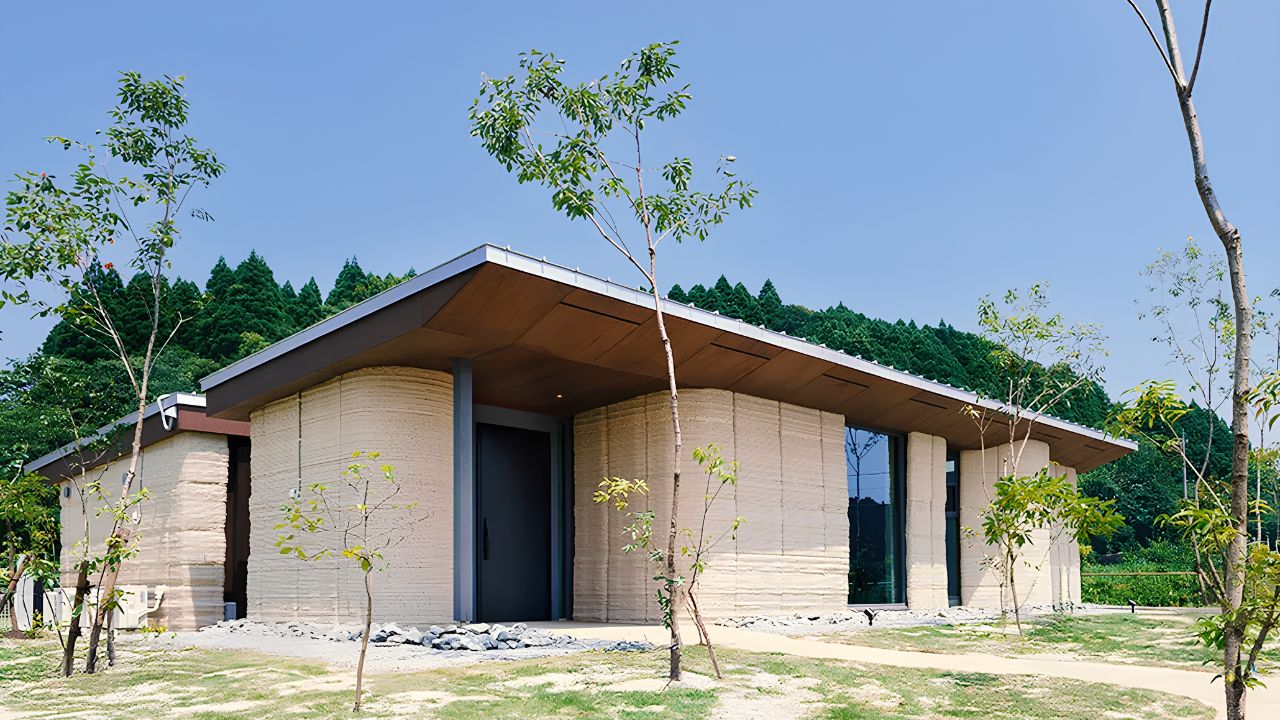
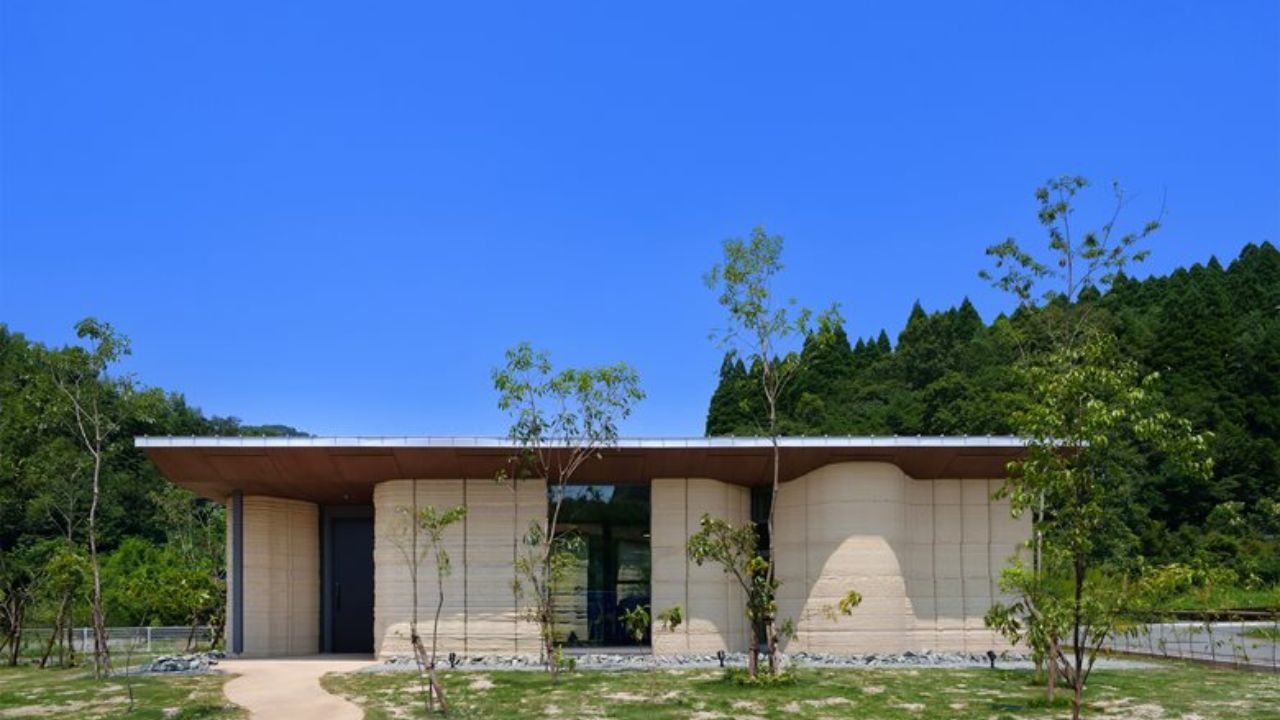
A residence of 100 square meters built in Kumamoto Prefecture, Japan, proposes an alternative to structures printed with concrete. Named Lib Earth House, the 3D printed house with earth uses a combination of soil, lime, and natural fibers, and also produces its own energy through solar panels.
Developed by the Japanese company Lib Work in partnership with the engineering company Arup and the Italian printer manufacturer WASP, Model B was designed to reduce both the impact of construction and the volume of waste generated in the future.
The proposal is not expected to be limited to the first unit. Those responsible for the project have set a goal to deliver another 10,000 houses by the end of 2040, supported by the future automation of all construction stages.
-
Workers excavate one of the world’s longest railway tunnels beneath the Alps between France and Italy, stretching nearly 60 km, 600 meters deep, with an investment of 11 billion euros.

-
In Southern Brazil, a couple builds a Russian-style stove with 430 bricks that heats their 90 m² home all night using just 15 kg of wood.
-
U.S. Farmer Tackles $4 Million Water Issue by Installing Hundreds of Miles of Drainage Pipes to Protect Farm Profits
-
Two-Person Team Builds Entire House from Scratch in Just 3 Days Using Low-Cost Materials, Documenting Every Step on Video



3D printed house with earth replaces concrete with natural compound
A large part of constructions produced with 3D printers uses concrete as the main element. In the Lib Earth House, this base was replaced by a compound developed with natural and biodegradable materials.
The mixture combines earth, lime, and natural fibers, forming the walls of the residence without relying on cement. The selection of local components also reduces the need to transport industrial raw materials over long distances.
The project considers not only the origin of the materials but also the destination they may receive when the house is no longer in use.
A large part of the structure can be reintegrated into the soil, reducing the waste associated with demolition. The same principle can be applied when a renovation requires the removal of walls or other parts of the building.
Construction follows a digital model applied in layers
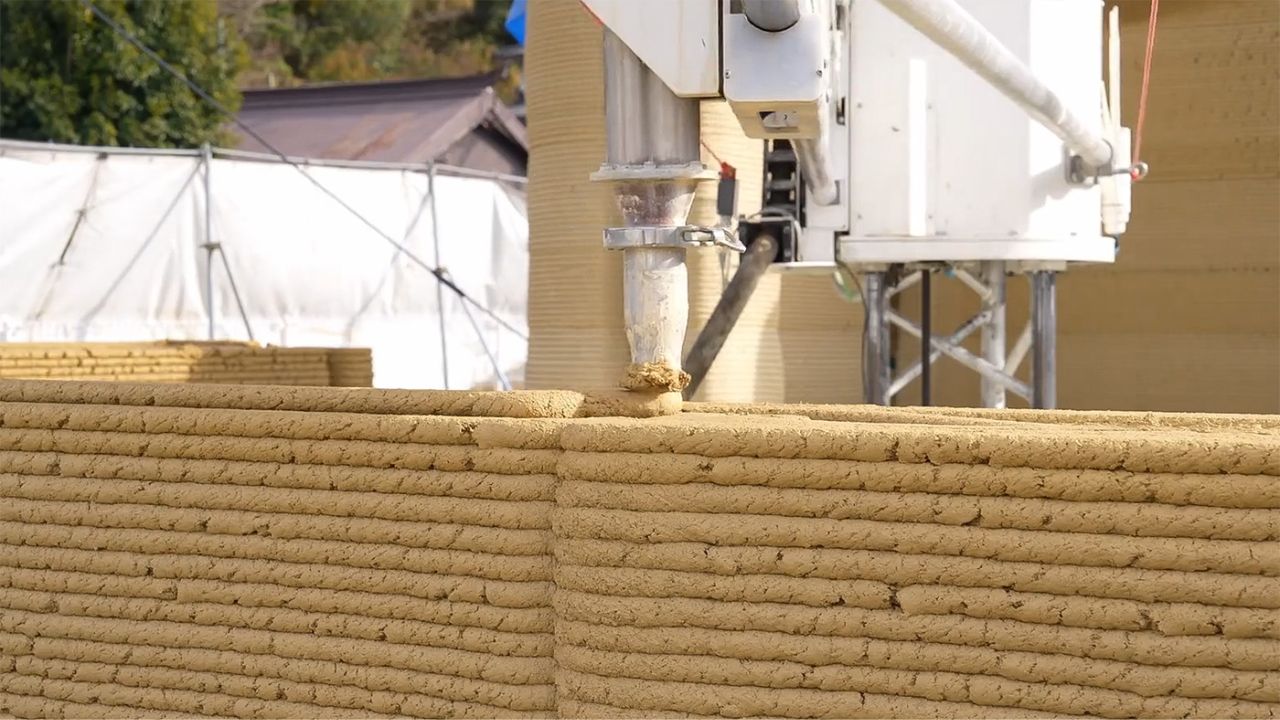
The first phase of the construction is conducted by a 3D printer, which deposits successive layers of the earth mixture according to the digital project information. This process forms the main structure of the house. After printing, a team takes over the services that complete the residence, including the installation of doors, glass, roofing, and accessories.
The marks left by the overlapping layers were not hidden. They remain visible on the internal walls and become part of the construction’s design. Wood also appears in the finish and on the covering of certain surfaces, creating contrast with the texture formed during printing.
The internal organization of the Lib Earth House was designed to favor the entry of natural lighting. An open space located in the center of the residence distributes brightness throughout the environments and helps create a sense of spaciousness.
Even with the predominant use of earth on the walls, the interior features a contemporary finish. The organic shape of the structure highlights the manufacturing method without turning the residence into just a technological demonstration.
The 3D printed house with earth thus seeks to combine the natural aspect of the materials with digital design and construction solutions.
3D printed house with earth produces and stores energy
The reduction of environmental impact also involves the daily operation of the residence. Solar panels generate the electricity used in the property, while a storage system conserves part of this energy. With this structure, the house can operate autonomously.
Different internal functions were connected to a smartphone control system. The resident can control the lighting, air conditioning, and even bathroom features via the device. The combination of self-generation and automation allows the project to monitor consumption and integrate equipment that would normally operate independently.
Sensors evaluate insulation, condensation, and resistance
The first Lib Earth House also serves as a testing unit for future constructions. Sensors installed in the residence collect information on condensation, thermal insulation, and material durability.
The results will allow for the evaluation of the earth mixture’s behavior over time and identify necessary adjustments before the project’s expansion. This monitoring will be important to verify how the structure reacts to environmental conditions and daily use.
Thus, the 3D printed house with earth functions simultaneously as a residence, construction demonstration, and data source for the development of future units.
Model bets on circular economy
The possibility of returning components to the soil is among the central elements of the project.
In conventional construction, renovations and demolitions often generate materials that need to be removed and discarded. In the Lib Earth House, the choice of natural components aims to reduce this problem from the start.
The proposed cycle includes three main stages:
- use of local and low-impact materials;
- automated manufacturing from a digital design;
- reuse or reintegration of components at the end of their useful life.
The strategy brings construction closer to the principles of the circular economy, where materials remain in use or return to the environment with minimal waste generation.
Automation should reduce manual steps
Although printing produces the main structure, part of the services still depends on a team’s work. Doors, glass, roof, finishes, and accessories are installed after the walls are ready.
The next goal of Lib Work is to automate the entire process, from the start of construction to the delivery of the completed residence. According to the proposal, full automation could reduce construction time and the costs involved in producing the next units.
This stage will be decisive in achieving the goal of more than 10,000 houses by the end of 2040.
3D Printed House with Earth Can Serve Rural Areas
The lightweight and adaptable structure is seen as a possibility for rural regions or areas affected by climate emergencies. In Japan, where the project was implemented, the solution is also considered within a scenario marked by the occurrence of natural disasters.
Digital manufacturing allows for design changes and dimension adjustments before printing begins. The use of locally found materials can reduce dependence on long supply chains.
The project is still under evaluation, and sensor data should help determine how future versions can be improved.
Goal of 10,000 Units Will Take Project to a New Scale
The Lib Earth House presents a proposal that goes beyond replacing concrete with earth.
The project combines biodegradable materials, local production, automated printing, solar generation, energy storage, and digital monitoring.
To transform the first unit into a model produced in larger quantities, the creators will need to automate the phases that still depend on manual intervention and incorporate the results obtained by the sensors.
If the goal is achieved, the 3D printed house with earth will no longer be just a prototype built in Kumamoto but will become part of a planned production of thousands of homes by 2040.
With information from Ciclo Vivo