






 Portuguese
  Spanish


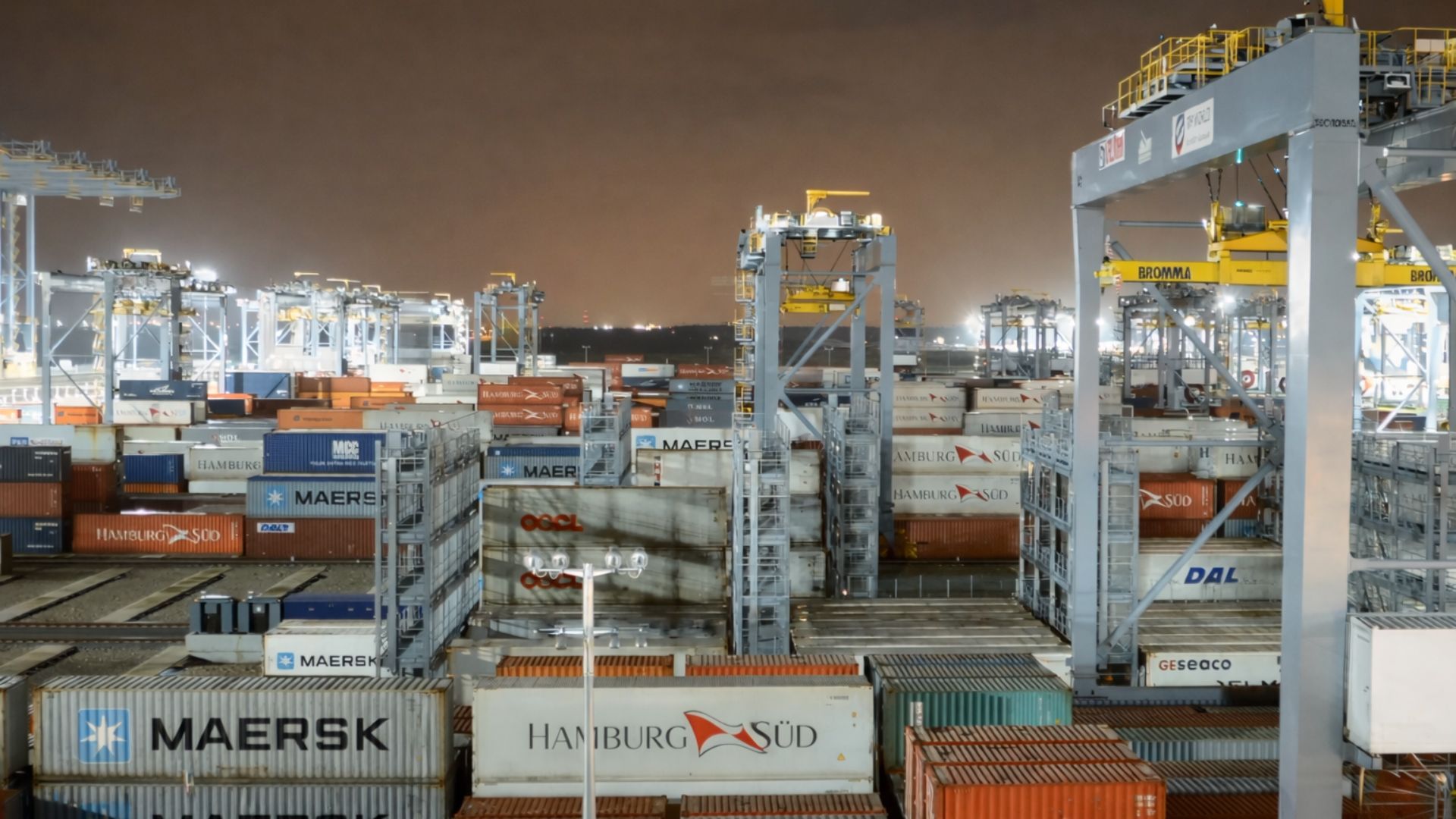
Investment of £1 Billion Targets Expanding Capacity of London Gateway Port with New Electric Berths, Rail Integration, and Advanced Automation on a Strategic Route for European Trade. Expansion Seeks to Accommodate Larger Ships, Reinforce Logistical Predictability, and Accelerate Container Movement in the United Kingdom.
DP World announced an expansion package of £1 billion, approximately R$ 6.3 billion, for London Gateway, one of the UK’s main logistics complexes, aimed at increasing the capacity of the container terminal through the construction of two new “all-electric” berths of 400 meters each, raising the planned total to six berthing areas capable of accommodating some of the world’s largest container ships.
The company also reported that the plan includes a second rail terminal to reinforce multimodal integration and reduce dependence on exclusively road flows within the supply chain.
Investment of £1 Billion and Expansion of London Gateway Port
The announcement positions London Gateway as a major-scale port expansion project in a country that relies heavily on maritime imports and exports.
-
Petrobras and Engeko’s New Investment Plan Promises Billions and Thousands of Jobs, Capturing Market Attention

-
JBS Halts Beef Production for China as Brazil Exceeds 50% of 1.106 Million-Ton Quota; Tariff May Rise from 12% to 67%, Raising Concerns Over Cattle Prices.

-
Brazil’s Social Security Alters Biometric Rules for Pensions and Benefits, Sets 30-Day Deadline, Expands Requirements, and Clarifies Who Is Exempt from Immediate Update
-
Major Brazilian Supermarkets, Including Carrefour and Assaí, May Close Earlier to Prevent Price Increases


DP World describes the investment as an enhancement of the UK’s trade capacity and states that, with the expansion, the terminal will be served by quay cranes that the company classifies as the tallest in Europe, associated with the operation of the additional berths.
The operation, according to the same corporate source, is part of an integrated hub that combines port, rail, and warehousing logistics within the same perimeter, focusing on predictability and productivity.
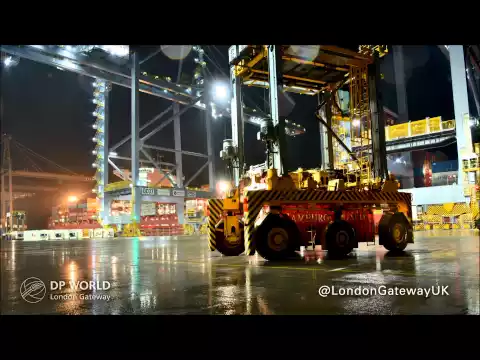

Thames Freeport, Thames River, and Integrated Logistics
London Gateway is located on the north bank of the Thames River, in Essex, and integrates the area of Thames Freeport, a regime aimed at stimulating industrial and logistical activities with incentives and operational facilities.
In institutional material about the site, DP World presents the complex as a deep-water terminal with direct connections among ships, trains, and trucks, as well as an adjacent logistics park designed to shorten distances between unloading, storage, and distribution.
By sustaining expansion in the same site, the company attempts to capture efficiency gains typical of integrated port operations, where the movement of containers is planned from the quay to land dispatch.
“All-Electric” Berths of 400 Meters and Capacity for Megaships
The public justification for the investment rests on two axes.
One of them is physical infrastructure, with new berths and quay equipment designed to accommodate large vessels and increase simultaneous berthing capacity.
The other is the expansion of the entry and exit network for cargo by rail, through a second rail terminal, which DP World points out as a central piece to absorb the growth of volumes without concentrating the impact on road congestion and pickup windows.
In port operations, this layer is often decisive because productivity at the quay can quickly diminish if yards and land access do not keep pace with unloading and loading rates.
BOXBAY Automation and Investment of £170 Million
The undertaking also gained a high-visibility technological component: DP World announced an additional investment of £170 million in a container handling system associated with BOXBAY, aimed at automating part of the flow and redefining storage and handling patterns, focusing on efficiency and safety.
In a corporate statement about the subject, the company presents the solution as a step towards the digitalization and automation of processes, reinforcing an agenda of operational modernization in a sector pressured by costs, route volatility, and the need to reduce delays.
BOXBAY, in turn, also released information about the adoption of a high-density storage system at London Gateway, situating the contract within the context of the ongoing port expansion.
Record of 3 Million TEUs and Growth in Movement

The expansion of London Gateway does not appear in isolation from recent movement figures.
DP World reported that the terminal recorded a significant increase in volumes and reached an annual record of over 3 million TEUs in 2025, associating the performance with the capacity expansion due to the entry of a new berth into operation and a boost in calls on relevant routes.
Specialized vehicles from the port sector also reported the milestone of 3 million TEUs, attributing the result to the increase in calls and the incorporation of additional capacity at the terminal.
In the context of container terminals, TEU is the standard unit equivalent to a 20-foot container, used to compare annual capacity and movement between ports.
Works, Approval, and Schedule of the Expansion
Corporate statements indicate that the construction of the two additional berths is planned to be completed in about four years, a schedule provided by DP World when it announced the start of construction following project approval.
Maritime industry publications also reported the commencement of construction based on the same information, reinforcing the understanding that London Gateway aims to accelerate its path to establish itself among the largest container ports in the country.
The strategic reading is that, by increasing berthing fronts and incorporating more equipment, the terminal enhances its capacity to receive larger ships and maintain more predictable operating windows, which are valued by shipowners and shipping alliances.
Electrification and Modernization of Port Infrastructure
The design of the expansion is significant because port infrastructure, unlike other areas, often requires long-term investments and complex works in regulated environments.
In the case of London Gateway, the choice of “all-electric” berths is presented as part of an agenda of electrification and modernization, aligned with pressures to reduce emissions and improve energy efficiency in port operations.
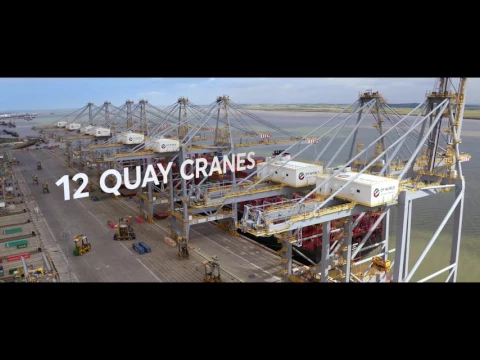
DP World emphasizes in its material that the expansion reinforces the country’s capacity and associates the investment with productivity benefits, while other sector sources highlight the potential impact on jobs and capacity to accommodate routes.
Berthing Flexibility and Impact on the Supply Chain
In operational practice, additional berths mean more berthing points for ships and greater flexibility to handle demand peaks, schedule delays, and variations in vessel size.
In container ports, this type of flexibility is often translated into reduced waiting times, better utilization of tide windows, and greater stability for supply chains that depend on tight schedules.
The ability to simultaneously accommodate several large vessels, cited by DP World when mentioning the possibility of six of the largest ships in the complex after the expansion, has a direct impact on the perceived competitiveness of the terminal compared to other European ports.
Railway, Container Disposal, and Logistical Reach
The railway reinforcement also has implications that go beyond the port.
Terminals that can dispose of a larger share of containers by train tend to relieve pressure on roads, reduce emissions per ton transported, and expand the distribution reach to distant logistics centers.
In the case of London Gateway, DP World states that the second rail terminal was designed to accommodate the expected increase in containerized trade associated with the growth in berth capacity, creating a continuity line between investment in quays and investment in land exit.
This linkage is relevant because bottlenecks outside the port can limit productivity gains inside the port.
Automated Yard, High-Density Storage, and Efficiency
The entry of automated solutions, announced through the investment associated with BOXBAY, adds another layer to this scenario.
Storage and handling systems with a high degree of automation aim to reduce redundant movements, reorganize stacking to accelerate the removal of units, and decrease operational conflicts in the yard.
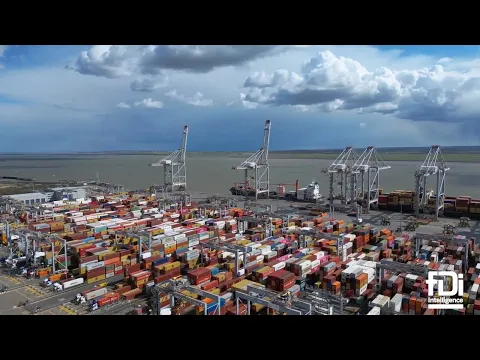
DP World describes the initiative as a leap in efficiency and safety, aligned with the digitalization of processes, while BOXBAY presents the project as an implementation of high-density technology in a British port hub.
In a terminal where volumes are increasing and physical space is limited, yard gains can have a direct impact on effective movement capacity without the need to indefinitely expand the footprint.
Supply, Distribution, and Competition Among European Ports
London Gateway, being situated in a logistics axis close to one of the largest concentrations of consumption in the country, also interacts with retail supply, industry, and cold chains, which often depend on regularity in unloading and speed in distribution.
This proximity is often used as a commercial argument by terminals in the Thames region, and the volume growth reported by DP World reinforces that the port is attempting to establish itself as a hub capable of capturing additional traffic on global routes, especially when shipping companies seek alternatives with operational efficiency and integration with land logistics.
In a competitive environment among UK ports and northern European ports, the combination of additional berths, electrification, railway expansion, and advanced automation has become the core of DP World‘s public narrative for London Gateway.
The company presents the investment as infrastructure to strengthen trade capacity and modernize operations, while sector sources report record TEU figures and highlight berth expansion as a growth factor.
The strategy, in practical terms, is to transform a physical expansion into a package of productivity, predictability, and technology, elements that directly influence the selection of routes and schedules in maritime container transport.
To what extent can the race for electrified and automated megaterminals redefine which ports become the new transshipment and distribution centers on maritime routes in Europe?





-

1 person reacted to this.