






 Portuguese
  Spanish
 3 min of reading
  0 comments


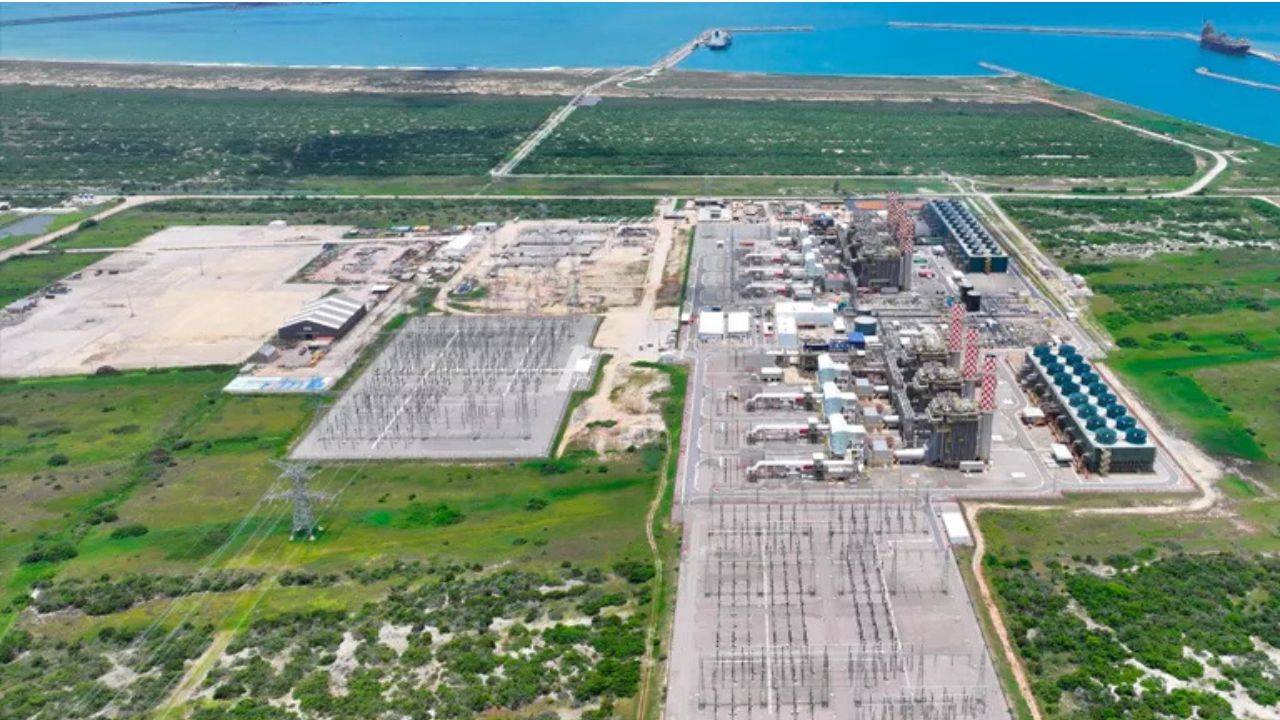
Aneel Approves Operation of GNA II Thermoelectric Plant, Largest Natural Gas Power Plant in the Country, Located at the Porto do Açu. Plant Reinforces Electricity Generation in the SIN.
GNA II, largest natural gas power plant in Brazil, received authorization from the National Electric Energy Agency (Aneel) and began commercial operation on May 31. The plant, located at the Porto do Açu in São João da Barra (RJ), added 1.672 gigawatts (GW) to the National Interconnected System (SIN), reinforcing electricity supply at a time of alert for power deficit.
The acceleration of generation, previously scheduled for August, offsets part of the delays faced during the project’s implementation. Despite the reinforcement, the new volume of electricity is still insufficient to meet the entire national demand.
GNA II Is Located at the Porto do Açu
With three gas turbines and one steam turbine, GNA II represents 10% of national capacity in natural gas thermal plants.
-
Oil production grows in Rio, but reserve replacement raises a warning sign

-
Petrobras is expected to complete the drilling of the Morpho well in the Foz do Amazonas in August 2026, the first well in the Equatorial Margin, an oil frontier that the ANP estimates at more than 30 billion barrels and could redraw the map of Brazil.

-
Oil returns to the center of concerns with tension between the US and Iran

-
IEA reduces forecast for global oil demand in 2026 after impacts of the Middle East crisis


The plant also stands out for its innovation: it can operate with up to 50% hydrogen mixed with liquefied natural gas (LNG), positioning it in the transition to a more sustainable energy matrix.
Integrated into the Gás Natural Açu S/A complex, GNA II is part of a system that, combined with UTE GNA I (1.338 GW), reaches an installed capacity of 3 GW at the Porto do Açu.
Project Experienced Delays and Logistic Challenges
Negotiated at the A-6 auction in 2017, GNA II faced obstacles such as the COVID-19 pandemic, changes in the connection point to the system, and delays in the environmental license for the transmission line.
Furthermore, an act of vandalism in 2024 knocked down the line and halted the commissioning tests for a period.
Nevertheless, the early completion of the project demonstrates the energy sector’s effort to maintain security and continuity of supply.
Brazil Still Faces Electric Power Deficit
Despite the entry of GNA II, the National Electric System Operator (ONS) warns of a deficit of 4 GW in the second half of 2025.
The expectation is that this volume will be covered through the Capacity Reserve Auction (LRCap), with delivery scheduled for September 2025.
Concerns about the expansion of electricity generation intensify in light of growing demand and the need for more efficient and reliable sources.
GNA II now tops the list of the largest natural gas power plants in the country, ahead of Porto de Sergipe (1.593 MW) and GNA I itself (1.338 MW). Among the ten largest are also the units of Santa Cruz, Termorio, Termomacaé, Norte Fluminense, Porto do Pecém, Uruguaiana, and Mauá 3.






Be the first to react!