





 Portuguese
  English
  Spanish
  5 min of reading
  0 comments


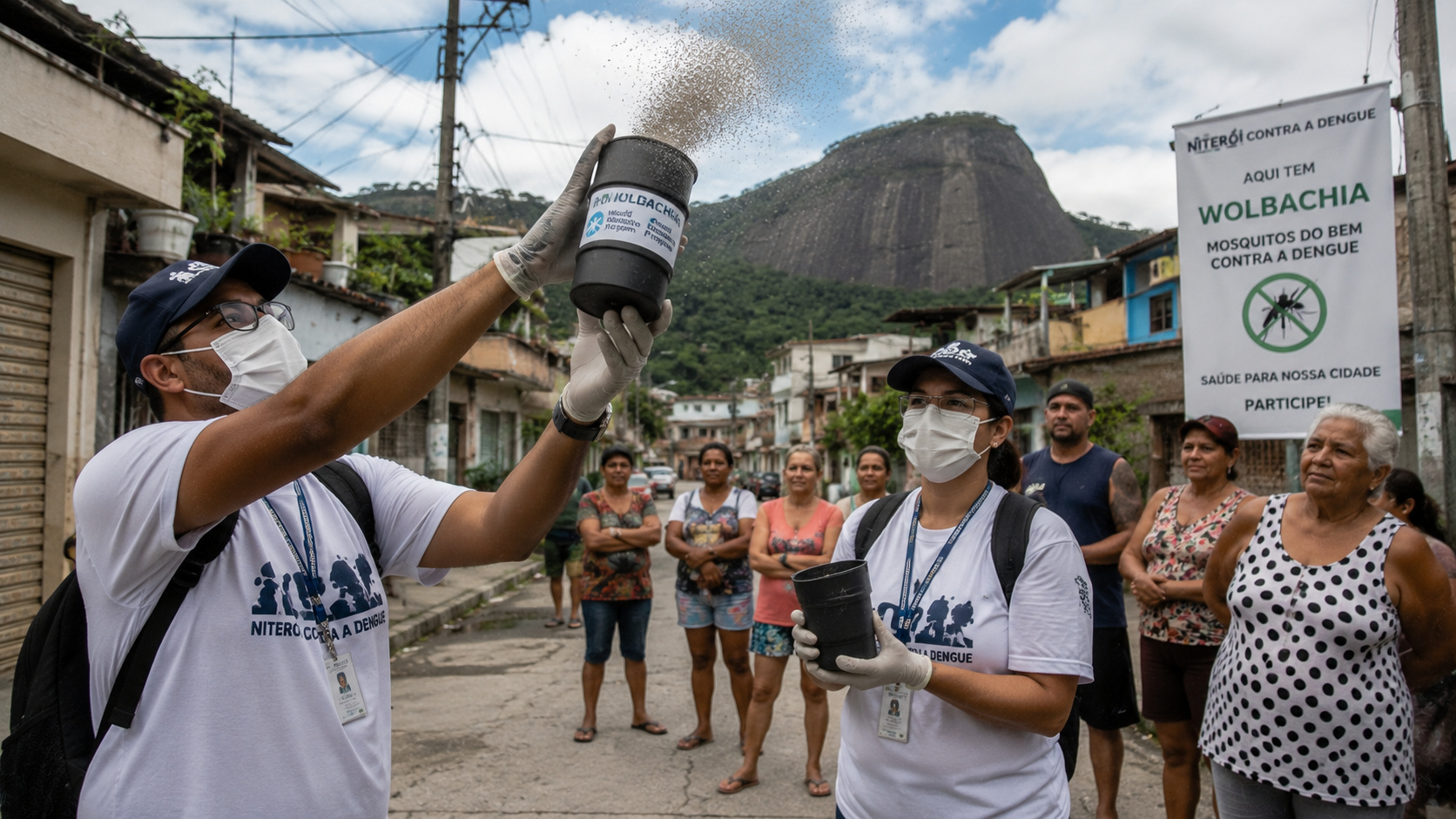
Innovative technique using mosquitoes with the Wolbachia bacteria already shows impressive results in Brazilian cities, but logistical and urban challenges still prevent faster expansion across the country
The fight against dengue has gained a new ally in Brazil, and it seems to have come straight out of a science fiction lab. It is the so-called “good” mosquito, a biological strategy that uses Aedes aegypti mosquitoes with a natural bacterium called Wolbachia to drastically reduce the transmission of dengue, chikungunya, and zika.
The information was released by the “world mosquito program,” based on data from scientific projects already implemented in Brazilian cities and monitored by specialized researchers in public health and epidemiological control. The strategy has been drawing attention precisely because of the significant results recorded in places where the method has already been applied.
The topic regained prominence in May 2026, especially after the increase in dengue cases in various regions of Brazil and the advancement of discussions on new alternatives to contain the disease, which continues to affect millions of people every year.
-
Science issues a concerning warning about a common bedtime habit: using your phone at night may affect your mind much more than you think.

-
Eos Energy will build the world’s largest zinc battery with 1 GWh in Mojave and eliminates lithium for AI data centers.

-
One in five adults may carry an invisible risk of heart attack and stroke that traditional cholesterol tests do not detect, and a study with 20,070 patients presented in 2026 showed that many remain at risk even after taking the medications prescribed by doctors following a result considered normal.
-
Brazil will receive a new submarine cable coming from the United States, the connection passes through a giant data center worth R$ 550 million in the Northeast and promises to make the Brazilian internet faster and more stable.





Although many people still find the idea of releasing more mosquitoes into the environment to combat dengue strange, the logic behind the technology is precisely to transform the transmitter itself into a barrier against the virus.
What are the “wolbitos” and how do they manage to block dengue


The so-called “wolbitos” are Aedes aegypti mosquitoes infected with the Wolbachia bacteria. This bacterium already exists naturally in about 60% of the planet’s insects, but it was not originally present in the dengue-transmitting mosquito.
When scientists insert Wolbachia into Aedes aegypti, something extremely important happens: the mosquito loses much of its ability to transmit the dengue virus.
This occurs because the bacterium hinders the development of the virus within the insect’s organism. Thus, even if the mosquito bites an infected person, it has much more difficulty transmitting the disease to other people.
Moreover, Wolbachia also interferes with the transmission of other important diseases, such as:
- dengue
- chikungunya
- zika
- urban yellow fever
Another point that draws attention is that the bacteria poses no risks to humans, domestic animals, or the environment. In other words, the method is considered safe by health authorities and the researchers involved.
The strategy works progressively. After the modified mosquitoes are released in certain regions, they begin to reproduce with local mosquitoes and pass the Wolbachia bacteria to their offspring.
Over time, common mosquitoes are replaced by a population less capable of transmitting diseases.
How the production of “good” mosquitoes works in Brazil
To make the strategy viable on a large scale, Brazil currently has biofactories specialized in the production of these mosquitoes.
These facilities can generate millions of eggs weekly, using strict biological control protocols and laboratory monitoring.
After production, the eggs go through several stages until they reach the cities participating in the project. The process includes:
- placing the eggs in special capsules
- transport to selected regions
- distribution at strategic points
- release into the environment for mosquito hatching
From that moment, the natural process of reproduction and dissemination of the Wolbachia bacteria among local mosquitoes begins.
Although it seems simple, the method requires detailed technical planning, environmental studies, and continuous monitoring of the insect population.
Therefore, experts state that the national expansion is still happening gradually.
Results impress specialists and health authorities
The numbers recorded in the cities that have already received the project help explain why the “good” mosquito has become one of the biggest bets in combating dengue currently.
According to the data presented:
- Niterói recorded a reduction of up to 89% in dengue cases
- Campo Grande showed a decrease of about 63%
These results have placed Brazil among the countries that have advanced the most in the use of Wolbachia technology.
Additionally, researchers highlight that the effects tend to increase over time, especially when the mosquito population with Wolbachia manages to dominate a certain region.
However, despite the success, experts emphasize that the method does not completely eliminate the need for other preventive measures.
The technique works as a complement to traditional dengue control strategies.
Why Dengue Continues to Grow in Brazil
Even with new technologies emerging, dengue continues to advance in various parts of the country.
According to experts, one of the most important factors behind this growth is the increase in temperatures caused by climate change.
Regions that previously recorded few cases now present favorable environments for mosquito breeding.
Moreover, other urban factors also accelerate the proliferation of Aedes aegypti, such as:
- standing water
- irregular waste disposal
- uncontrolled urban growth
- high population density
- deficiency in basic sanitation
This makes the scenario even more challenging for health authorities.
Why the Method Has Not Yet Reached All of Brazil
Despite the positive results, the expansion of Wolbachia technology still faces several obstacles in Brazil.
Among the main challenges are:
- need for detailed technical planning
- time required for results consolidation
- logistical difficulties in large cities
- vulnerable regions with difficult access
- excessive use of insecticides that can affect mosquitoes with Wolbachia
Additionally, the operational cost of the project still limits a faster implementation on a national scale.
Even so, experts consider the strategy one of the most promising ever developed against dengue in recent decades.
The information was initially disclosed by the portal “Fala Ciência”, which highlighted the advances of the Wolbachia technique and the positive impacts already recorded in Brazilian cities that adopted the experimental method.
Meanwhile, researchers continue to monitor the results and expand studies to bring the “good” mosquito to new regions of the country in the coming years.
In light of all this, an inevitable question arises: would you trust a technology that combats dengue using the very mosquito that transmits the disease?


Be the first to react!