Portuguese
  Spanish


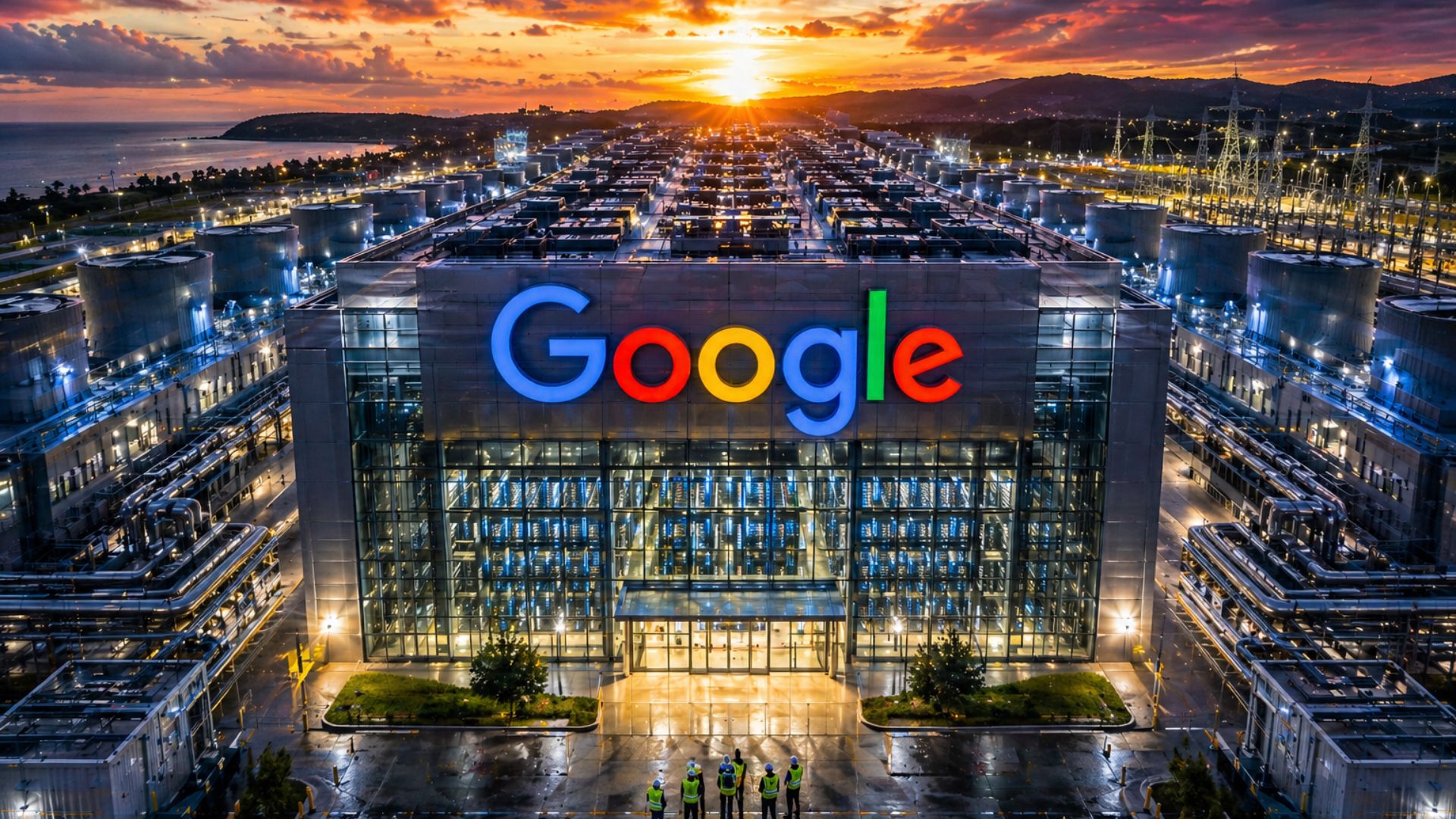

Google’s Billion-Dollar Investment in AI Infrastructure in India Promises to Redefine Global Data Center Scale and Meet Accelerated Growth in Demand for Advanced Computing, with Direct Impact on the Asian Country’s Energy Capacity, International Connectivity, and Digital Strategy.
Google Cloud plans to build an artificial intelligence-focused data center campus in Visakhapatnam, India, with an investment of US$15 billion and a projected capacity of up to 5 gigawatts, as stated by CEO Thomas Kurian in an interview with the Economic Times.
Detailing the initiative, the executive explained that the project will bring together multiple data centers and will be developed over five years, covering the period between 2026 and 2030, with progressive expansion of installed capacity.
“And then, that will reach 5 GW. It’s a very, very large campus,” Kurian stated when commenting on the dimension of the planned structure and the ambition of the investment in the Asian country.
-
Ancient Stone City in the Desert, Once Home to 30,000, Puzzles Scientists with Nabateans’ Water Mastery 2,000 Years Ago

-
Ancient Creature Thought Extinct Since Dinosaur Era Reappears, Baffling Scientists

-
India Deploys Giant Fabric Tubes Filled with Sand to Combat Coastal Erosion and Rebuild Disappearing Beaches

-
China Unveils Most Human-Like Humanoid Robot for Public Sale, Featuring Silicone Skin and 88 Joints, Priced from $17,600




It is noteworthy that the projected scale far exceeds India’s current data center capacity, estimated at around 1.5 GW by the end of 2025, according to data cited by the publication.
If the schedule is maintained, the complex in Visakhapatnam tends to reposition the country on the global digital infrastructure map, increasing its relevance in cloud computing and artificial intelligence.
Google Expands AI Investment in India
Considered Google’s largest financial commitment ever made in the Indian market, the project also stands out as the company’s biggest initiative in this segment outside the United States to date.
Within its global strategy, the company seeks to expand its infrastructure to keep pace with the accelerated advancement of artificial intelligence, which demands greater computational capacity and more robust networks to support new digital services.
Back in October 2025, Google had announced plans to invest US$15 billion in creating its first AI hub in India, choosing Visakhapatnam, in the state of Andhra Pradesh, as the base for this operation.
In addition to gigawatt-scale data centers, the project includes dedicated energy infrastructure and fiber optic connectivity systems, essential for ensuring operational performance and stability.
Furthermore, the installation of a new international submarine connection port is planned, which should strengthen India’s integration into Google’s global cable network and expand data flow between continents.
5 GW Capacity Exceeds Current Infrastructure
With a forecast to reach up to 5 GW, the campus positions itself on a scale uncommon in the sector, especially when compared to the current stage of development of India’s digital infrastructure.
For comparison, the country’s entire data center park totaled approximately 1.5 GW by the end of 2025, which highlights the magnitude of the project and its potential impact on the local market.
This difference helps explain why the initiative is seen as strategic for the advancement of AI computing in India, which is undergoing a period of accelerated expansion driven by internal demand and foreign investments.
Operations of this scale require a large volume of energy, advanced cooling solutions, and high-capacity networks, in addition to detailed planning to ensure continuous and efficient operation over time.
Integrated into Google’s global network, the hub will be part of a structure distributed across 12 countries, allowing greater flexibility in workload management and better response to demand variations.
Global Strategy Ensures Operational Resilience
Regarding operations, Kurian highlighted that Google Cloud has the ability to move workloads between different regions in case of interruptions, leveraging the company’s distributed architecture.
As an example, he mentioned recent episodes of geopolitical tension in the Middle East, when organizations had to quickly adapt their operations to maintain the continuity of digital services.
According to the executive, governments have shown greater flexibility in emergency situations, allowing companies to adjust data location according to operational needs.
“If you look at the Middle East during crises, the government gave companies the freedom to move their information and store it in various locations,” he declared.
In the Indian context, the company already operates cloud regions in Mumbai and Delhi, which can be used for data replication and service maintenance in critical scenarios.
“In a crisis, you can replicate any of these solutions anywhere else in India,” Kurian added, explaining the redundancy strategy adopted by the company.
This approach combines physical expansion with resilience mechanisms, an aspect considered essential by corporate clients and governments that depend on high availability.
New data law influences Google’s strategy
While the project moves forward, India is implementing the Digital Personal Data Protection Act of 2023, which establishes guidelines for the processing and transfer of personal information.
Although the legislation allows international data flows, it also grants the government the power to restrict transfers to certain jurisdictions, which directly impacts the cloud computing sector.
Given this scenario, decisions about data storage and processing now involve not only technical aspects but also increasingly complex regulatory and contractual requirements.
The existence of robust infrastructure within Indian territory tends to reduce some of these limitations, offering safer alternatives for companies operating in the country.
Furthermore, the possibility of internal replication strengthens Google Cloud’s offering for clients seeking low latency, greater reliability, and compliance with local rules.
Demand for AI grows at an accelerated pace
Justifying the investment, Kurian highlighted the significant growth in demand for AI-driven computing, fueled by the popularization of generative models and corporate applications.
According to the executive, the API throughput rate jumped from 10 billion to 16 billion tokens per minute between December and March, indicating a significant advance in the use of these services.
This increase corresponds to a 50% rise in just three months, which pressures global infrastructure capacity and highlights the need for accelerated data center expansion.
Given this scenario, the availability of chips, power, and networks has become one of the main challenges for companies operating at scale in the artificial intelligence sector.
Recognizing these limitations, Kurian stated that Google maintains dedicated sites for demand and constantly monitors to balance resource supply and consumption.
“We have dedicated sites for demand and are constantly measuring and trying to meet it,” the CEO said, commenting on the management of installed capacity.
Visakhapatnam enters the global AI route
With the choice of Visakhapatnam, the state of Andhra Pradesh seeks to consolidate itself as a relevant digital infrastructure hub, attracting investments and strengthening its position in the international technological landscape.
The project brings together data centers, power systems, submarine cables, and strategic partnerships, forming an ecosystem capable of sustaining large-scale and highly complex operations.
To make the initiative viable, Google has been working in conjunction with Indian infrastructure and telecommunications companies, accelerating implementation and expanding regional connectivity.
Although the value of US$ 15 billion has been officially confirmed by the company, the capacity of up to 5 GW was mentioned by Thomas Kurian in an interview, and may vary according to the progress of the construction phases.
The final definition will depend on factors such as energy availability, demand evolution, and compliance with the schedule planned until 2030.